Why Dictation Matters: Making Dictation Purposeful in K–3 Classrooms
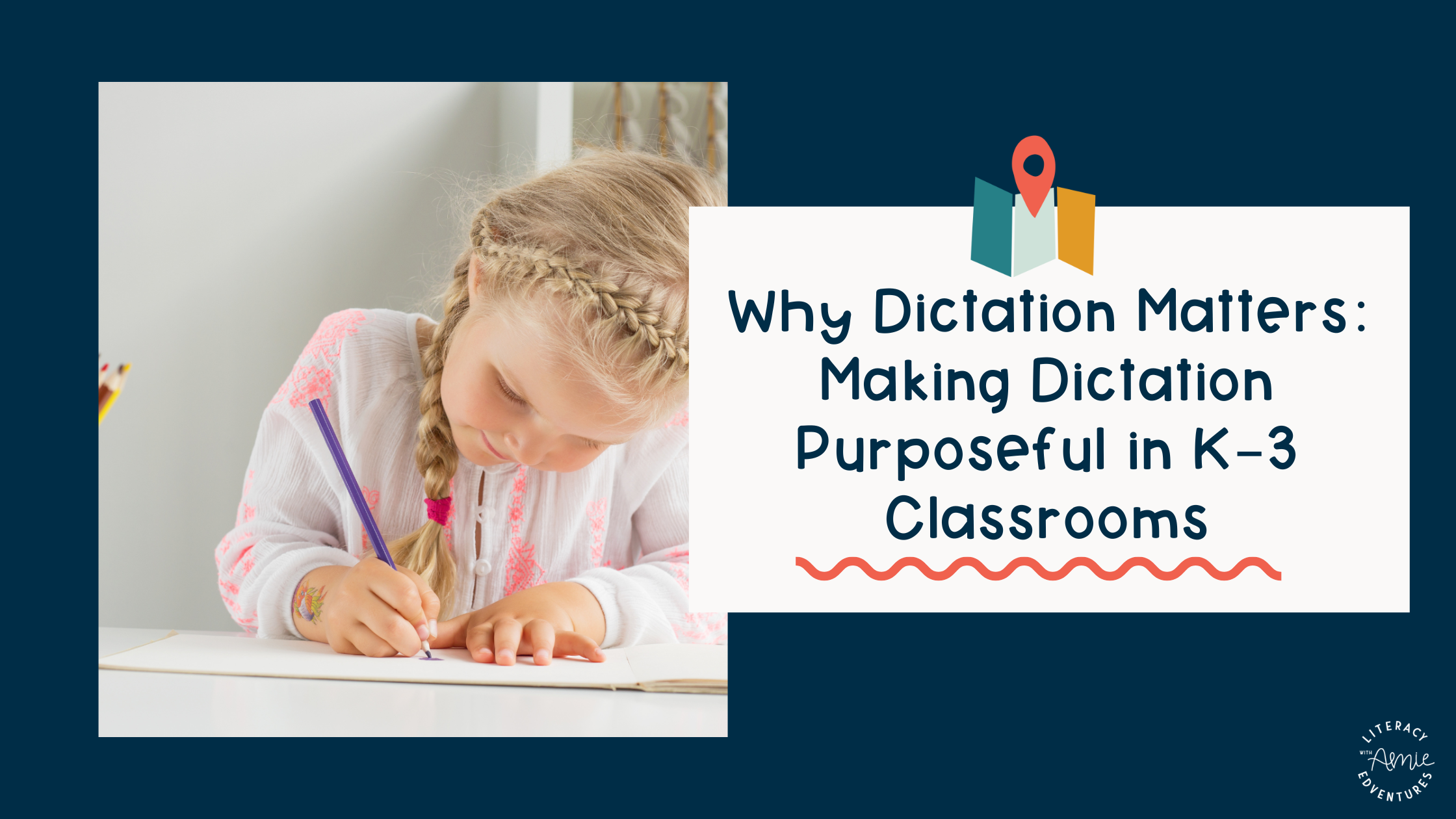
Dictation is often misunderstood. For some teachers, it brings to mind long, formal exercises or worksheets labeled dictation that feel disconnected from daily instruction. But when used intentionally, dictation is one of the most powerful tools we have for supporting phonemic awareness, phonics, spelling, and sentence writing—especially in kindergarten through third grade.
In a recent Table Talk at the Teachers Table conversation, I shared how dictation can be used purposefully across grade levels and why it plays such an important role in helping students apply what they’re learning. Below, you’ll find a brief excerpt from my conversation with Elise, and you can watch the full Table Talk inside The Teacher’s Table—a platform where literacy leaders come together to share practical knowledge and classroom-tested strategies in one place. Join here!
table-talk-dictation-k-3.png
“Table Talk discussion on why dictation matters in K–3 classrooms”
What Dictation Really Is (and Isn’t)
At its core, dictation is simply asking students to take what they hear and put it into print. That can look very different depending on the grade level and the skills students are working on.
In Kindergarten, dictation can happen at the sound level. For example, a teacher might say a sound (/m/), and students write the letter m while saying, “m spells /m/.” This mirrors an auditory drill and builds early sound–symbol connections.
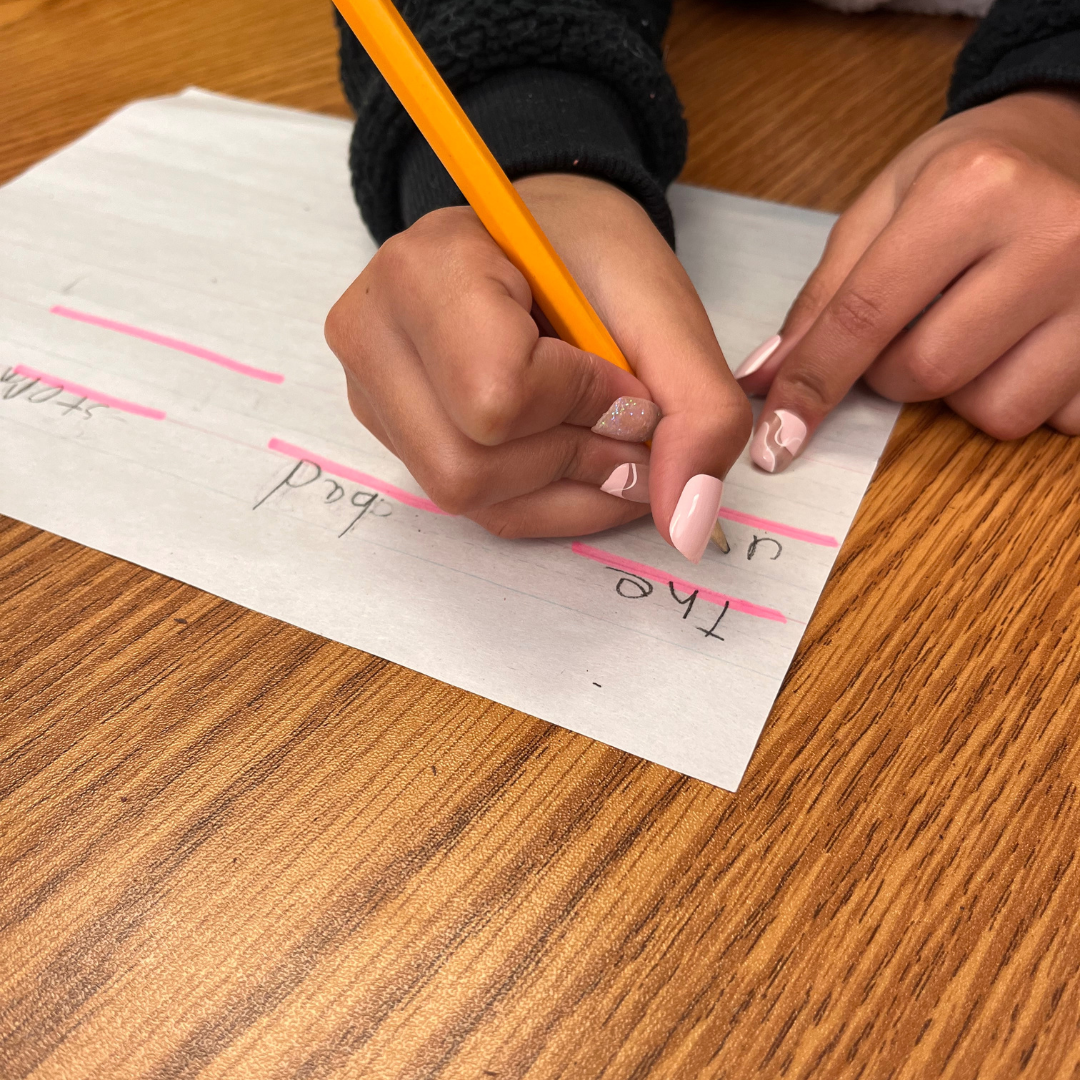
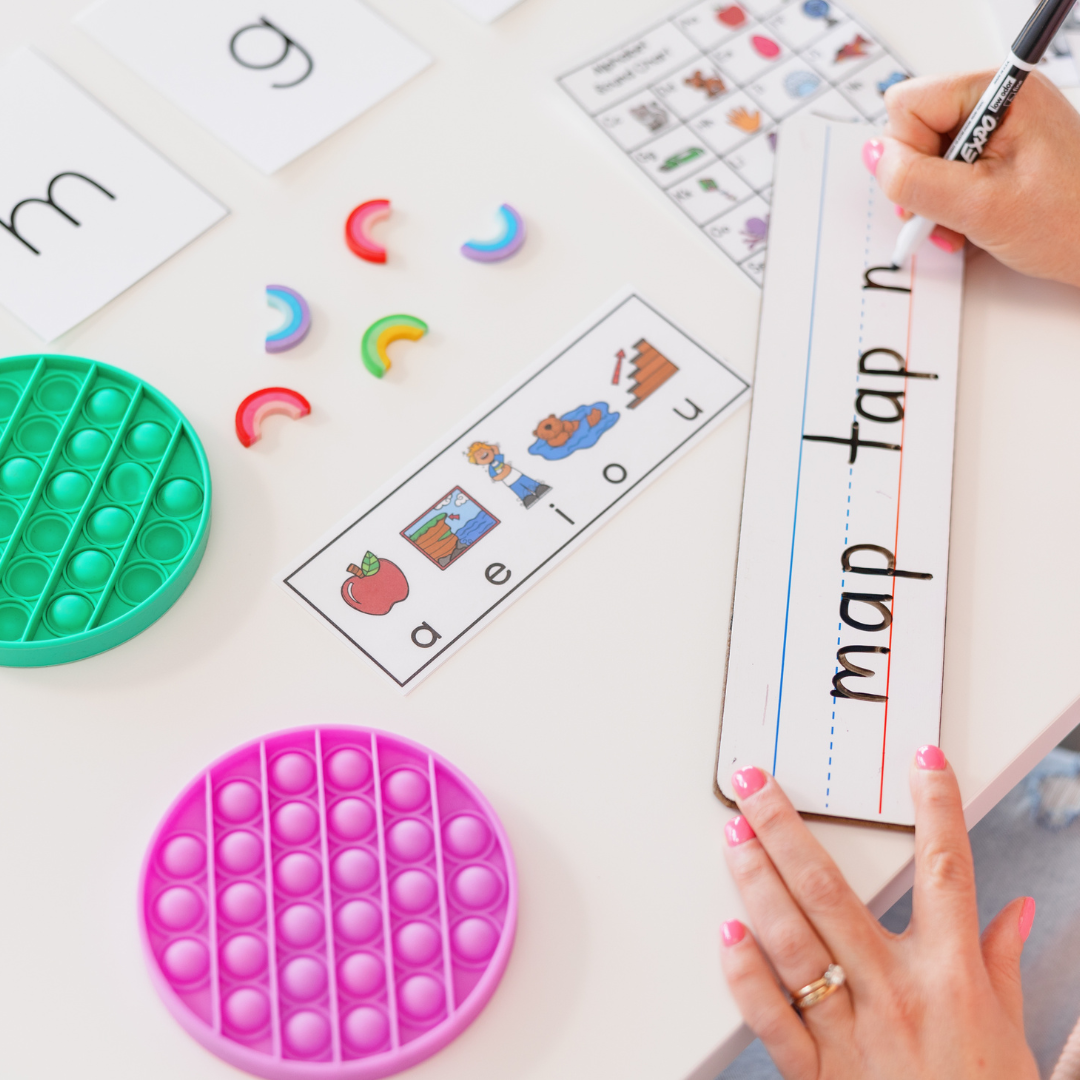
As students progress, dictation moves to word-level work, often starting with CVC words. Students tap out sounds, map them, and spell the word.
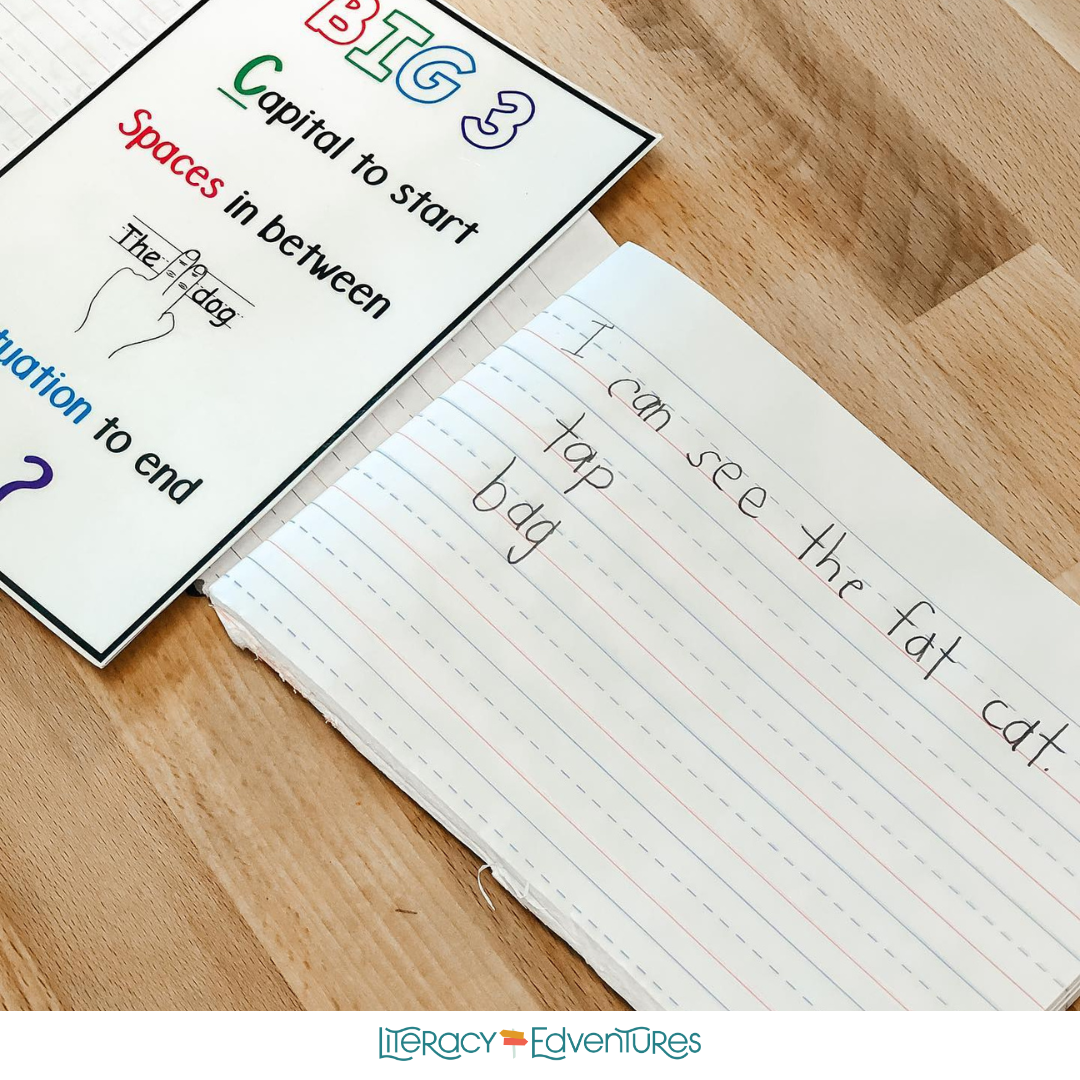
From there, dictation expands to simple sentences, such as I see a cat, and eventually to more complex sentences that reflect newly taught phonics skills.
The goal is —it’s application. Dictation helps students use the phonics skills they’re learning, not just recognize them.
Why Dictation Is So Powerful
Dictation supports multiple areas of literacy development at once:
The Orthographic Mapping Process: Students must hear sounds, connect them to letters, and store those patterns for reading and spelling.
Phonemic Awareness: Tapping, segmenting, and blending sounds during dictation strengthens sound awareness.
Working Memory: Holding a word or sentence in mind long enough to write it requires significant cognitive effort.
Immediate Feedback: Dictation—especially in small groups—allows teachers to quickly see where students are confused and respond in the moment.
Writing is hard for our kiddos. Dictation provides a scaffolded way for them to practice writing with support so that independent writing feels more manageable over time.
Dictation Doesn’t Have to Be “Formal”
One of the biggest misconceptions is that dictation must be a stand-alone activity on a worksheet. In reality, dictation is already embedded in many effective routines.
If you’re using:
Word chaining (read my latest blog post on word chaining here)
Word mapping
Magnetic letters
Whiteboards or sand trays
…you’re already doing dictation.
These routines serve as powerful informal assessments, helping teachers answer questions like:
Can my students break words into sounds?
Can they represent those sounds accurately in print?
Dictation can also be integrated throughout the day—in science, social studies, or content-area writing—making it both efficient and meaningful.
Backward Design: Let Your Scope and Sequence Lead
The most important tool for effective dictation is your phonics scope and sequence. It acts as the roadmap for everything:
Word mapping
Decodable text selection
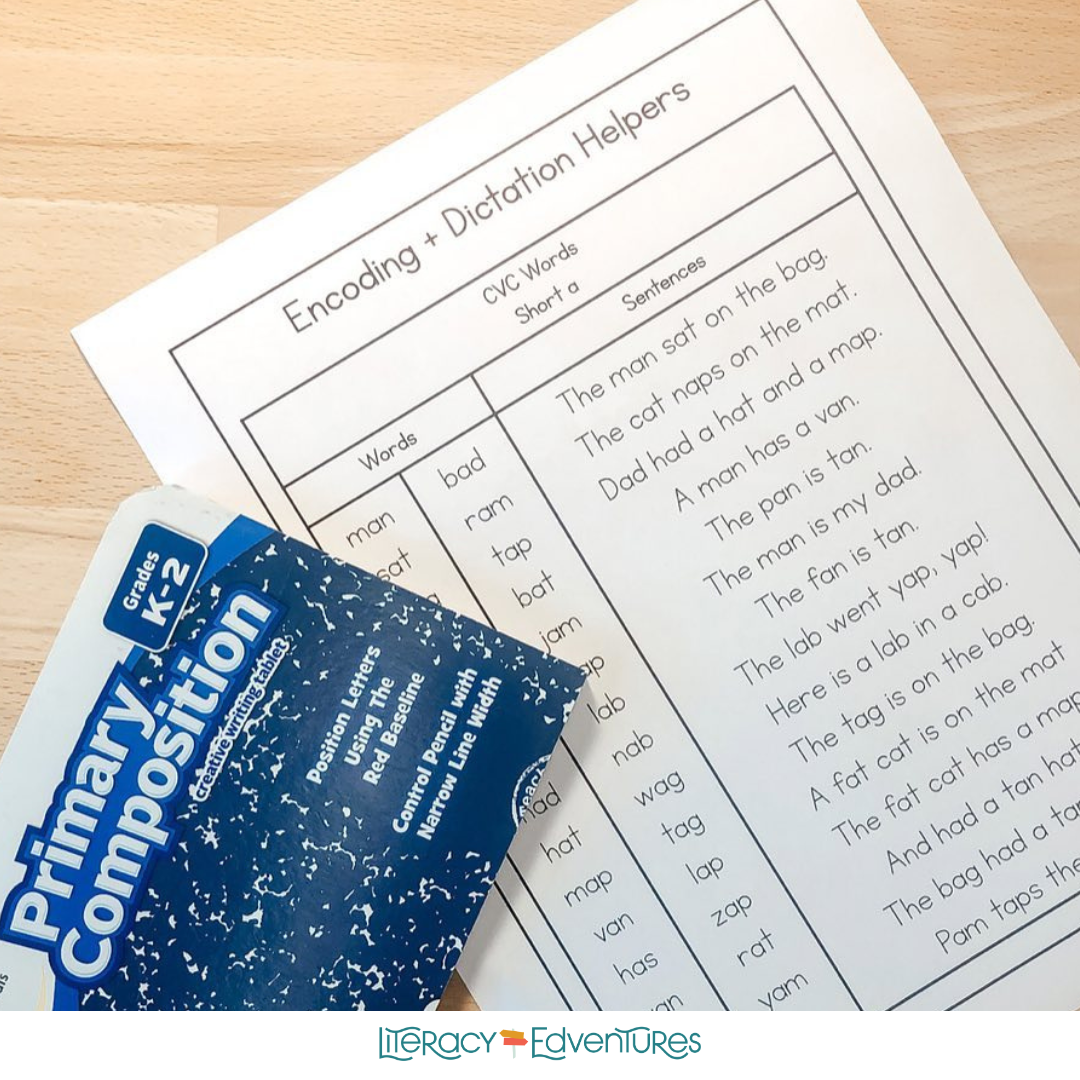
Dictation content
Effective dictation is never random. Teachers should start with diagnostic data, place students along the scope and sequence, and plan instruction with a clear view of where students are headed.
When choosing dictation sentences, ask:
What skill am I currently teaching?
What skills did I teach 4–6 weeks ago that still need review?
And then, allow those answers to guide your instruction. Dictation is one of the best ways to revisit previously taught skills while reinforcing new ones—because we are never “one and done” with phonics instruction.
A Simple, Consistent Dictation Routine
One of the biggest challenges teachers face with dictation isn’t choosing a sentence—it’s managing the process. Consistency is key.
Here’s an example of a simple dictation routine:
Say the sentence (e.g., The dog sits.)
Discuss meaning
What is the sentence about?
What is the dog doing?
Repeat the sentence in engaging ways
Clap it
Pound it
“Raise the roof”
These movement-based repetitions help students hold the sentence in working memory.
Silent writing time
Students write independently while the teacher observes.
Read it twice
When students finish, they read their sentence twice before receiving feedback.
This gives students a chance to self-correct before the teacher steps in.
The key is predictability. When students know the routine, cognitive energy is spent on writing, not figuring out what comes next.
Key Takeaways for Teachers
Dictation can begin at the sound level and grow to words and sentences.
Your scope and sequence should always guide dictation choices.
Dictation works best when it follows a consistent routine.
Informal dictation routines can be just as powerful as formal ones.
If dictation has felt overwhelming or unclear, start small. Write out your routine. Use it daily. Over time, it will become second nature—for you and your students.
Why I Designed These Dictation Helpers
Every time I create a resource, I make sure it’s grounded in research and works in real classrooms with real kids.
These Dictation Helpers are intentionally designed so that:
Dictation aligns directly to your phonics scope and sequence
Previously taught skills are naturally revisited alongside new skills
Sentences are short, intentional, and developmentally appropriate
Dictation can be used flexibly in a small group or a whole group
Teachers can model first, then gradually release responsibility to students
They’re meant to support instruction — not replace teacher thinking or add more prep.
You’ll also find:
Clear teacher tips for using dictation intentionally
Guidance on scaffolding and error correction
Support for using dictation at the sound, word, and sentence level
Ideas for embedding dictation into existing routines (word mapping, chaining, whiteboards, notebooks)
Why Dictation Belongs in Every Phonics Block
When used intentionally, dictation is one of the most powerful tools we have.
It helps students:
Strengthen phonemic awareness
Connect sounds to print
Apply phonics skills in real time
Build spelling confidence
Develop automatic word recognition
Transition more smoothly from decoding to writing
Dictation isn’t just about writing words or sentences — it’s about helping students apply what they’re learning in a supported, meaningful way.
It’s a small routine with a big impact.
If you’re looking for a high-impact phonics routine that builds confidence and supports transfer, these Dictation Helpers were designed to do exactly that.