Why Word Chaining Matters: Small Routine, Big Impact
Word Chaining is More Than a Phonics Activity
Word chaining often looks simple on the surface — change one letter, make a new word. But when implemented intentionally, it is one of the most powerful routines we can use to support phoneme manipulation, sound-to-print connections, and orthographic mapping.
If you’ve used word chaining before, you already know it’s engaging. What’s often less clear is why it works — and how to use it in a way that truly moves the needle for readers.
In this post, I want to go deeper into:
why phoneme manipulation matters
how applying it to print strengthens reading and spelling
and how tools like whiteboards, sound boxes, and magnetic letters make word chaining even more effective
(If you want a practical overview of how to run a word chaining activity step-by-step, you can start with this post 👉 Word Chaining Activity.)
What is Word Chaining?
Word chaining is a structured phonics routine where students start with one word and change only one sound at a time to create a new word.
For example:
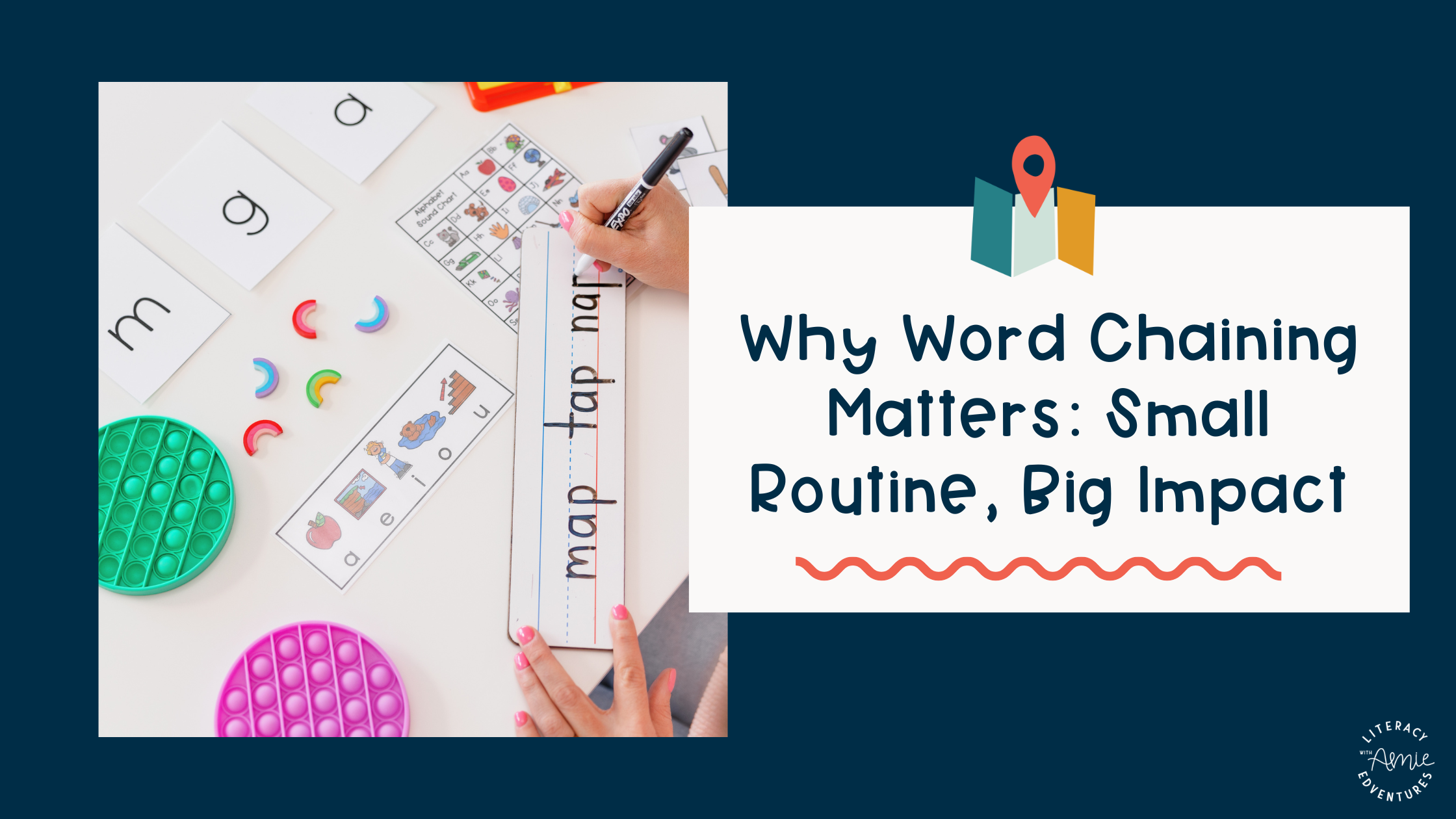
map → mop → hop → hot
Each step requires students to:
identify the phonemes in the word
determine which sound is changing
connect that sound change to print
blend the new word
That last piece — connecting sound changes to print — is what makes word chaining so powerful.
Why Phoneme Manipulation is Critical for Reading
Phonemic awareness isn’t just about hearing sounds. Strong readers must be able to manipulate sounds — adding, deleting, and substituting phonemes — quickly and accurately.
When students struggle with reading and spelling, it’s often because they:
can’t isolate individual sounds
don’t understand where sounds occur in a word
or haven’t fully connected sounds to letters
Word chaining directly targets these skills by requiring students to attend to one sound at a time — without overwhelming them.
Applying Phoneme Manipulation to Print is Where Growth Happens
Oral phonemic awareness activities are important, but they’re not enough on their own.
Students make the biggest gains when phoneme manipulation is:
paired with letters
applied directly to reading and spelling
repeated in meaningful ways
Word chaining does exactly that.
Instead of manipulating sounds in isolation, students manipulate sounds while watching print change. This strengthens the bridge between spoken language and written language — which is essential for decoding and encoding.
How Word Chaining Supports Sound Mapping (orthographic mapping)
Orthographic mapping is the process by which words become stored in long-term memory for automatic retrieval.
Word chaining supports this process because students:
analyze each phoneme in the word
link each phoneme to a grapheme
Repeatedly map sounds to print across related words
This isn’t memorization. It’s intentional sound-symbol mapping, which leads to faster word recognition and stronger spelling.
That’s why word chaining works for both reading and writing — and why it’s especially effective for students who struggle.
Why Tools Matter: Word Chaining Works Best When It’s Hands-on
Word chaining is most effective when students can see and manipulate sounds and letters. Here’s how different tools support learning:
Using Whiteboards for Word Chaining
Whiteboards are ideal for quick, responsive word chaining.
Why they work:
Students can erase and change one letter easily
Mistakes feel low-risk
Teachers can instantly see who understands the sound change
Tip:
Have students say the word before and after each change. Always ask:
“Which sound changed? Where do you hear it?”
This keeps the focus on phonemes — not just letters.
Sound Mapping (Elkonin) Boxes: Making Phonemes Visible
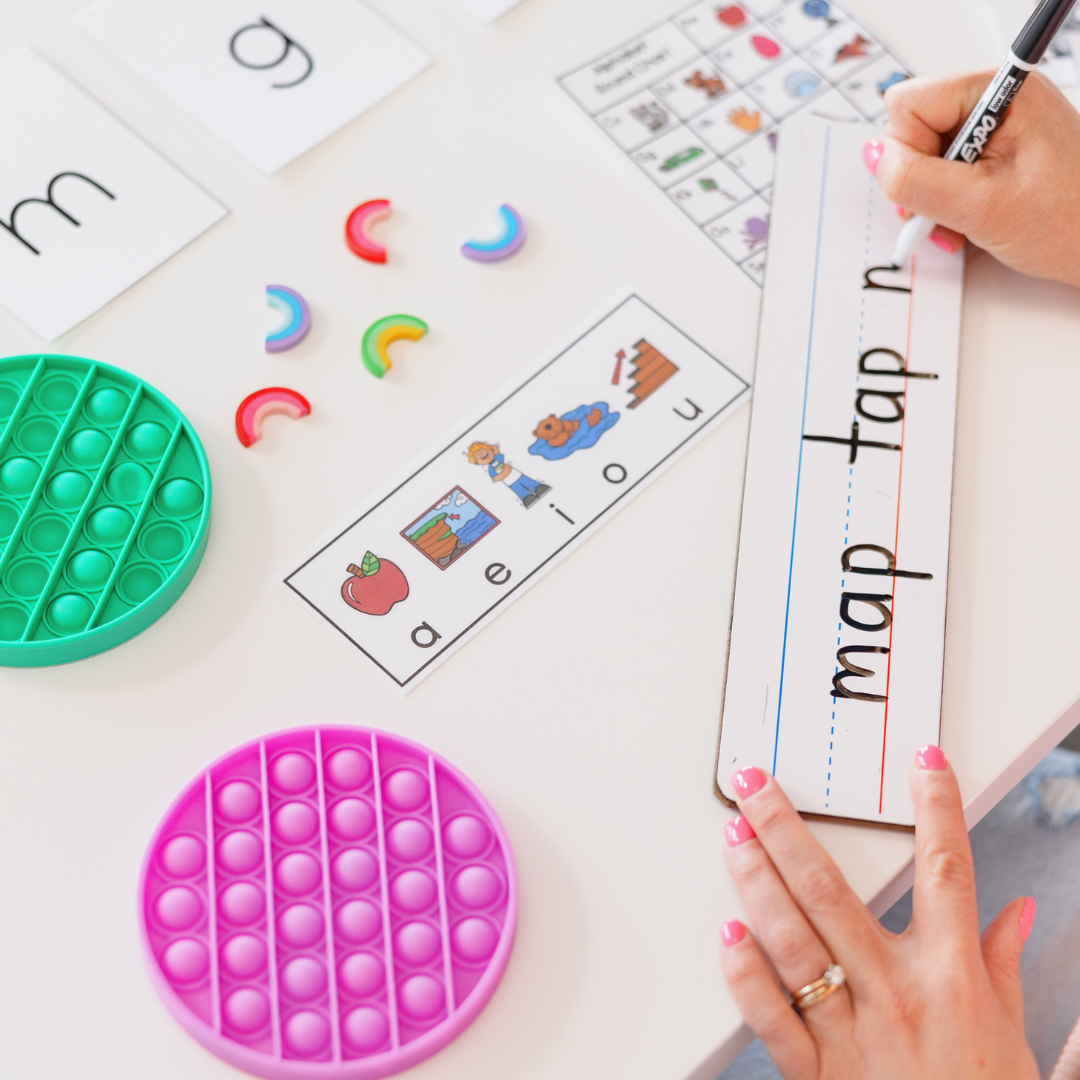
Sound boxes slow students down and force attention to each individual sound.
Why they matter:
They prevent guessing
They strengthen segmentation and blending
They clarify sound position (beginning, middle, end)
Tip:
Have students map the sounds before changing the letters. Then adjust only the box that changed.
This reinforces true phoneme manipulation — not guessing based on word shape.
Magnetic Letters: Strengthening Sound-to-Print Connections
Magnetic letters or letter tiles are especially helpful in small groups and intervention.
Why they work:
Students physically remove and replace graphemes
Movement reinforces learning
Teachers can slow the routine intentionally
Tip:
Ask students to explain why the letter changed:
“What sound does that letter represent? Why does it change the word?”
This deepens the orthographic mapping process.
Why Designed Word Chaining Resources in this Way:
Every time I create a resource, I make sure it is backed by research (and kid/teacher approved!)
They are intentionally designed so that:
only one sound changes at a time
patterns align to phonics instruction
routines work seamlessly with whiteboards, sound boxes, and magnetic letters
teachers can model first, then release to students
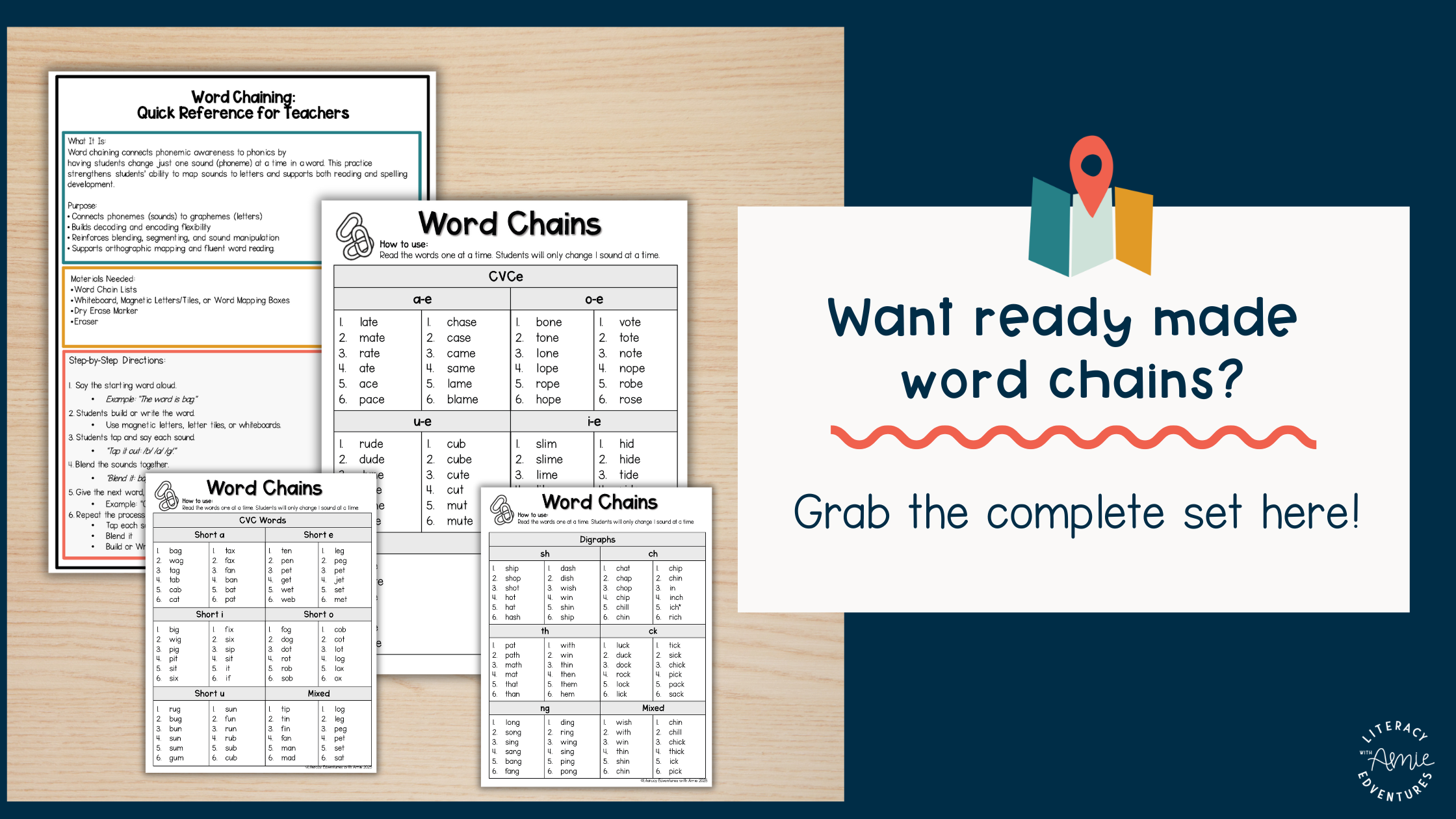
You’ll also find:
teacher tips and implementation notes
ideas for error correction
videos showing word chaining in real classrooms
The goal is to make word chaining easy to implement and effective — not another thing teachers have to figure out on their own.
Why Word Chaining Belongs in Every Phonics Block
When done well, word chaining helps students:
manipulate phonemes with confidence
connect sounds to print
decode words easier
spell with confidence
build automatic word recognition
It’s a small routine with a big impact.
If you’re looking for a high-impact phonics routine, this is it!