
How to Regroup Small Groups Using Mid-Year Data

By January, you’re no longer guessing.
You know your students. You’ve seen how they respond to instruction. You’ve watched some readers make steady progress, others plateau, and some struggle to transfer skills into real reading and writing. That’s what makes mid-year one of the most powerful times to regroup small groups — not because it’s a reset, but because it’s informed.
Regrouping with mid-year data isn’t about reshuffling students or reacting to a single score. It’s about using what you now know to make smarter instructional decisions that actually move students forward.
Why Mid-Year Data Is the Right Data for Regrouping
Early in the year, grouping decisions are often based on limited snapshots. By mid-year, you have something much more meaningful: patterns over time.
You’ve likely collected:
Universal screening data
Diagnostic assessments
Writing samples
Decodable reading checks
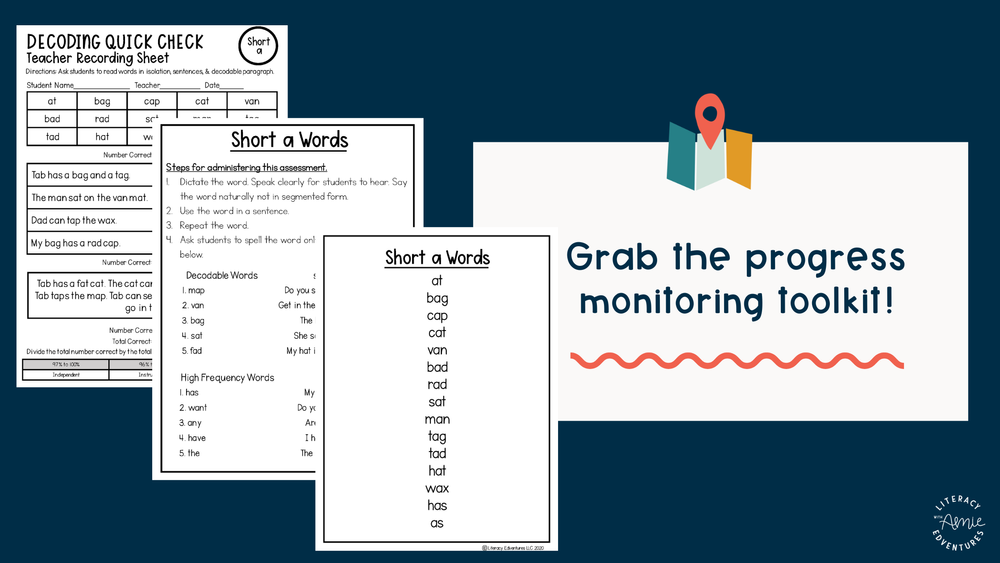
Progress monitoring data
As I shared in Episode 51 of the Route2Reading Podcast, assessments are only useful when they lead to instructional decisions. Mid-year regrouping is where those decisions finally come into focus.
At this point in the year, data helps you answer questions like:
Who is responding to the instruction?
Who needs more intensity?
Who is ready to move on?
Which skills are holding students back?
This clarity is your instructional advantage.

Start With the Right Data (And Know What Each Tool Tells You)
Not all assessment data serves the same purpose. Before regrouping, it helps to sort data by what it actually tells you.
Universal Screeners: Identifying Who Needs Support
Universal screeners provide a broad snapshot of student performance. They help you identify which students may need additional support — but they don’t tell you why a student is struggling. Screeners are the starting point, not the end point.
Diagnostic Assessments: Understanding the Why
Diagnostics are where regrouping truly begins. These tools help you pinpoint:
Which phonics patterns are secure
Where decoding breaks down
Whether challenges stem from phonemic awareness, phonics, fluency, or language
Effective small groups are built around specific skill needs, not overall scores.
Progress Monitoring: Deciding What to Do Next
Progress monitoring shows you whether instruction is working. It answers the most important regrouping question of all: Is this group the right match for this student right now?
If students aren’t making expected progress, regrouping isn’t a failure — it’s a necessary instructional response.
If you want a deeper breakdown of how to use these assessments, this post may be helpful:
👉 SoR-Aligned Assessments: What to Use and Why
What the Research Says About Regrouping
Stephanie Stollar emphasizes that data should guide instructional decisions, not labels. Her work reinforces that effective regrouping is:
Skill-based, not score-based
Flexible, not fixed
Responsive to growth over time
Grouping should reflect what students need next, not where they started.
This aligns closely with what I discuss in Podcast Episode 57, where we explore how assessment data should directly shape instruction — not just documentation.

A Simple 3-Step Process to Regroup Small Groups Mid-Year
Step 1: Look for Skill Patterns
Start by reviewing your screening and diagnostic data together.
Ask:
Are multiple students missing the same foundational skill?
Are gaps showing up in decoding, fluency, or comprehension?
Which needs are appropriate for whole group vs. small group?
If many students share the same need, that’s a Tier 1 conversation. Small groups should be reserved for more targeted, skill-specific instruction.
Step 2: Build Groups Around the Lowest Missing Skill
Strong small groups focus on one primary instructional target.
Instead of grouping students as “below” or “on level,” organize groups around needs such as:
Phoneme-grapheme mapping
Short vowel accuracy
Blending automaticity
High-frequency word reading
Fluency with connected text
Students with different needs may score similarly on a screener — but they don’t belong in the same instructional group.
Step 3: Regroup Based on Growth, Not the Calendar
Groups should change when data says they should, not when the schedule says it’s time.
Use progress monitoring to ask:
Has the student mastered the target skill?
Is the group still appropriately matched?
Does instruction need to intensify or shift focus?
Regrouping should be an ongoing and expected process — not something that happens only once per quarter.
What Mid-Year Regrouping Reveals About Your Literacy Block
Mid-year regrouping isn’t just about students — it’s also a reflection of instruction.
If a large number of students need the same intervention:
Tier 1 instruction may need tightening
Routines may need reteaching
Pacing or alignment may need adjustment
This isn’t a criticism. It’s insight.
A strong literacy block evolves as students do. January gives you the space to refine what matters most.
Practical Tips to Make Regrouping Sustainable
Keep groups small to increase opportunities to respond
Use predictable routines so students can focus on learning
Celebrate movement between groups as growth, not failure
Regrouping is not remediation. It’s responsive, intentional teaching.
Final Thoughts
Knowing how to regroup small groups using mid-year data allows you to work smarter — not harder — in the second half of the year.
When assessment, instruction, and grouping align, your literacy block becomes:
More targeted
More efficient
More supportive of every learner
January isn’t about starting over. It’s about using what you now know to move students forward with clarity and confidence.
Want Support Making Sense of Your Mid-Year Data?
Reading about regrouping is one thing. Sitting down with your actual data and making confident decisions is another.
That’s why all January long, I’m offering free data coaching calls for Route2Reading members. These calls are a space for teachers to bring their mid-year data and get support turning it into clear, actionable groupings and instructional decisions.
During these calls, you can:
Bring your mid-year screening and progress monitoring data
Talk through regrouping and placement decisions
Clarify what to prioritize next in whole group and small group instruction
Leave with a plan that feels manageable and grounded in your students’ needs
There’s no extra cost for these calls—just real-time support included with your membership.
If you’re feeling unsure about how to use your data or want reassurance that your instructional decisions make sense, this is exactly what January is for.
👉 Join the Route2Reading Membership to access the free January data coaching calls
Your data already tells a story. Let’s make sure it leads to instruction that truly supports your students.