How to Simplify Your Literacy Block (So It Actually Works)
Why Your Literacy Block Feels Overwhelming
If your literacy block felt overwhelming this year, I want you to know you’re not alone. I hear the same thing from teachers all the time—“I have too many programs,” “I don’t have enough time,” “I can’t fit it all in.” And when you step back and look at everything that’s expected, it makes sense that it feels that way.
What’s happening in a lot of classrooms right now is that we’re trying to do everything, from every program, in one block of time. And when you actually map that out, it feels like you could teach reading all day and still not get to everything. That’s not a teacher problem—it’s a systems problem.
So before you head into next year thinking you need to do more, I want you to consider this shift: what if the issue isn’t effort at all? What if your literacy block feels overwhelming because it isn’t simple enough to be consistent?
The Real Problem Isn’t Time—It’s Too Much
When teachers tell me they don’t have enough time for their literacy block, I always want to dig a little deeper. Because most of the time, it’s not really about time—it’s about overload.
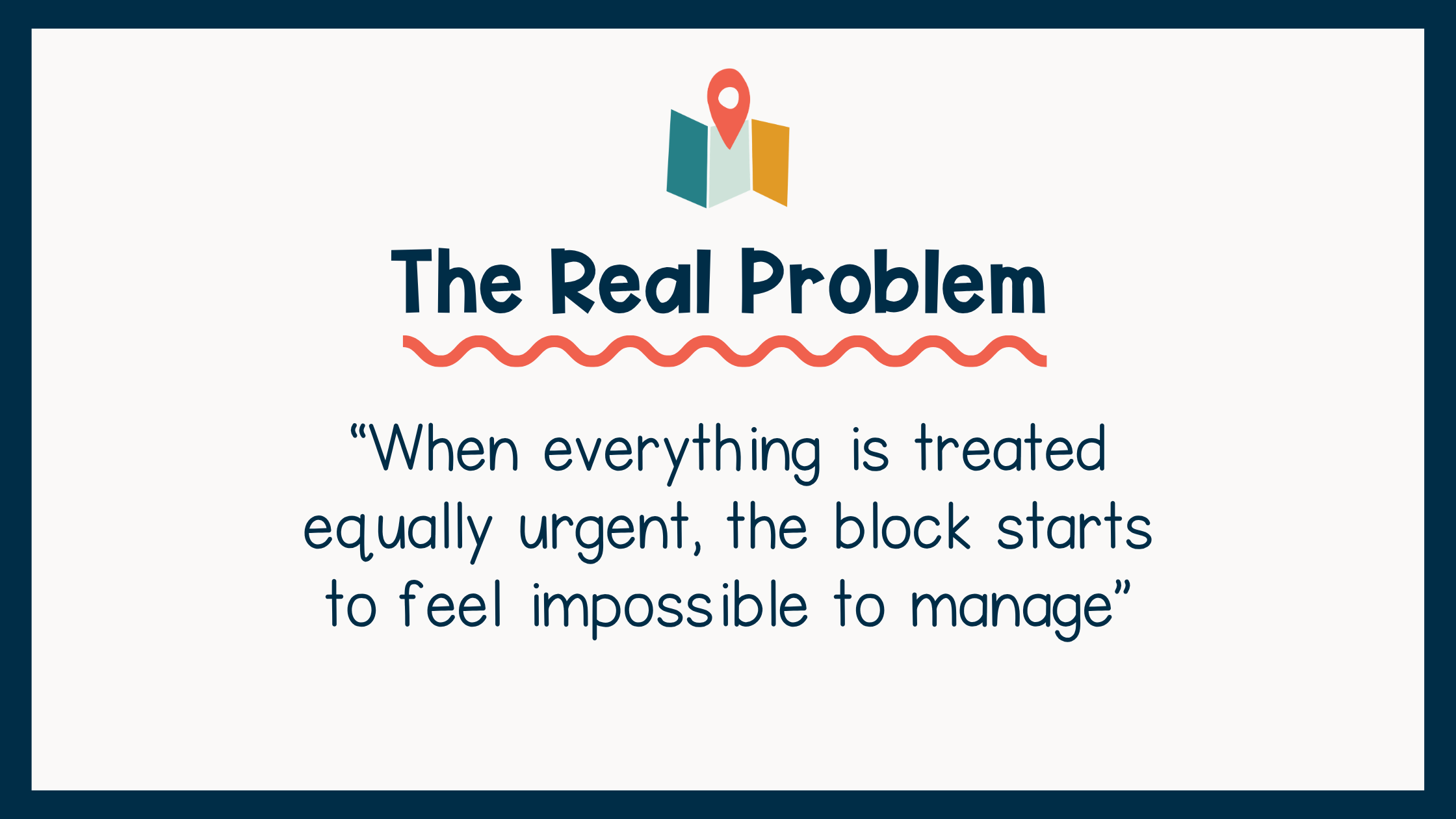
There are too many materials, too many expectations, and too many disconnected pieces. You’re trying to fit phonemic awareness, phonics, comprehension, writing, and intervention all into one block, and each one is important. But when everything is treated as equally urgent, the block starts to feel impossible to manage.
Instead of asking, “How do I fit it all in?” we need to start asking:
What actually matters most in my literacy block?
If you’ve ever struggled to organize your block, this is exactly why I created a simple structure you can actually follow. You can read more about that here:
How to Structure Your Literacy Block for K–2 Students
Why Simpler Literacy Instruction Is More Effective
One of the biggest mindset shifts I try to help teachers make is moving from quantity to quality.
When we over-adopt curriculum, we create overwhelm. And when teachers feel overwhelmed, instruction becomes inconsistent—and that’s when students start to fall through the cracks.
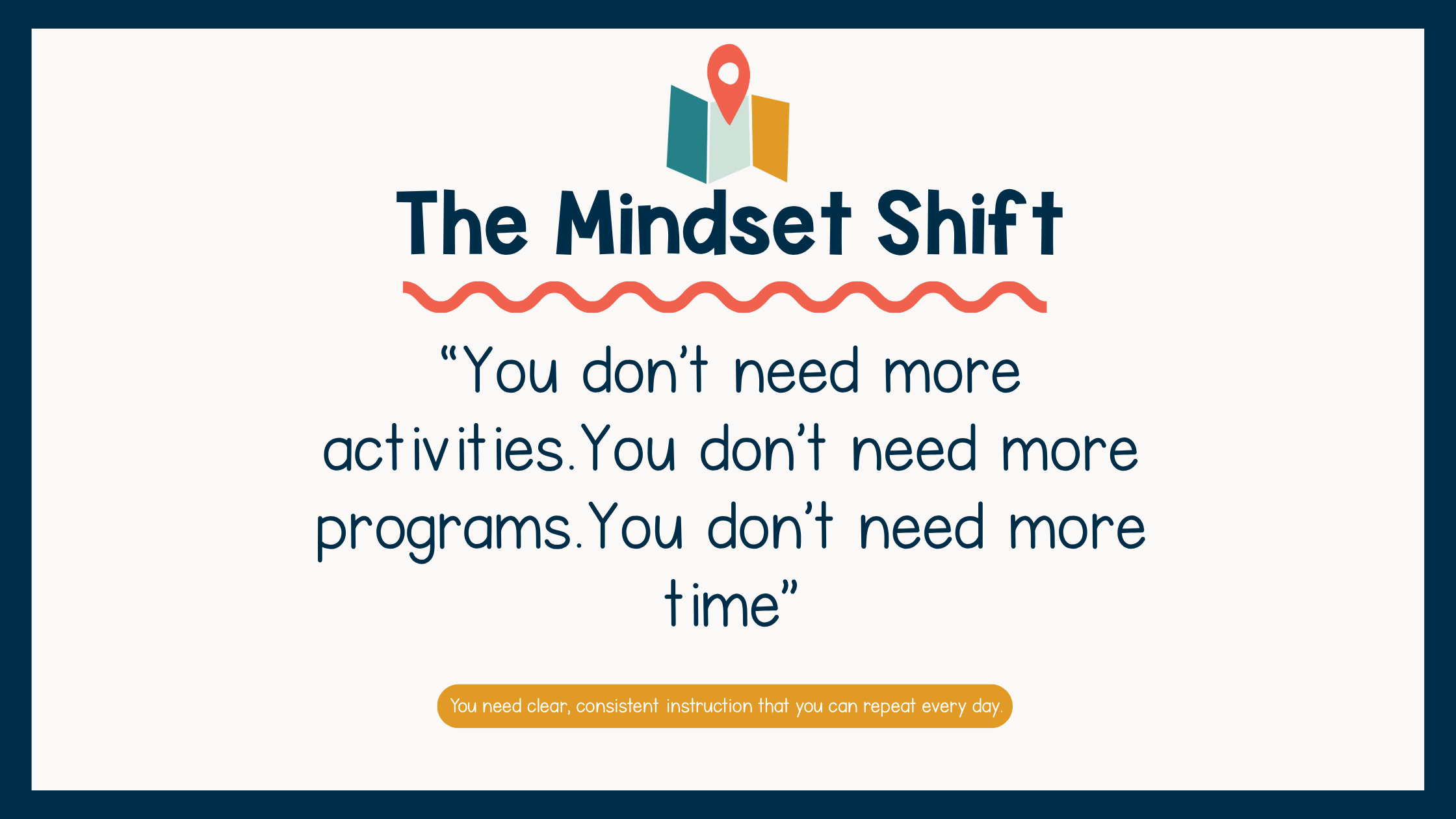
You don’t need more activities. You don’t need more programs. You don’t need more time.
You need clear, consistent instruction that you can repeat every day.
What Should Be Included in a Literacy Block?
Before we simplify your literacy block, we have to be clear on what actually belongs in it.
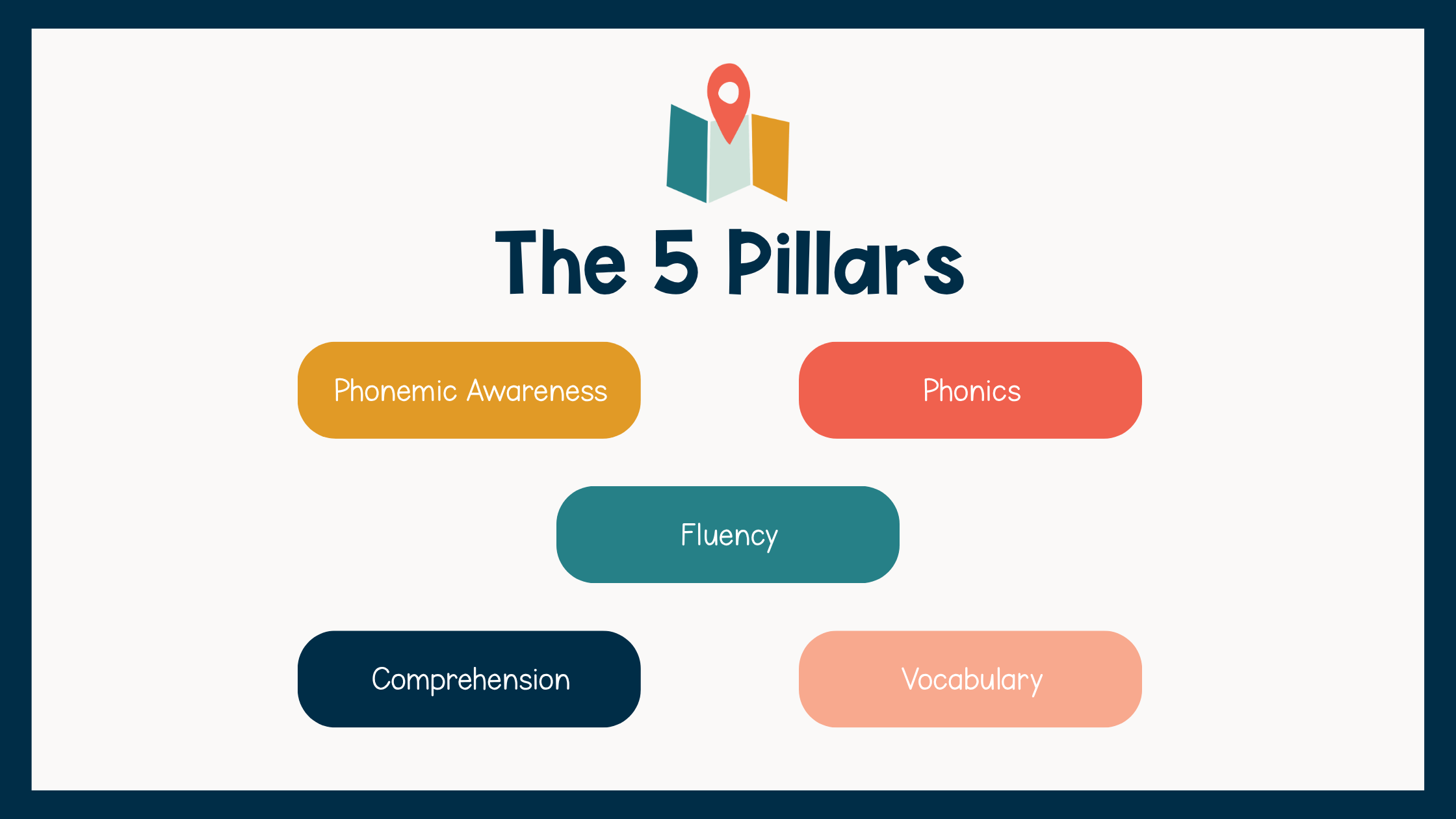
We know strong literacy instruction includes phonemic awareness, phonics, fluency, vocabulary, and comprehension. But here’s where teachers get stuck—not all of those components need equal time, especially in K–2.
In the early grades, students are learning how to read. That means your literacy block should prioritize word recognition—connecting sounds to print, reading words, and writing words—while still intentionally building vocabulary and background knowledge.
If you’re unsure how to balance those pieces, I break this down more in this podcast:
Structuring Your Literacy Block: Episode Number 46
How to Structure a Literacy Block (A Simple Approach)
Instead of trying to fit everything in separately, I want you to start thinking about your literacy block as a simple, repeatable structure.
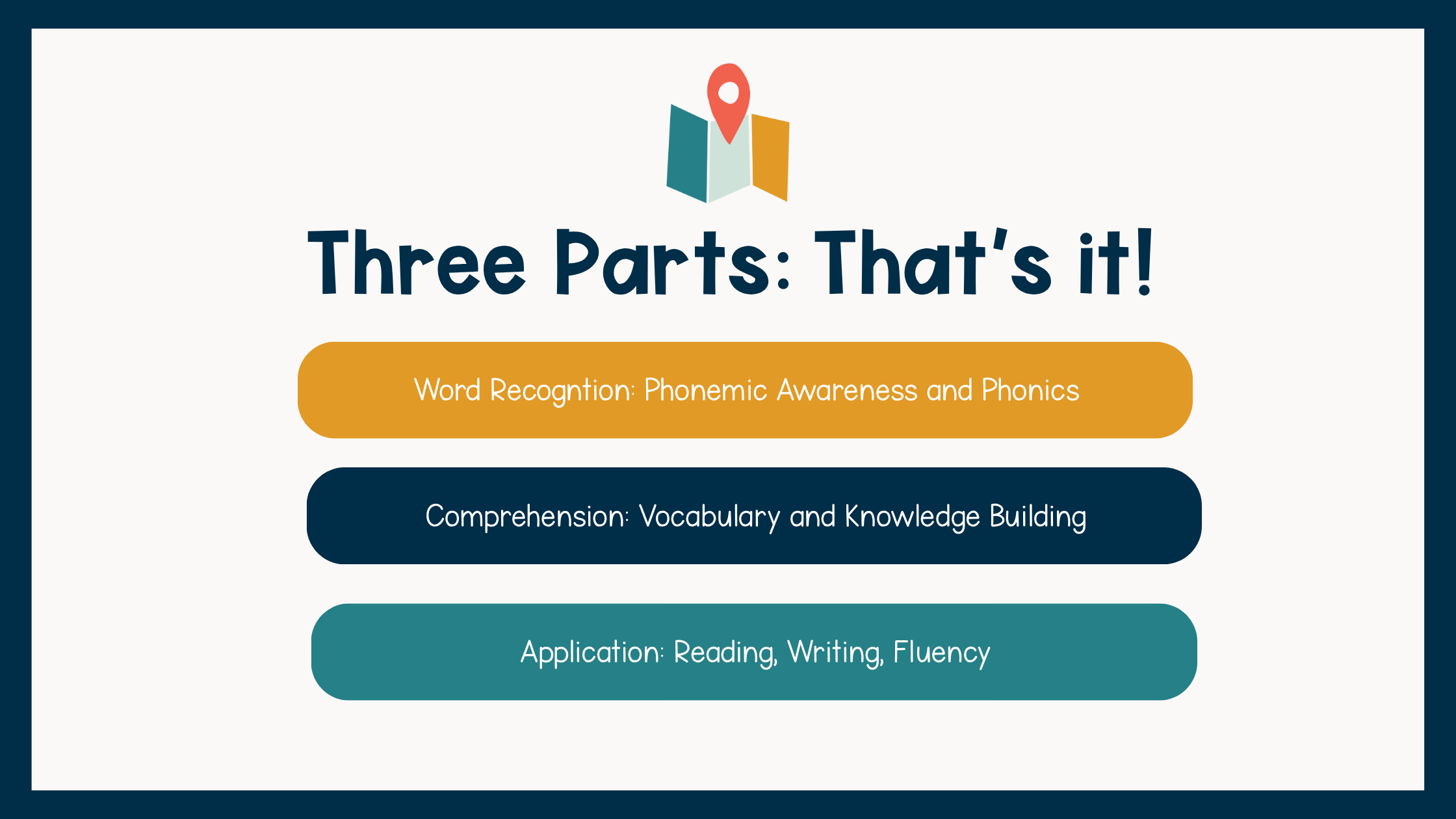
At its core, your block really comes down to three parts:
word recognition (phonemic awareness + phonics)
language comprehension (vocabulary + knowledge building)
application (reading and writing)
That’s it.
You don’t need something new every day. You need something that works—and that you can repeat consistently. Because the structure stays the same, and the skill changes.
If small group instruction is part of your block (which it should be), this structure becomes even more important. I walk through that here:
The 3-Part Small Group Framework That Actually Works
Why Consistency Matters More Than Fidelity in Your Literacy Block
This is where I see teachers overcomplicate things the most—and honestly, it makes sense why. For so long, we’ve been told to implement programs with fidelity. Follow the lesson exactly. Use every component. Don’t skip anything. And while that guidance comes from a good place, it can also create a lot of pressure.
Because when you’re trying to do everything exactly as written across multiple programs in one block of time, something has to give. And more often than not, what gives is consistency.
So it’s worth pausing and asking a different question:
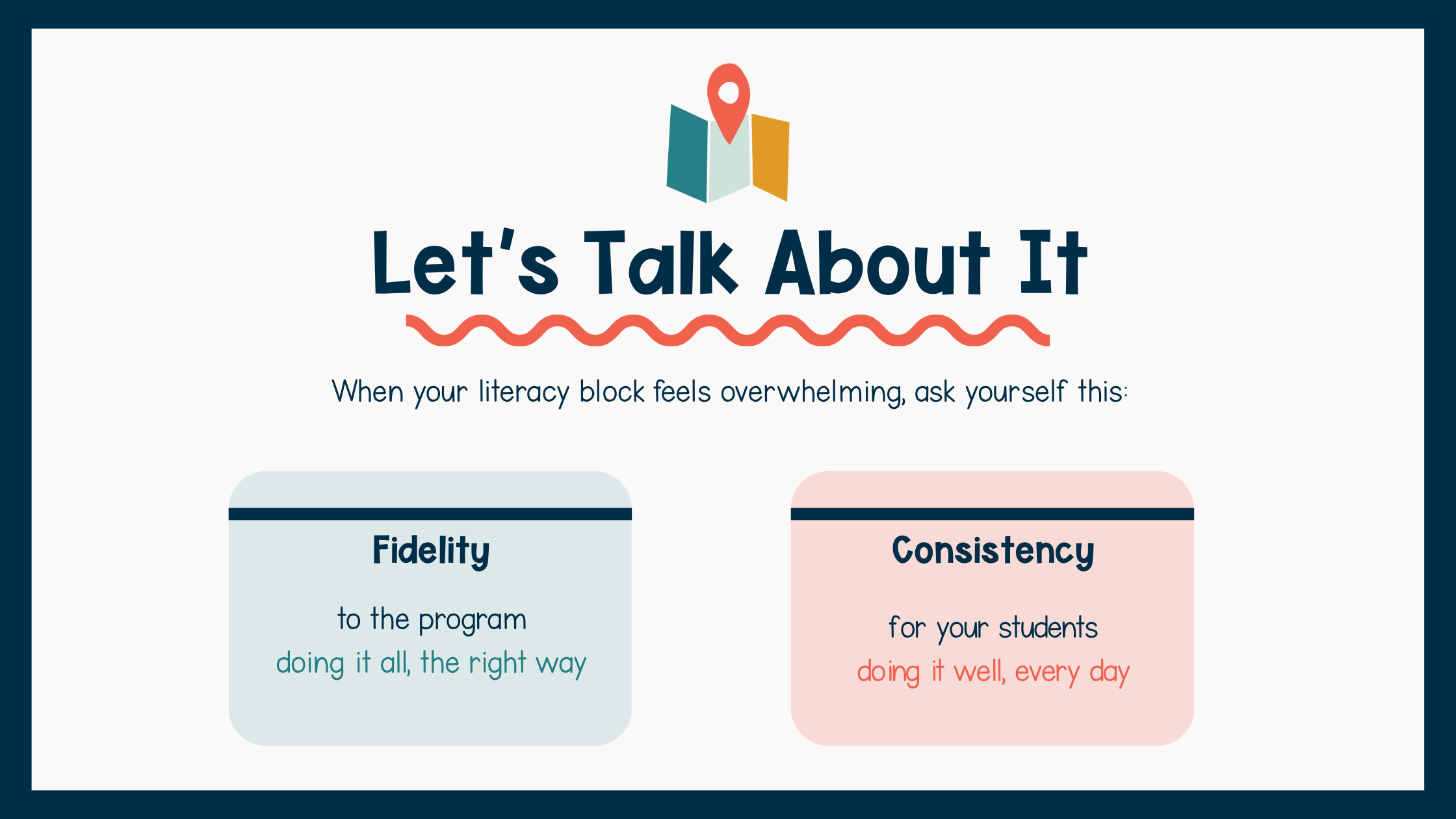
Is fidelity to a program more important than consistency in your instruction?
When teachers try to stay loyal to every program, instruction can start to feel rushed and inconsistent. One day looks different from the next. Pieces get squeezed in or dropped depending on time. And even though everything being used is technically “right,” it doesn’t stick.
Students don’t benefit from perfect implementation once in a while. They benefit from clear, predictable instruction every single day.
When routines stay the same and the structure is familiar, students aren’t spending energy figuring out what to do—they’re able to focus on what they’re learning.
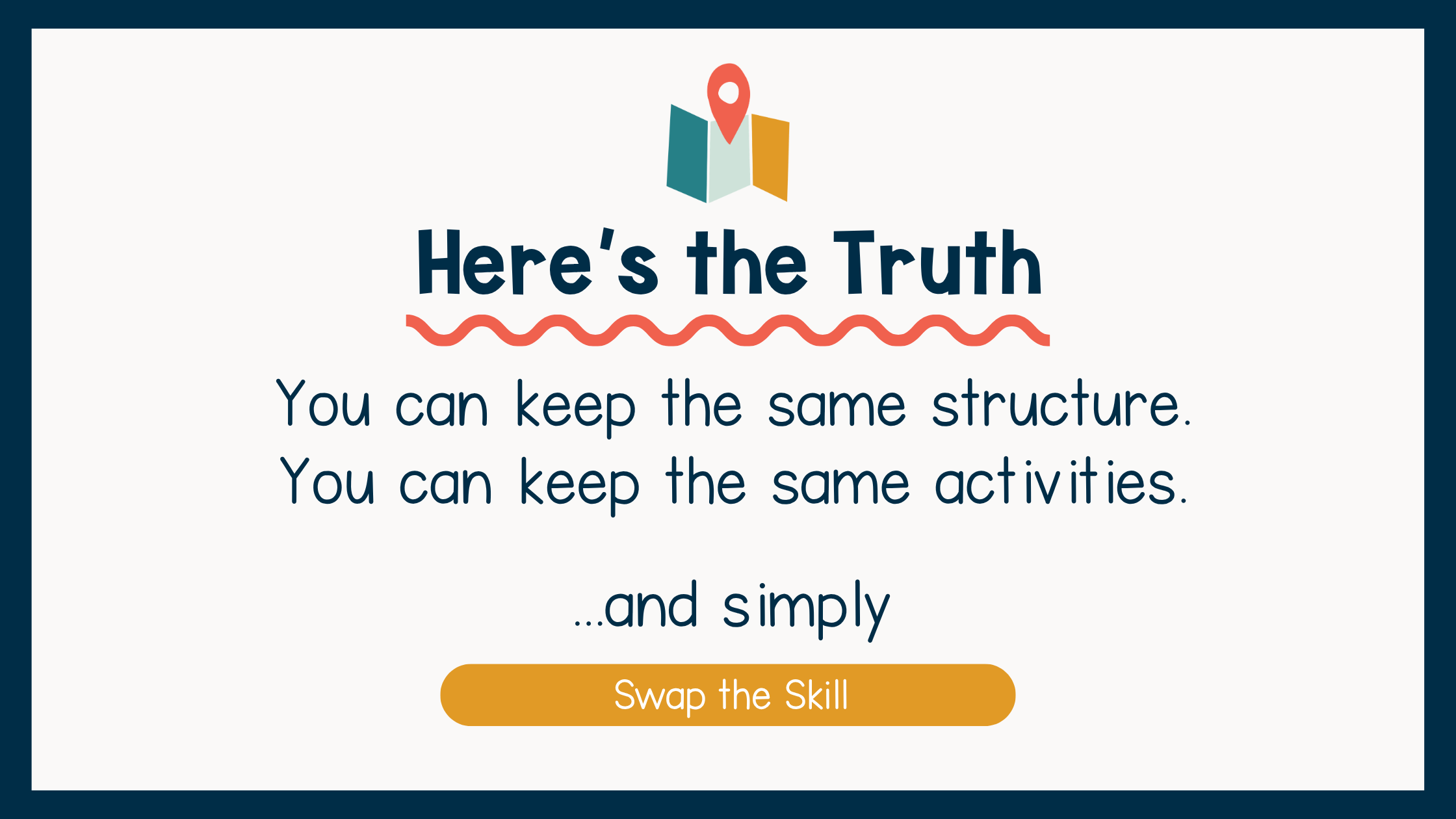
You can keep the same structure.
You can keep the same types of activities.
…and simply swap the skill.
That’s what helps you:
reduce planning time
increase consistency
build independence
Programs can guide us, but they aren’t the goal. The goal is learning.
Your loyalty is not to the program. Your loyalty is to your students.
And once you start thinking that way, it naturally leads to the next step—letting go of what isn’t actually serving your instruction.
What to Stop Doing in Your Literacy Block
If your literacy block feels overwhelming, it may not be about what you need to add. It may be about what you need to let go of.
This is the part that can feel uncomfortable, especially if you’ve been trying to do everything “the right way.” But holding tightly to every piece of every program can actually be what’s making things feel unsustainable.
Sometimes, simplifying your literacy block means giving yourself permission to step back and rethink what’s actually working.
You might need to let go of:
trying to do every part of every program
feeling like you have to follow everything exactly as written
constantly changing activities just to keep things fresh
overpacking your schedule to “fit it all in”
Because when everything is prioritized, nothing really is.
Those choices don’t lead to stronger instruction. They lead to noise—where students are exposed to a lot, but don’t have the time or consistency to actually learn it deeply.
When you start letting go of what isn’t sustainable, you create space for what matters most. Instruction becomes clearer. Routines become more consistent. And your literacy block starts to feel manageable again.
How to Simplify Your Literacy Block Starting Now
As you start thinking about next year, I don’t want you walking away with a longer to-do list. I want you to feel like you have permission to simplify.
Start by asking yourself:
What can I repeat daily?
What structure will I use consistently?
What actually matters most for my students right now?
Because once your literacy block becomes consistent, everything else starts to fall into place. Small groups become more targeted. Students build confidence. Skills start to stick.
And most importantly—you feel less overwhelmed.
Final Thoughts
If your literacy block felt overwhelming this year, don’t assume the answer is to do more next year.
Instead, consider this:
What if the answer is to do less—but do it consistently?
Because strong literacy instruction isn’t about doing more.
It’s about doing the right things, consistently, within aligned systems.
And that is the entire heart behind the Route2Reading Roadmap.
Not creating more work for teachers.
Not adding more disconnected literacy activities.
Not handing teachers one more random small-group idea and hoping it somehow solves the overwhelm.
Because strong small groups are not built through:
• endless prep
• complicated rotations
• constantly reinventing instruction
They are built through:
• intentional grouping
• aligned instruction
• repeatable routines
• strong phonics instruction
• progress monitoring
• systems that support both students and teachers
If you're spending this summer trying to figure out how to make small groups feel more effective, more manageable, and less overwhelming, I'd love to invite you to my free workshop:
The Route2Reading System: A Simple Framework for Grouping, Planning, and Small-Group Instruction
Inside this free training, I'll walk you through the exact framework I use to help teachers:
✔ Understand their data
✔ Create meaningful groups
✔ Plan instruction efficiently
✔ Build repeatable routines
✔ Create small-group systems that actually work
Most teachers don't need more literacy activities.
They need a system.