
Why Students Know Phonics but Struggle When Reading
“But I know they know it!”
I cannot tell you how many times I have heard a teacher say this.
“She knows her short vowels.”
“He can blend these words during phonics.”
“They did this perfectly with me yesterday.”
And yet, we put a book in front of that same student and suddenly it looks like the phonics skill disappeared. Maybe the student can read ship on a word list but gets stuck when ship appears in a sentence. Maybe they can blend CVC words beautifully during your phonics lesson, but the minute you open a decodable book, they start guessing. Or maybe they know every sound in the word, but reading connected text is still painfully slow and laborious. It can be incredibly frustrating because we think:
I taught this. They know this. Why aren't they using it when they read?
The answer is important.
Knowing a phonics skill in isolation and being able to automatically apply that phonics skill while reading connected text are not the same thing.
And that space between the two is where some of our most important reading instruction happens.
Why Phonics Skills Don't Always Transfer to Reading
Think about what we ask a beginning reader to do when reading connected text. During explicit phonics instruction, we have removed a lot of the complexity. I might put the word chat in front of a student. Their entire job is to decode that word. But now put chat into a book.
Suddenly, that student is tracking print across a page, moving from word to word, recognizing high-frequency words, applying multiple phonics patterns, holding the sentence in memory, reading with enough fluency to maintain meaning—and trying to understand what is happening in the story.
That is a very different task.
So when a student demonstrates a phonics skill during instruction but struggles to apply that skill while reading, my first thought isn't:
They didn't learn it.
My question becomes:
Where is the breakdown between learning the phonics skill and applying it in connected text?
That is a much more useful question.
Students Need a Bridge From Phonics Instruction to Connected Text
I think sometimes we unintentionally treat phonics instruction and reading as two separate parts of the literacy block. We teach the phonics lesson. Students blend some words. Maybe they complete some word work. Then we put those materials away and move on to reading. But our earliest readers need us to explicitly help them make the connection between phonics and reading connected text. If I just taught sh, I don't want students only reading ship, shop, and shut from a word list. Eventually, I want them to encounter those same phonics patterns in sentences and books and think:
Oh! This is the same thing I just learned. I know what to do here.
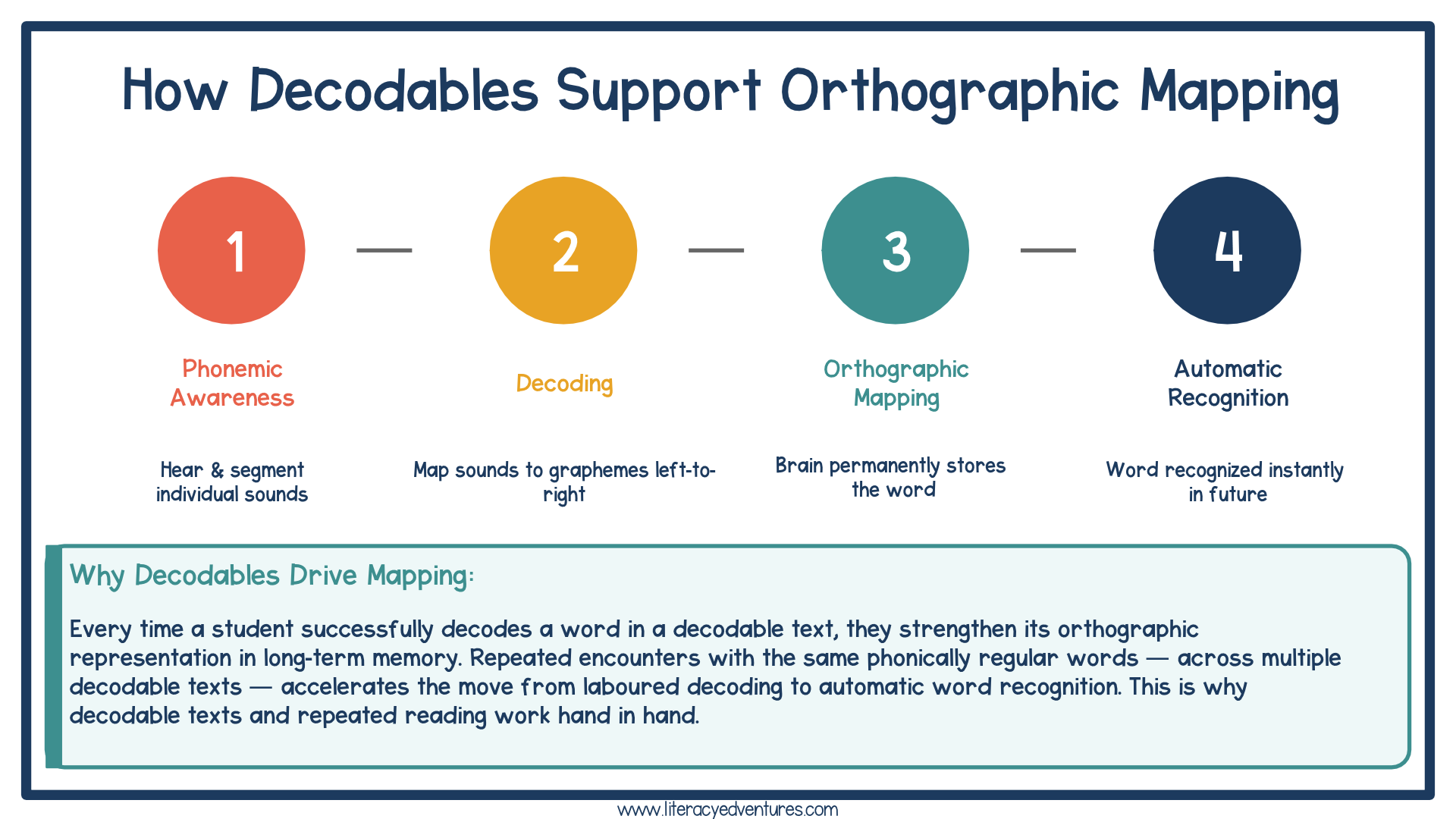
That transfer doesn't always happen automatically. We have to create opportunities for it. This is one reason I believe decodable texts are so powerful for beginning readers. A well-matched decodable text gives students a controlled place to take the phonics knowledge they are developing and actually use it to read. I often call decodable texts the practice field. We aren't trying to keep students there forever. We are giving them a place to practice the decoding skills they will eventually need everywhere.
Match Decodable Texts to Your Phonics Instruction
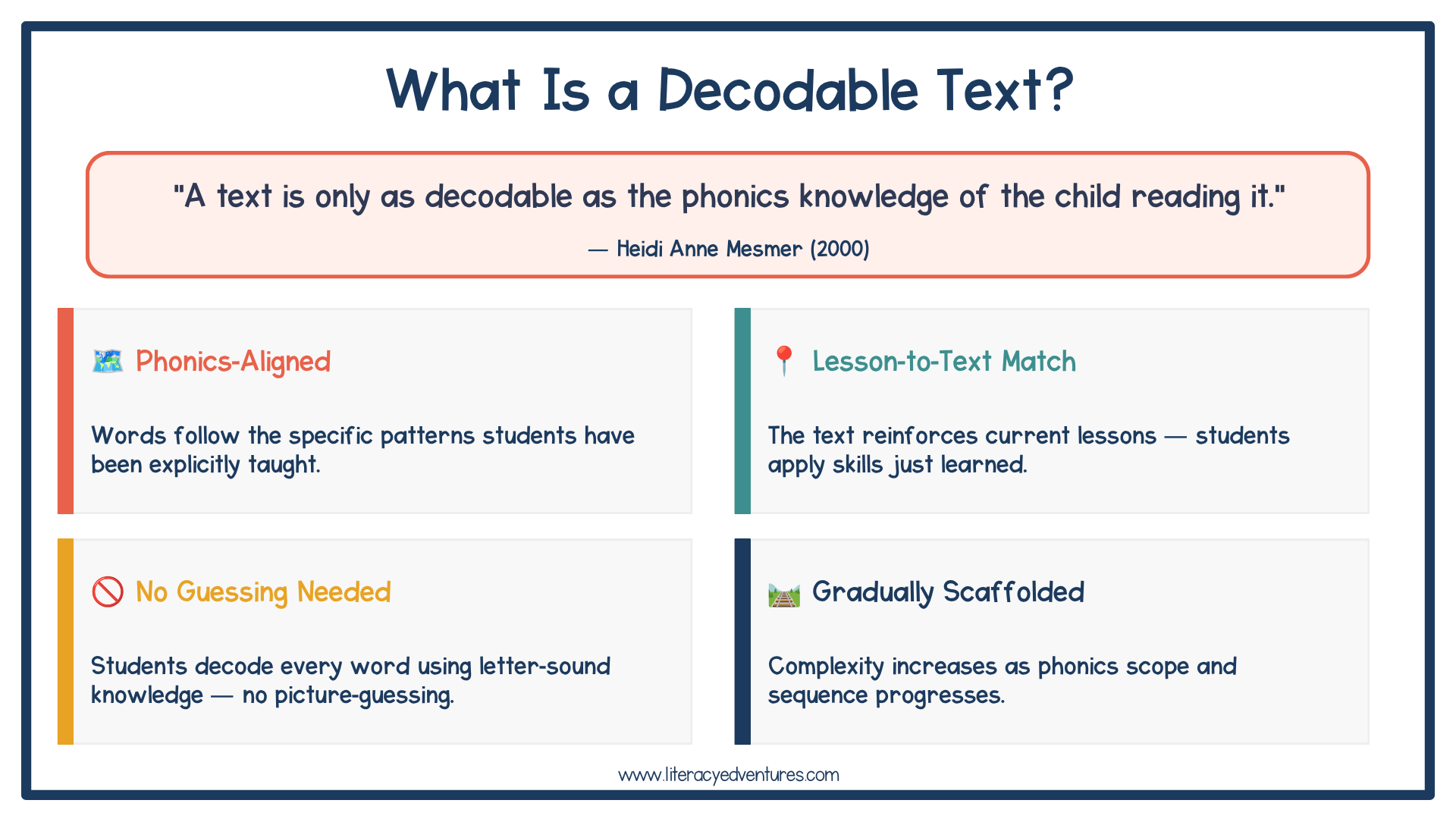
Here's where we have to be careful. Simply handing a student a book labeled “decodable” doesn't guarantee that transfer will happen. The decodable text has to match what the student has already learned. If I have taught short vowels and then hand a student a text filled with vowel teams, r-controlled vowels, and phonics patterns they haven't learned yet, I shouldn't be surprised when they struggle or begin guessing. I've created a problem the student doesn't yet have the tools to solve. Instead, I want decodable books to provide lots of opportunities for students to encounter the phonics patterns we have already taught.
That allows a beginning reader to experience something incredibly important:
“I can figure this out.”
They see the graphemes.
They connect them to sounds.
They blend the word.
They read the sentence.
And every time they successfully do that work, we are strengthening the connection between explicit phonics instruction and actual reading.
Use Words, Phrases, and Sentences Before Decodable Text
This is one of the simplest shifts we can make when students know phonics skills but struggle to use them while reading.
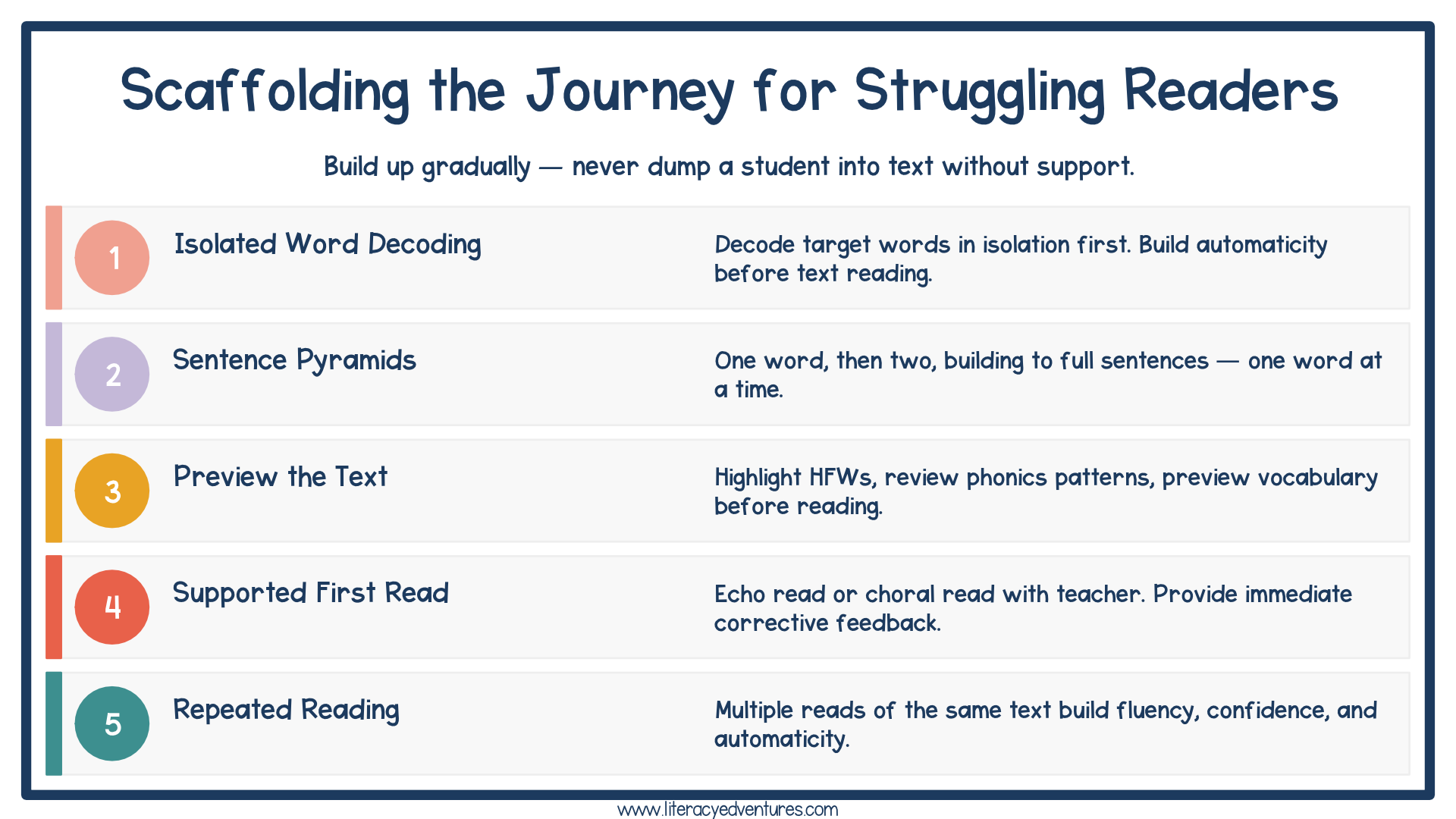
If a student is having difficulty transferring a phonics skill into connected text, build the bridge in smaller steps.
Instead of moving directly from:
phonics lesson → decodable book
try:
word → phrase → sentence → connected text
Let's say you've been working on words with -ck.
Students might begin by decoding individual words:
back
pick
rock
Then move into phrases:
back in the sack
pick up the rock
a black duck
Then sentences:
Jack put the rock in his sack.
And finally, students encounter that same phonics pattern throughout a decodable text. Now we aren't asking the student to make one enormous leap. We are gradually increasing the amount of language they have to manage while keeping the target phonics skill familiar. For some struggling readers, that little bridge makes an enormous difference.
Watch What Students Do When Reading Decodable Text
This is also where I want teachers to become really good observers. If a student can decode words in isolation but struggles once the book opens, watch what happens.
Do they stop looking all the way through the word?
Do they revert to looking at the picture?
Do they read the first sound and guess?
Do they know the letter-sound correspondences but struggle to blend the sounds together?
Can they decode the word correctly but have to work incredibly hard every single time it appears?
Those behaviors tell us something. The answer isn't always more phonics instruction. Sometimes the student does know the phonics skill. They just need more opportunities to successfully retrieve and apply it while reading. That distinction matters. Because reteaching something a child already knows isn't necessarily going to solve a transfer problem. Sometimes students need more supported practice using the phonics skills they already know in connected text.
Repeated Reading Helps Build Automaticity
This is another place where I think we sometimes move too quickly. A student reads the decodable book once and we think:
Great! Next book. But that first reading may have required an enormous amount of cognitive effort. The student was working through the words one by one:
/sh/ /i/ /p/… ship.
/f/ /i/ /sh/… fish.
/sh/ /i/ /p/… ship.
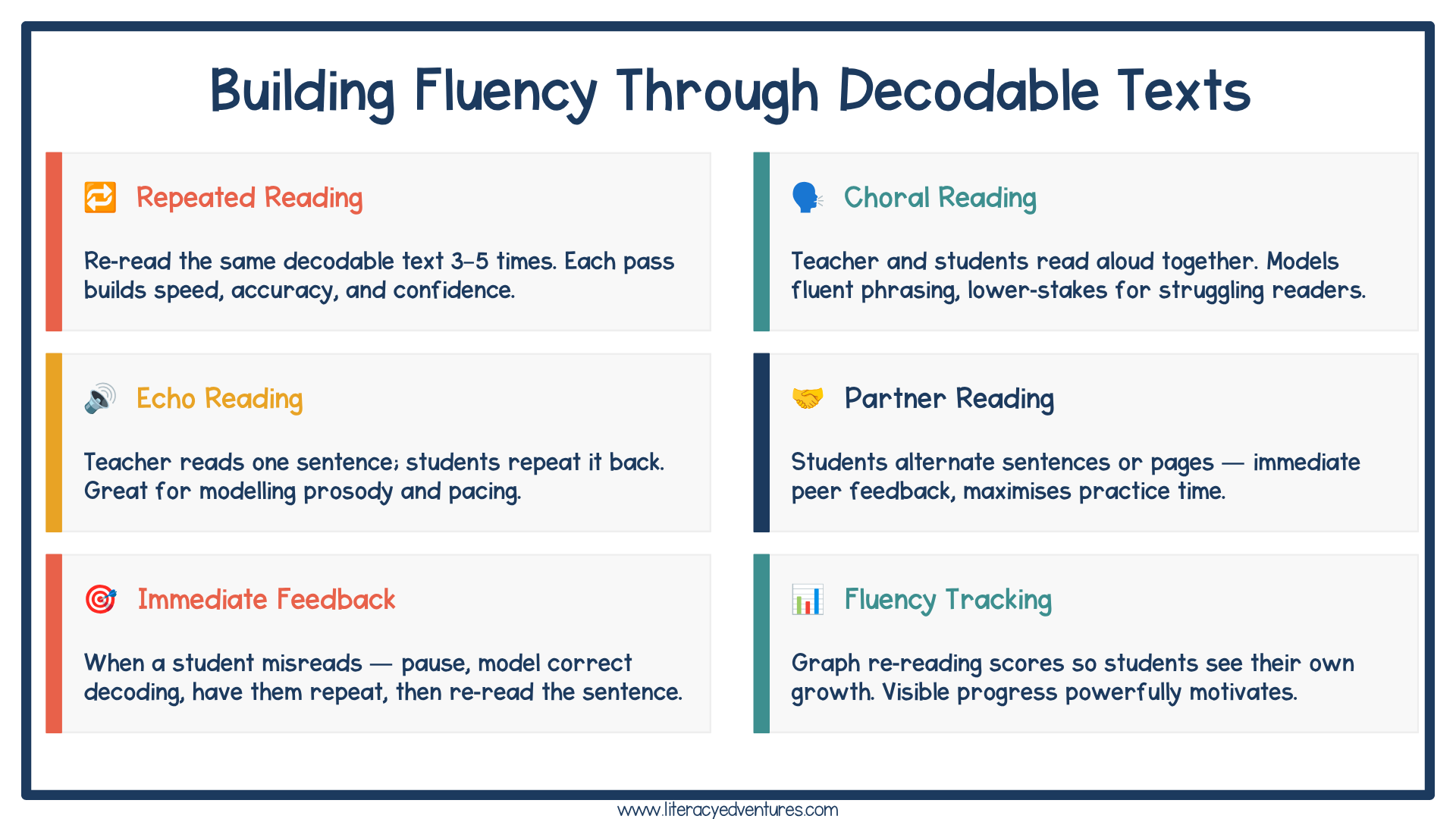
That isn't failure. That is the work of learning to read. But I don't want the student to have to expend that much effort forever.So we read again. The second reading is a little smoother. Then maybe we reread a sentence. We echo read. We choral read. Students read with a partner. They return to the decodable text another day. With repeated successful encounters, decoding begins to require less effort.
We are moving from:
“I can figure this word out.”
toward:
“I know this word.”
And eventually toward:
“I barely even noticed the word because I was thinking about what I was reading.”
That is progress.
Fluency Connects Decoding and Reading Comprehension
Sometimes when teachers hear reading fluency, they immediately think about reading faster. That's not really what I'm talking about here.
I'm talking about the point when decoding becomes automatic enough that the student can devote more attention to meaning. Early on, a child may need tremendous effort to decode a sentence. As word recognition becomes more automatic, the reading becomes smoother.
Accuracy improves.
Phrasing improves.
Expression begins to appear.
And most importantly, the child has more mental space available to think: What is this actually saying? That is why I don't see phonics, decodable texts, reading fluency, and comprehension as four unrelated pieces of reading instruction. They are connected. We are building a reader.
What to Do When Students Know Phonics but Can't Apply It While Reading
If you have a student who “knows it” during phonics but isn't using the skill during reading, resist the urge to immediately start the phonics lesson over from the beginning. Instead, figure out where the bridge is breaking down. Start with a few words containing the target phonics pattern. Then put those words into phrases. Move into sentences. Finally, put the student into a well-matched decodable text containing that same pattern. And once they can read it accurately?
Don't immediately move on.
Read it again.
Use repeated reading, echo reading, choral reading, or partner reading to give students additional opportunities to practice accurate decoding and build fluency. Let them experience what it feels like when something that was difficult yesterday becomes easier today. That feeling matters. Because eventually the student who painstakingly sounded out every word begins recognizing more and more words automatically. The pauses get shorter. The sentences get smoother. And their attention begins shifting away from figuring out the words and toward thinking about what those words mean. That's the goal.
The Phonics Skill Didn't Disappear
So the next time you find yourself saying, “But I know they know this!” you may be absolutely right.
The student may know the phonics skill. They may simply not be able to apply it automatically in connected text yet.
And that little word—yet—changes our instructional response.
We don't abandon explicit phonics instruction. We don't abandon decodable texts. And we certainly don't wait to expose students to rich language, vocabulary, knowledge, and incredible books through read-alouds.
We build the bridge between all of them.
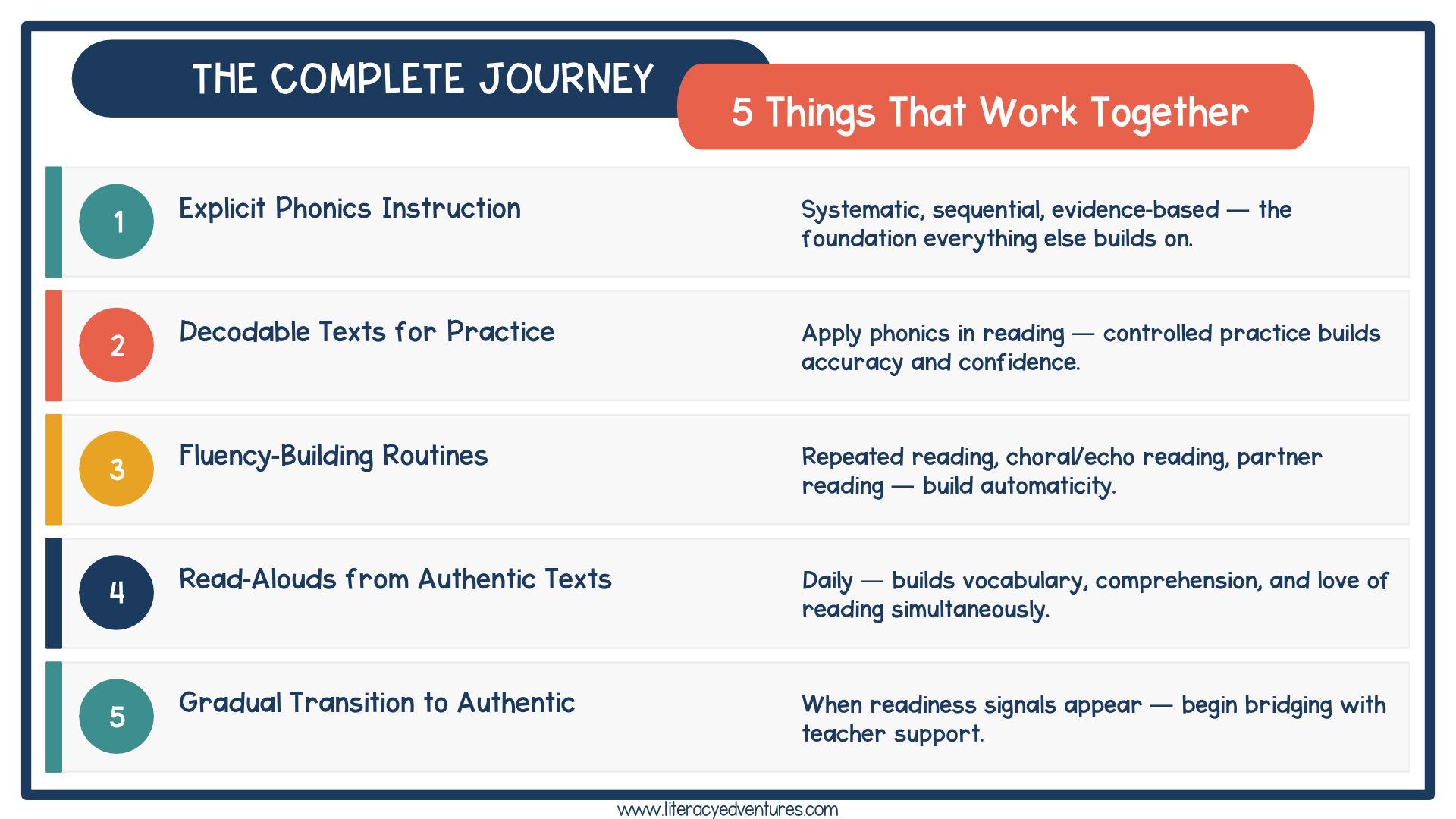
Teach the phonics skill explicitly. Practice it in words. Expand into phrases and sentences. Apply it in decodable and connected text. Reread until decoding becomes increasingly automatic. Then keep moving forward.
Because ultimately, I don't want students to become really good at reading word lists. I want all of that phonics knowledge to become something much bigger.
I want it to become reading.
But When Do We Move Beyond Decodable Text?
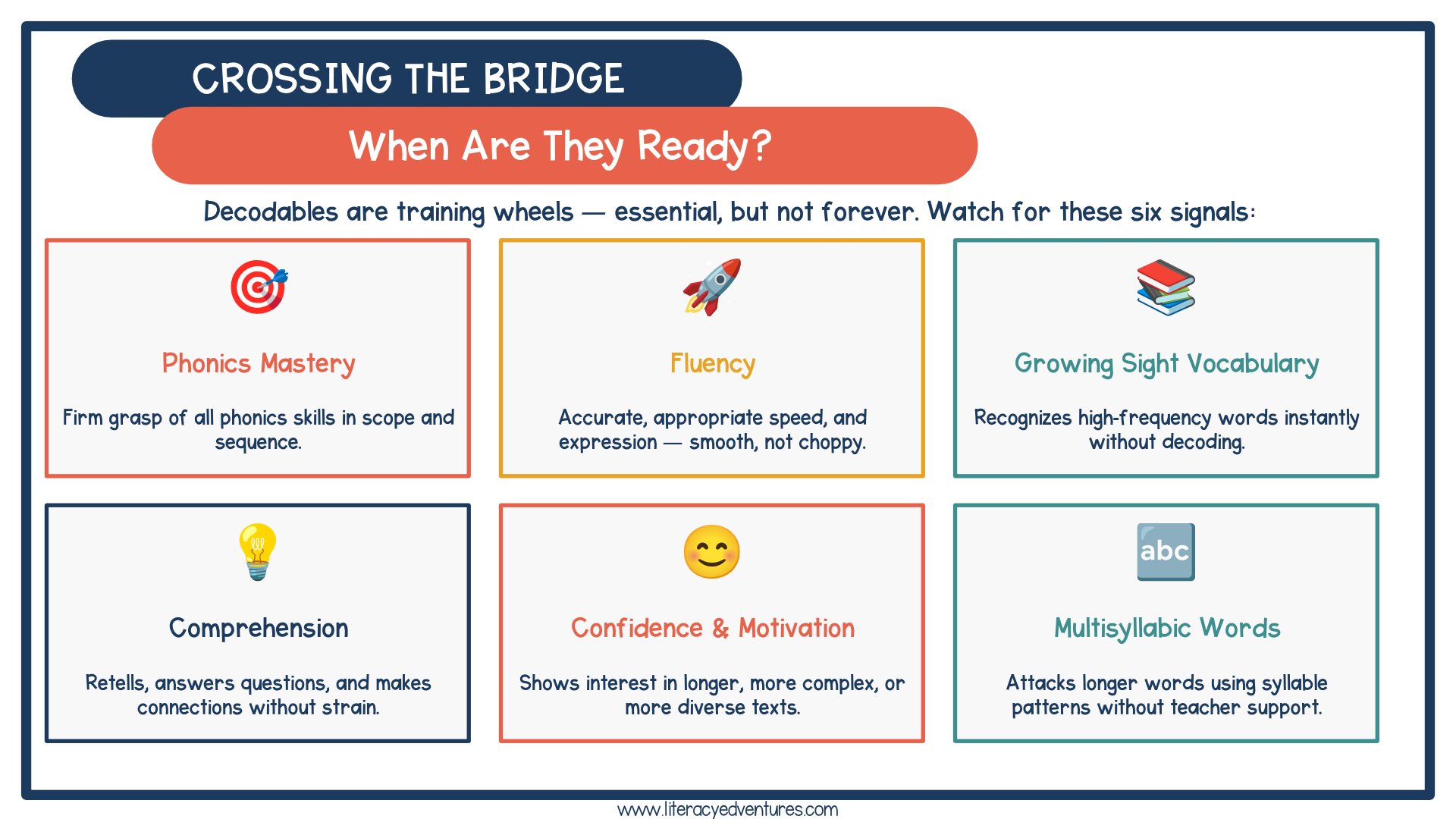
One more thing: decodable texts aren't the destination. I like to think of them as the training wheels of early reading—an important place for students to practice applying the phonics skills they've learned while those skills become increasingly automatic.
As students begin reading accurately and smoothly, recognizing more words automatically, tackling longer words independently, and maintaining meaning while they read, we can gradually loosen the control of the text. We aren't waiting for some magical moment when a child is suddenly “done” with decodables. A student might still use a decodable text to practice a newly taught phonics pattern while also reading increasingly authentic text elsewhere in the day.
Think of the progression as:
Decodable text → Fluency → Increasingly authentic text
Fluency is the bridge. It's one of the clearest signs that all of that decoding work is becoming automatic enough for students to devote more attention to meaning.
Because ultimately, the goal was never to create really great readers of decodable books. The goal is to create readers.
Give Them a Place to Practice
If your students can read the words during phonics but fall apart when those same patterns show up in a book, they need more practice applying the skill in connected text.
That's exactly what my decodable texts are designed to provide.
Each text gives students a chance to take the phonics skills you've explicitly taught and actually use them while reading—making them perfect for small groups, intervention, partner reading, and repeated reading.
And right now, my Decodable Texts are 50% off.
→ Shop the 50% Off Decodable Texts
Because knowing the phonics skill is an important first step.
Using it to read? That's the goal.

Everyone loves a good decodable! Students and teachers alike. These decodables come for all phonics skills, so you can be sure it’s meeting the needs of each of your students.
One of the best aspects about these decodables is that they come with goals for the week. Students can read through these decodables and then check off the day of the week they read them. As they move on through the week, students will become more confident and more fluent as they go along.
Additionally, students can take their time and go at their own pace since the decodables themselves are divided up into three parts. You can choose to have the students read just one part a day and gradually move onto all three parts, or start them off with all three right away.
GET ALL ACCESS NOW!
OR

1-Minute Decodable Word Fluency Drills are timed reading activities that help students practice reading decodable words based on specific phonics patterns (e.g., short vowels, digraphs). Each drill contains 30 words, building fluency and speed.
Everyone loves a good decodable! Students and teachers alike. These decodables come for all phonics skills, so you can be sure it’s meeting the needs of each of your students.
One of the best aspects about these decodables is that they come with goals for the week. Students can read through these decodables and then check off the day of the week they read them. As they move on through the week, students will become more confident and more fluent as they go along.
Additionally, students can take their time and go at their own pace since the decodables themselves are divided up into three parts. You can choose to have the students read just one part a day and gradually move onto all three parts, or start them off with all three right away.
GET ALL ACCESS NOW!
OR

Build decoding, fluency, and comprehension—all in one aligned resource.
This set of fully decodable passages helps young readers strengthen the foundational skills that matter most: decoding with accuracy, reading with fluency, and responding with understanding. Each passage aligns to a specific phonics skill—like short vowels, blends, digraphs, or r-controlled vowels—so students can read with confidence and purpose.

Struggling with fluency is a normal process in a student’s reading journey. Students need to process a lot in order to master it and become proficient readers. This Fluency Build-Up activity helps them reach that end goal!
GET ALL ACCESS NOW!
OR

Decodable books and passages are critical to your student’s literacy journey. This decodable books and passages MEGA BUNDLE is aligned with the Science of Reading and include topics that interest students. These books and passages were carefully created and controlled by phonics skills that have previously been taught on our scope and sequence. As your students’ phonics skills grow, these decodable books and passages will grow with them. Embracing the power of decodables will help create successful and confident readers for years to come.
GET ALL ACCESS NOW!
OR