How to Build Reading Fluency: A 5-Day Routine That Works
You've taught the phonics patterns. Your students can decode words in isolation. Some are even reading decodable passages with pretty good accuracy.
But then you hand them a new passage.
Suddenly, they're reading word by word. They're stopping at words you KNOW they can decode. Their reading sounds choppy, and by the time they reach the end of a sentence, they've forgotten what they just read.
Sound familiar?
If you've been wondering how to build reading fluency, you're not alone. It's one of the most common challenges I hear from teachers.
Here's something I want us to think about.
Just because a student can decode words doesn't mean they can read fluently. And just because a student needs fluency instruction doesn't mean they need to stay in decodable text.
Some students absolutely need continued practice with carefully controlled decodable passages. But others are ready for more. They're ready to apply their decoding skills to grade-level text, encounter richer vocabulary, and develop the automaticity and expression needed to become proficient readers.
What they need is intentional fluency instruction.
And the good news? It doesn't have to be complicated!
Today, I'm sharing a simple 5-day reading fluency routine that incorporates word work, teacher modeling, repeated reading, corrective feedback, and comprehension.
It's a routine you can use during small-group instruction with different types of text, depending on what your students need.

What Is Reading Fluency and Why Does It Matter?
When teachers hear the word fluency, they often think about reading speed.
How many words can a student read in one minute? Are they meeting the benchmark? How can we get them reading faster?
But reading fluency is SO much more than speed.
Fluent reading involves three important components:
Accuracy: Reading words correctly.
Automaticity: Recognizing words efficiently without having to laboriously decode every single word.
Prosody: Reading with appropriate phrasing, expression, and attention to punctuation.
These components work together to support reading comprehension.
Think about it. If a student is using nearly all of their mental energy to figure out individual words, how much attention do they have left to think about what the text actually means?
Not much!
As word recognition becomes automatic, students have more cognitive space available to focus on understanding what they're reading.
But here's where I think we sometimes miss the mark……
We expect fluency to develop simply because students are reading more.
And while reading practice is important, some students need much more intentional instruction.
They need to hear fluent reading modeled. They need opportunities to practice with support. They need immediate, specific feedback. And they need repeated opportunities to read connected text successfully.
That's exactly what we're going to build into this routine.
Why Repeated Reading Alone Isn't Enough
Let's say you pull a group of students for fluency instruction. You hand everyone a passage, ask them to read it, and then have them read it again. Maybe you time them. Maybe you have them practice with a partner. Maybe you send the passage home for additional practice.
But here's my question.
What did we actually teach?
Repeated reading is a well-supported fluency strategy, but repetition alone doesn't guarantee that students are improving the skills we want them to develop. We don't want students simply becoming faster at reading one familiar passage. We want them becoming more proficient readers who can apply those skills to NEW text. That's why effective fluency instruction needs to include more than repeated reading.
Before students read, we can prepare them for challenging words.
During reading, we can model fluent reading and provide immediate corrective feedback.
After reading, we can discuss meaning, revisit challenging sentences, and provide opportunities for increasingly independent practice.
The goal isn't just to get students reading a passage faster. It's to help them become more accurate, automatic, and expressive readers.
And that requires instruction.
How to Choose the Right Text for Fluency Instruction
Before I share the five-day routine, I want to talk about something important.
Not every student needs the same type of text. But that doesn't mean we should limit what students have access to.
For students who are still developing foundational decoding skills, decodable passages provide valuable opportunities to apply previously taught phonics patterns. We want students practicing with text they can read successfully, not guessing their way through words they haven't learned to decode.
But here's the other side of that conversation.
Some students are ready for grade-level text! And even students who struggle with decoding can benefit from opportunities to engage with grade-level text when appropriate instructional support is provided.
I recently had the opportunity to sit down with Dr. Tim Shanahan on the Route2Reading podcast to discuss a topic that really got me thinking: Leveled Reading, Leveled Lives. One of the biggest takeaways from our conversation was that we need to be careful about how reading levels influence the opportunities we provide students. When we consistently give struggling readers easier texts simply because of their reading level, we may unintentionally limit their exposure to the vocabulary, knowledge, language structures, and content their peers are experiencing.
And over time, those missed opportunities can add up.
The problem isn't necessarily the leveled books themselves. It's when a reading level becomes a ceiling on what students are allowed to read and learn.
Now, does that mean we hand every student a challenging grade-level passage and expect them to read it independently?
Absolutely not!
As Tim emphasized in our conversation, access to challenging text doesn't mean removing support. It means being intentional about the support we provide. That might look like preparing students for challenging words, explicitly teaching vocabulary, building background knowledge, modeling fluent reading, unpacking complex sentences, or providing supported repeated reading opportunities.
Sound familiar?
That's exactly what a strong fluency routine can help us do!
For some groups, we'll use decodable passages aligned with their phonics instruction. For others, we'll use grade-level informational or literary text. And for students who aren't yet able to read grade-level text independently, we can still create supported opportunities to engage with it while continuing to strengthen their foundational skills.
We don't have to choose between meeting students where they are and giving them opportunities to grow.
We can do both.
The text may change. The scaffolding may change. But the instructional routine can remain consistent.
And that's one of the things I love most about the approach I'm sharing today.
We're not lowering expectations. We're providing the instruction students need to rise to them.
How to Build Reading Fluency With a Simple 5-Day Routine
One of the biggest questions I hear from teachers is:
What should I actually DO during fluency instruction each day?
And I get it!
You know your students need fluency practice, but figuring out how to organize that instruction can feel like one more thing on an already overflowing plate.
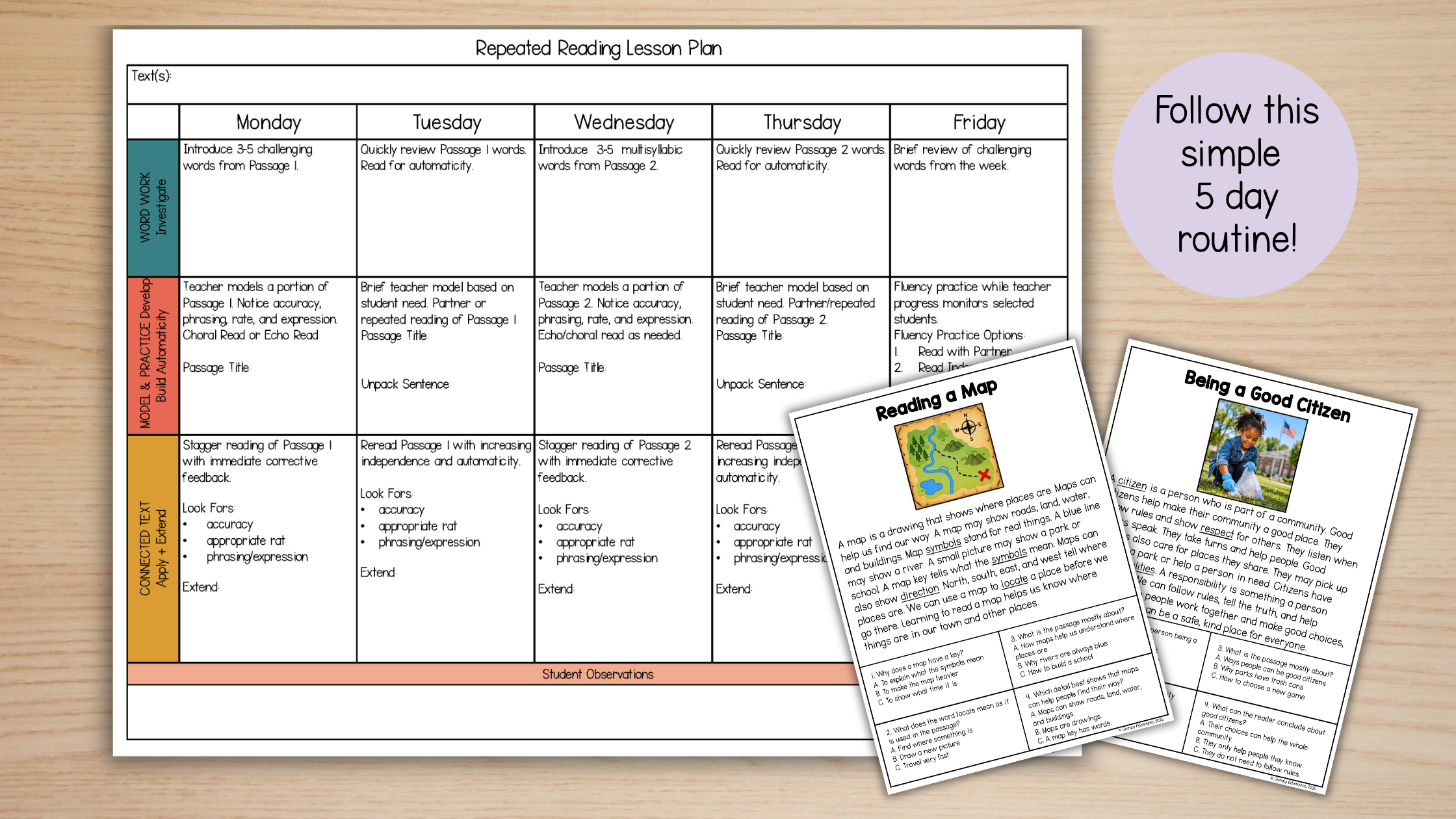
That's why I use a consistent five-day repeated reading routine.
Instead of planning five completely different lessons, I organize instruction around three components:
1. Word Work: Investigate
Before students read, we identify three to five potentially challenging words from the passage. These might include multisyllabic words, less familiar spelling patterns, or words students need to recognize more automatically.
We investigate the words together, providing explicit decoding instruction while also exploring syllable patterns, morphology, and meaning. For example, we might break a multisyllabic word into readable parts, examine a prefix or suffix, or connect a word to others in the same word family.
The goal isn't simply to help students read the word in isolation. It's to build the word knowledge they can apply to other words and connected text.
By taking just a few minutes to investigate challenging words before reading, we're setting students up for greater accuracy, automaticity, and comprehension when they encounter those words in the passage.
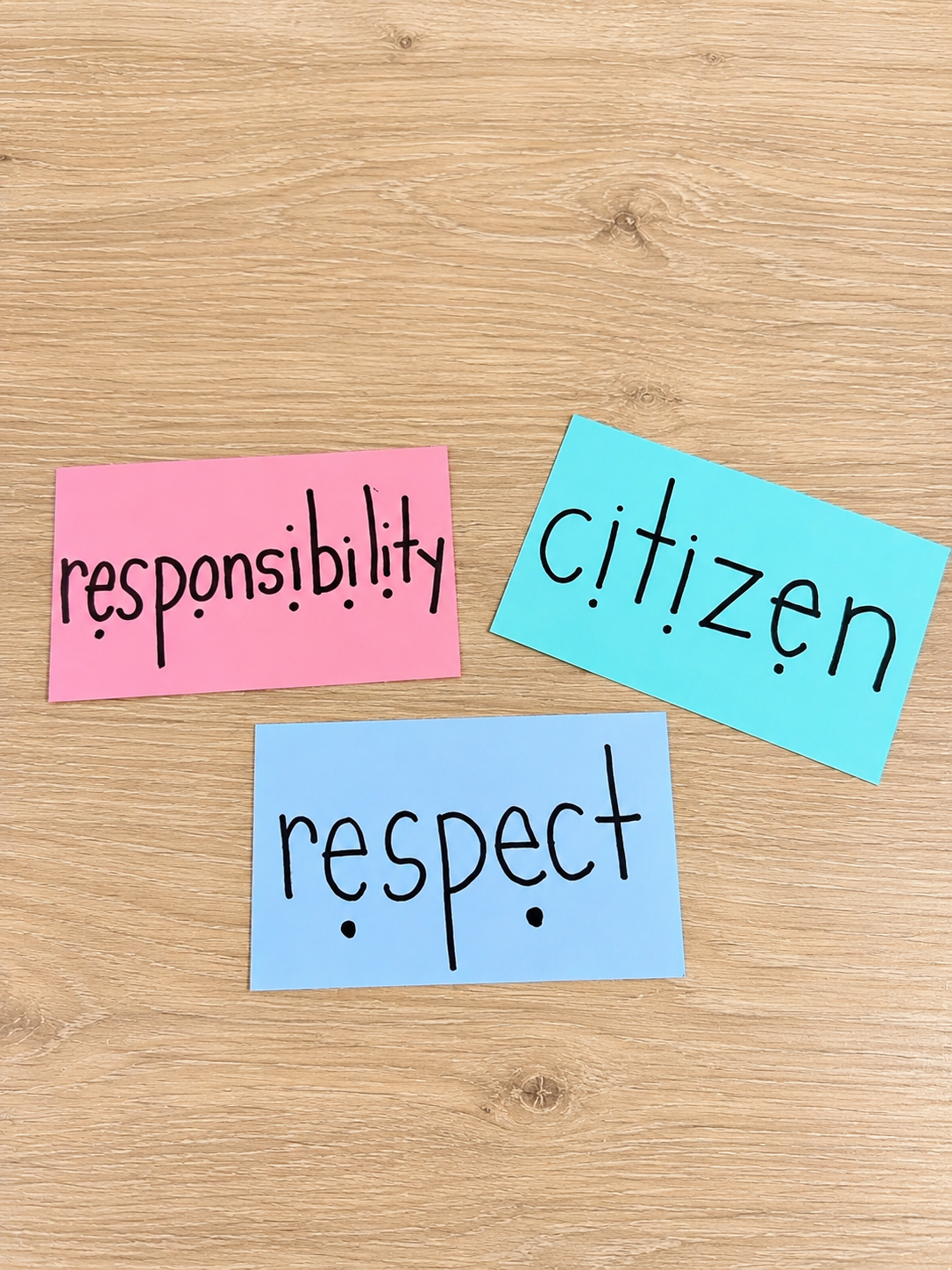
2. Model & Practice: Develop Automaticity
Students need opportunities to hear fluent reading and practice with support. We model appropriate phrasing, expression, rate, and attention to punctuation. Then students participate in echo reading, choral reading, partner reading, or repeated reading, depending on their needs.
3. Connected Text: Apply & Extend
Students apply their word-reading skills as they read connected text. We listen carefully, provide immediate corrective feedback, and create opportunities for increasingly independent reading. We also connect fluency instruction to vocabulary and comprehension. Because ultimately, we're not teaching students to read quickly. We're teaching them to read proficiently so they can understand what they're reading. Now, let's look at how these three components come together across a week.
Monday: Introduce, Model, and Support
Monday is all about setting students up for success. Start by selecting three to five challenging words from your first passage. Rather than simply telling students the words, take time to investigate them together. Have students decode the words, look at syllables, morphemes, endings, etc. Then have them practice reading them accurately. Next, model a portion of the passage. And I don't mean simply reading it aloud! Make your thinking visible.
You might say:
"Listen to how I group these words together. Notice how my voice changes when I reach the end of the sentence."
Then invite students to participate through echo reading or choral reading. Finally, have students read portions of the passage while you listen and provide immediate corrective feedback.
Your goal for Monday: Establish accurate reading and provide a strong model for fluent reading.
Tuesday: Reread With a Purpose
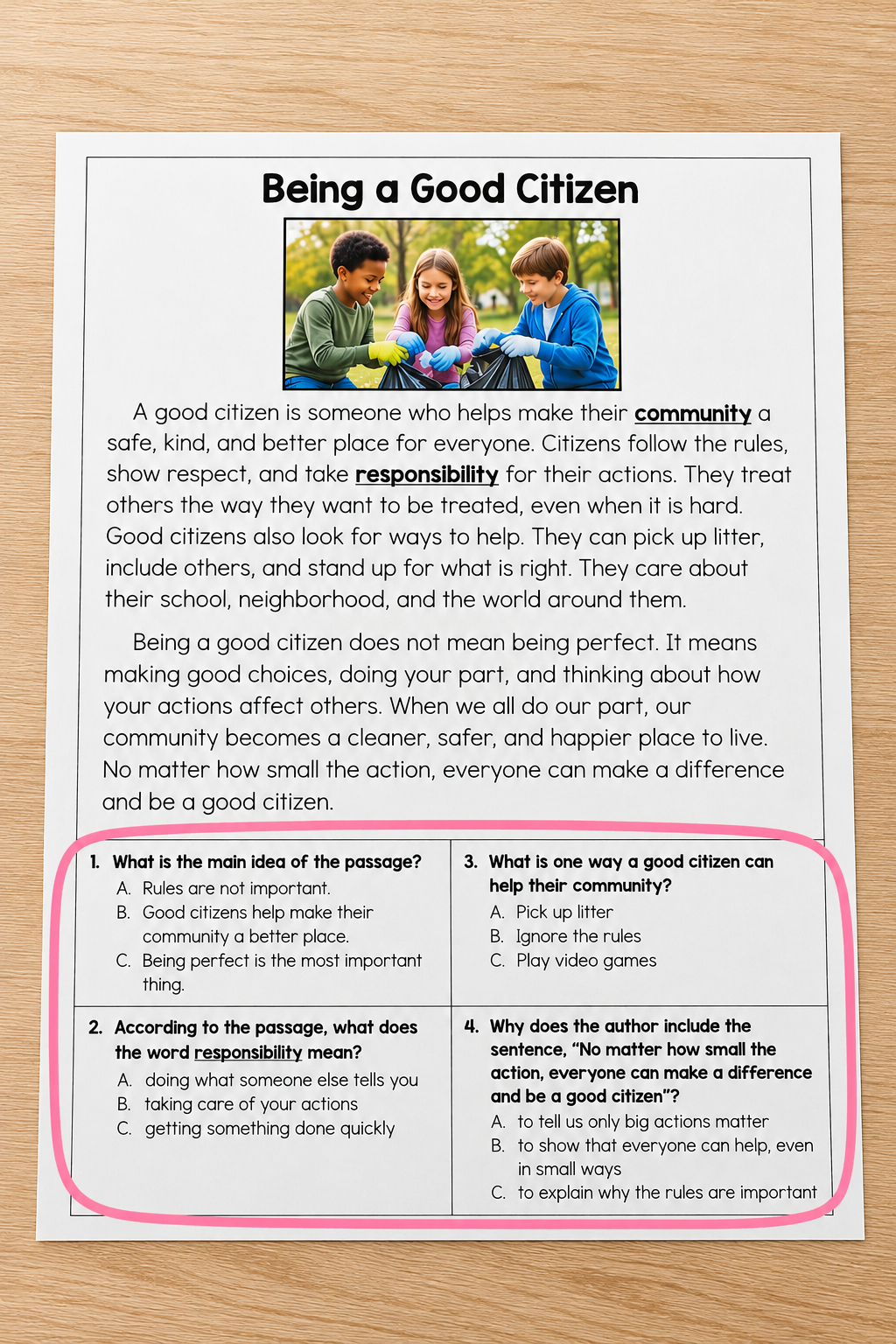
On Tuesday, return to Passage 1. Begin with a quick review of the challenging words from Monday, then provide a brief teacher model based on what you noticed during the previous lesson. Did students struggle with phrasing? Model how to group words into meaningful chunks. Were they rushing through punctuation? Show them how punctuation helps guide our reading. Next, provide opportunities for partner reading or repeated reading, focusing on accuracy, automaticity, and expression. Tuesday is also a great day to unpack a sentence from the passage. Look for a sentence that contains important vocabulary or a structure students might find challenging.
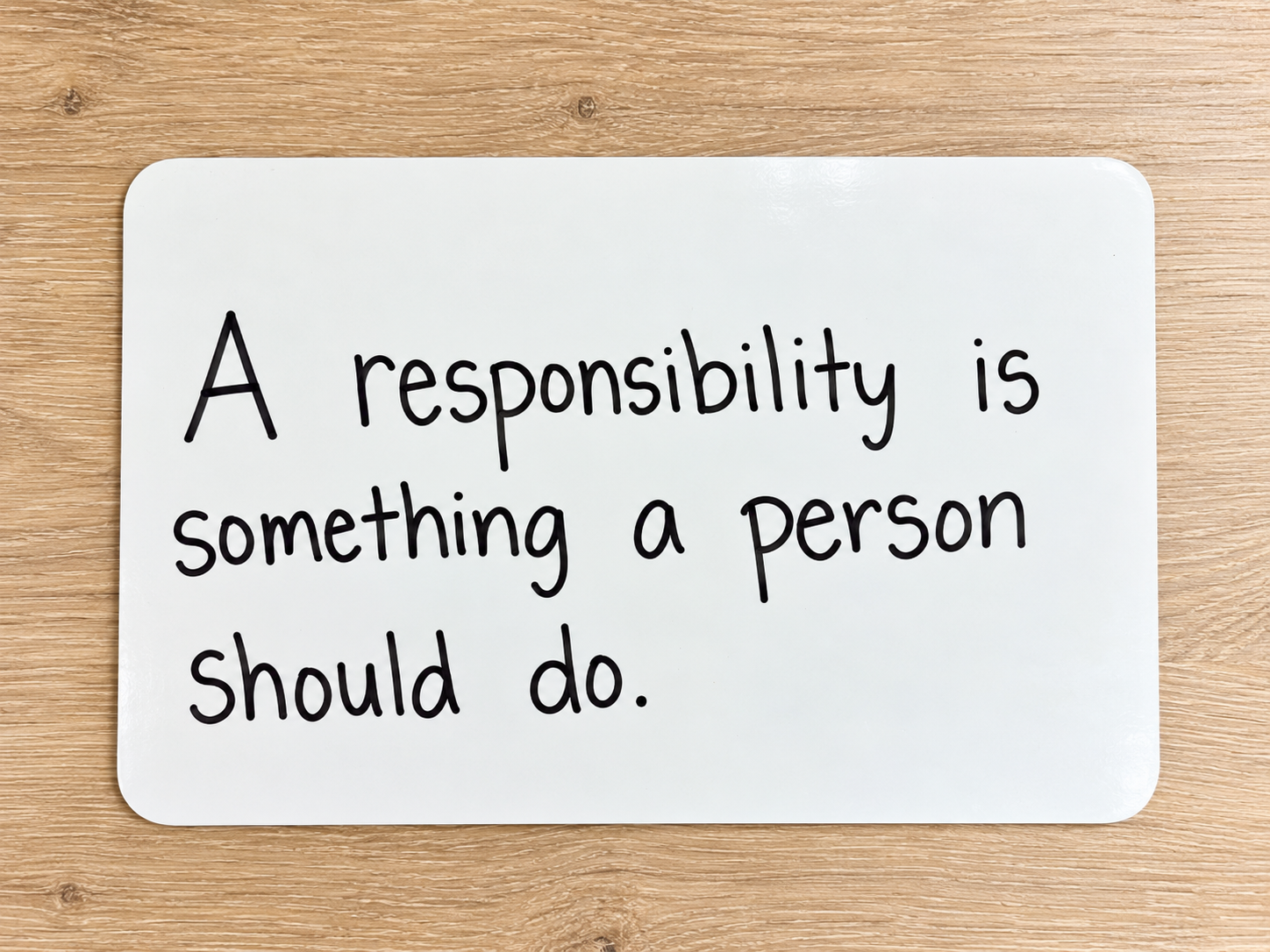
For example, in the passage Being a Good Citizen, students encounter this sentence:
"A responsibility is something a person should do."
Rather than simply reading the sentence and moving on, take a moment to help students understand what it's actually telling us. Start by asking, "What is this sentence teaching us about a responsibility?" Then guide students to think about the phrase something a person should do. Does that mean something we just want to do, or something we're expected to do? Connect it to something familiar. "If it's your job to put away the classroom supplies, is that a responsibility? Why?" Then ask students to put the sentence into their own words. They might say, "A responsibility is a job or something we're supposed to take care of." Now, return to the original sentence and reread it together, making sure students understand the meaning behind the words.
Notice what we just did? We slowed down, thought about the sentence, connected it to something we knew about, and helped students make meaning from the text. That's sentence unpacking! It's not about turning every sentence into a lengthy lesson. It's about intentionally selecting sentences that deserve a closer look. Finish with another reading of the passage, encouraging greater independence and attention to meaning.
Don't forget the comprehension questions! Use these to check students' understanding of the passage and encourage them to return to the text to support their answers. This is another opportunity to reinforce that fluent reading isn't just about how we read, but also about understanding what we read.
Your goal for Tuesday: Build automaticity and expression through purposeful rereading while deepening students' understanding of the text.
Wednesday: Apply the Routine to a New Passage
On Wednesday, introduce Passage 2 and repeat Monday's routine! Begin with word work, model fluent reading, and provide opportunities for supported practice through echo or choral reading. As students read, provide immediate corrective feedback to support accuracy and automaticity.
Your goal for Wednesday: Help students apply their developing fluency skills to a new text. Remember, we're not trying to help students memorize a passage. We're helping them become better readers!
Thursday: Build Independence and Automaticity
On Thursday, repeat Tuesday's routine with Passage 2! Review challenging words, provide opportunities for purposeful repeated reading, and unpack a sentence to deepen comprehension. Gradually release support as students demonstrate greater accuracy, automaticity, and expression.
Your goal for Thursday: Strengthen fluency through purposeful rereading while keeping comprehension at the center of instruction.
Friday: Practice, Observe, and Progress Monitor
Friday provides an opportunity to review and see how students are progressing. Begin with a brief review of challenging words from the week. Students can practice reading independently or with a partner while you progress monitor selected students. And here's something I want you to hear. You do NOT have to assess every student every Friday! Depending on student needs, you might monitor two to four students during your fluency block. During a one-minute oral reading fluency assessment, record correct words per minute (CWPM), accuracy, and observations about the student's reading. But don't stop at the number. A student might increase their reading rate while continuing to make frequent errors. Another student might show improved accuracy and phrasing even if their reading rate hasn't increased significantly yet. The number tells us something, but the way a student reads tells us even more. Use those observations to decide what students need next.
Your goal for Friday: Gather meaningful information that helps you make instructional decisions.
Yes, AI helped me create this image, but I turned it into a handy PDF just for you. Download it here and keep it at your small-group table.
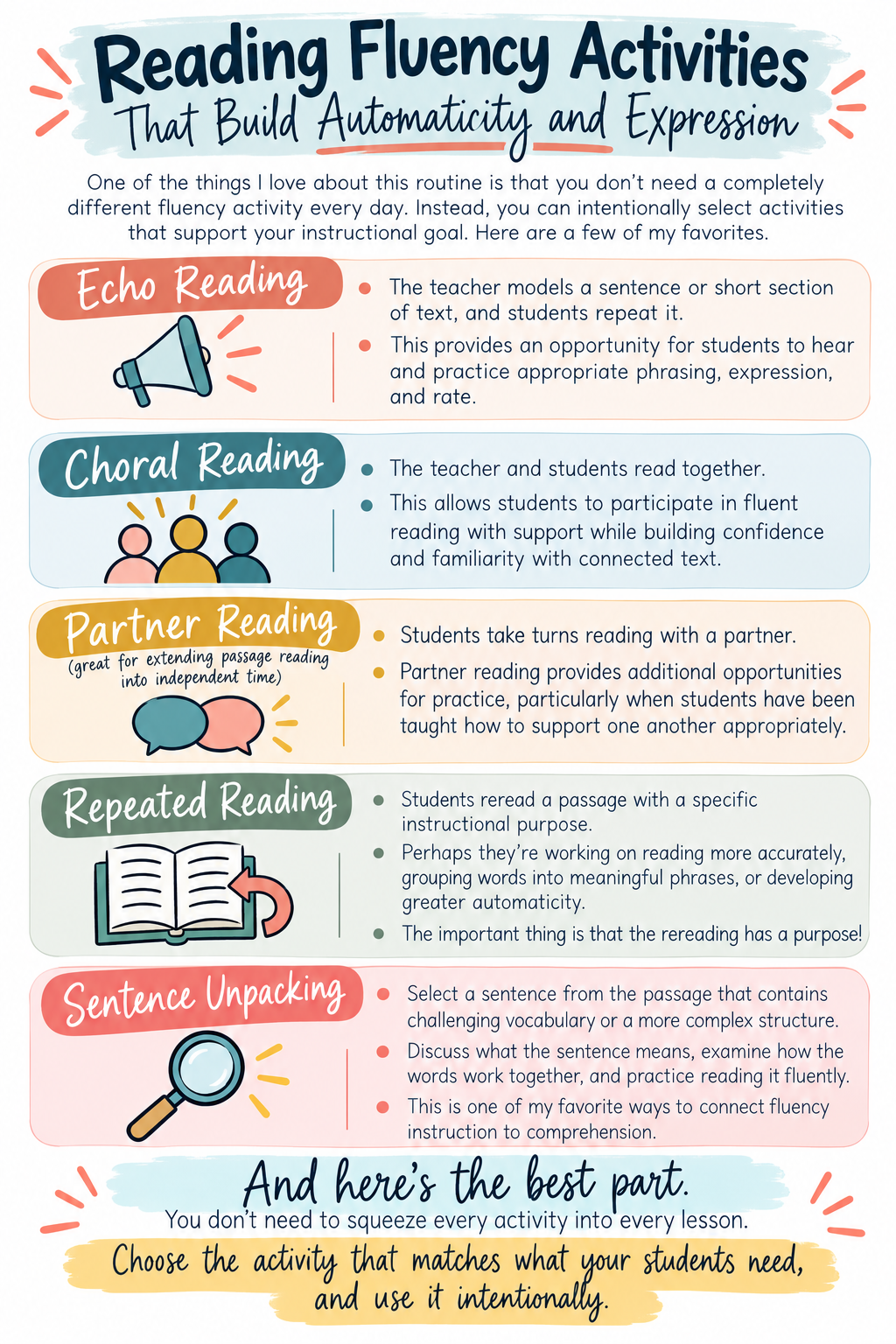
Reading Fluency Activities That Build Automaticity and Expression
One of the things I love about this routine is that you don't need a completely different fluency activity every day. Instead, you can intentionally select activities that support your instructional goal.Here are a few of my favorites.
Echo Reading
The teacher models a sentence or short section of text, and students repeat it.
This provides an opportunity for students to hear and practice appropriate phrasing, expression, and rate.
Choral Reading
The teacher and students read together.
This allows students to participate in fluent reading with support while building confidence and familiarity with connected text.
Partner Reading (great for extending passage reading into independent time)
Students take turns reading with a partner.
Partner reading provides additional opportunities for practice, particularly when students have been taught how to support one another appropriately.
Repeated Reading
Students reread a passage with a specific instructional purpose.
Perhaps they're working on reading more accurately, grouping words into meaningful phrases, or developing greater automaticity.
The important thing is that the rereading has a purpose!
Sentence Unpacking
Select a sentence from the passage that contains challenging vocabulary or a more complex structure.
Discuss what the sentence means, examine how the words work together, and practice reading it fluently.
This is one of my favorite ways to connect fluency instruction to comprehension.
And here's the best part.
You don't need to squeeze every activity into every lesson.
Choose the activity that matches what your students need, and use it intentionally.
Why I Love Using Informational Text for Reading Fluency
We often think about fluency passages as tools for practicing reading rate and accuracy. But what if we could accomplish more? Informational text gives students opportunities to encounter academic vocabulary, learn about the world, and navigate different sentence structures. When students read about plants, weather, animals, natural resources, or maps, they're developing more than fluency. They're building knowledge that can support future comprehension. And when we intentionally incorporate vocabulary discussions and comprehension questions, we're making those connections even stronger. This is especially valuable for students who are ready to move beyond highly controlled decodable text. They need access to rich, meaningful reading experiences.
Fluency instruction shouldn't come at the expense of comprehension. It should help support it.
Ready-to-Use Reading Fluency Passages and Lesson Plans
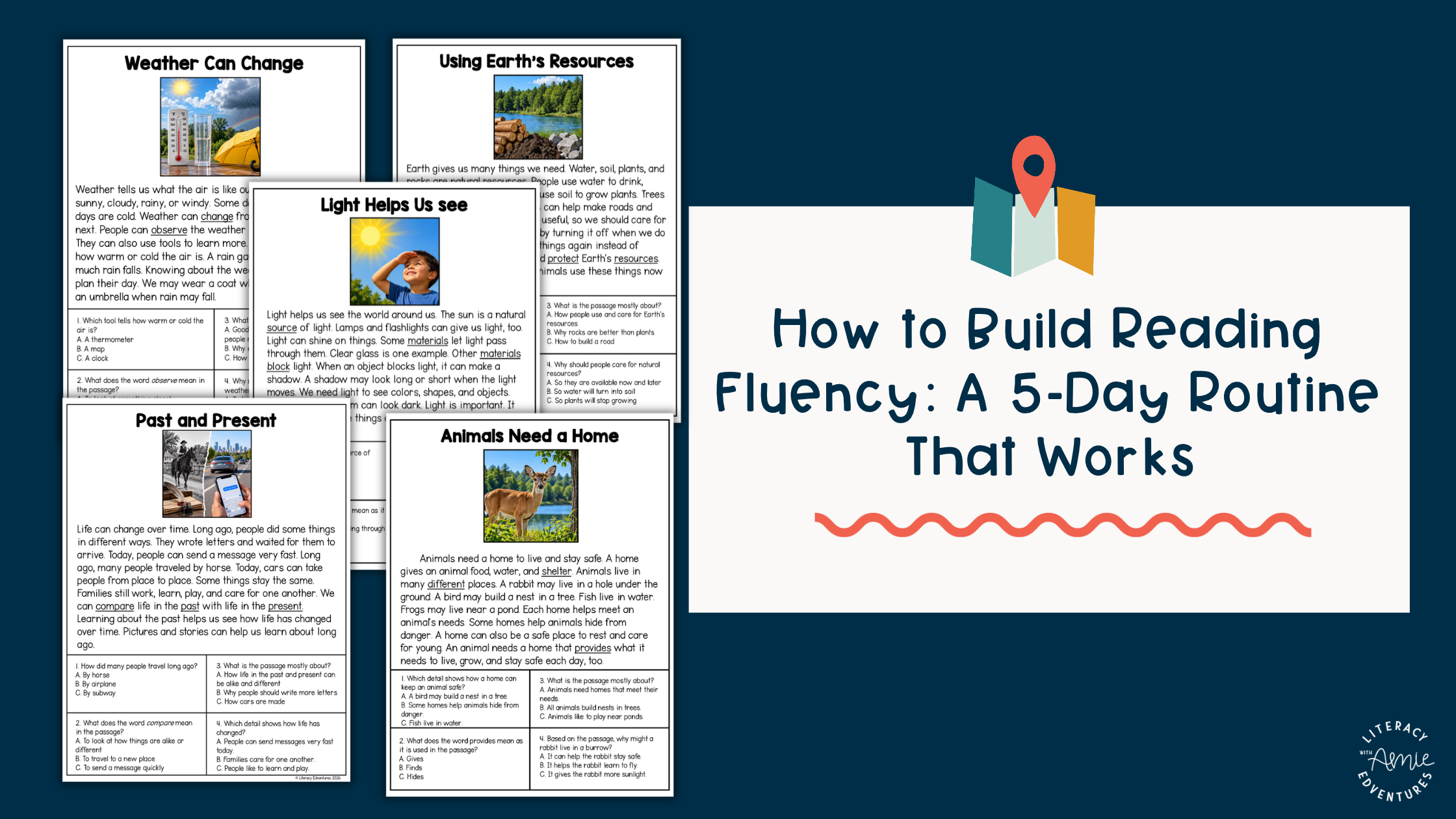
Here's what I know about teachers. You don't need another complicated instructional framework. You don't need another resource that requires hours of preparation. And you certainly don't need to spend your Sunday afternoons searching for passages, writing comprehension questions, and trying to figure out what fluency instruction should look like on Monday morning. You need practical resources that help you deliver intentional instruction without adding more to your plate. That's exactly why I created my fluency resource. Instead of piecing together fluency instruction each week, you'll have a ready-to-use resource designed to help you put this five-day routine into action.
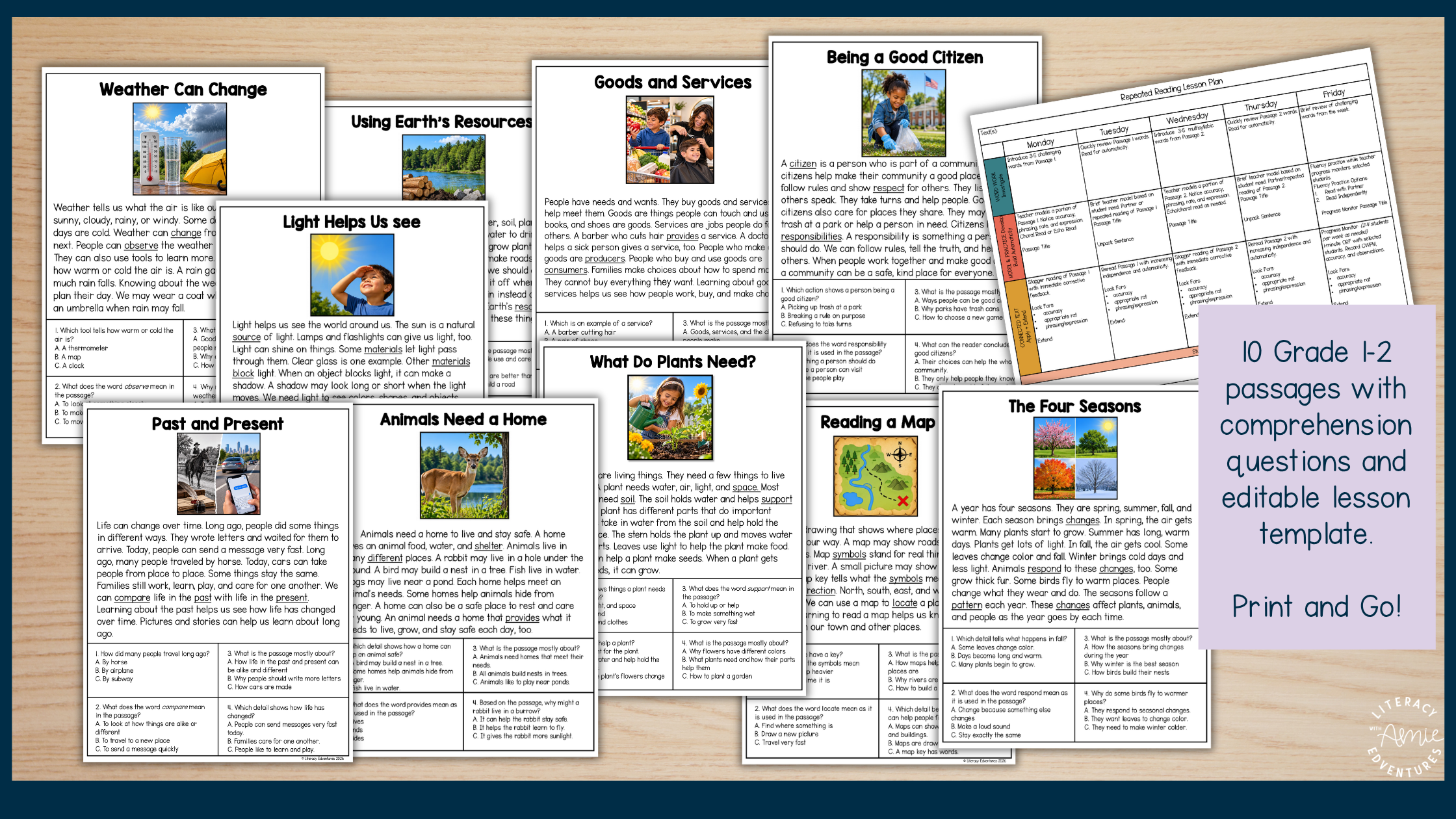
What's Included?
A 5-Day Repeated Reading Lesson Plan
A consistent Monday-through-Friday instructional framework that includes word work, teacher modeling, supported reading, repeated reading, and progress monitoring.
10 Informational Reading Passages (1st-2nd grade)
Engaging passages covering topics such as plants, animals, seasons, weather, maps, natural resources, and more. These passages are a great option for students who are ready for this level of connected text.
Comprehension Questions for Every Passage
Four multiple-choice questions accompany each passage, providing opportunities to check students' understanding of vocabulary, key details, main idea, and other comprehension skills.
Opportunities to Build Vocabulary and Knowledge
Students read about meaningful topics while strengthening the word-reading skills and automaticity needed for fluent reading.
A Routine You Can Use Again and Again
And THIS is what I love most!
You're not just getting a collection of passages.
You're getting an instructional routine you can use with different types of text throughout the school year.
Whether your students need decodable passages or are ready for grade-level text, you can follow the same instructional framework while adjusting the text and level of support.
Stop Piecing Together Fluency Lessons Every Week
Imagine walking into your small-group reading block knowing exactly what you're teaching.
You have your passages ready.
You know which words you're going to introduce.
You have a plan for modeling and repeated reading.
You know how you'll provide corrective feedback.
And you're building comprehension into your instruction rather than treating it as an afterthought.
No more guessing what fluency instruction should look like.
No more relying on repeated reading without a clear instructional purpose.
No more spending hours searching for passages and planning activities.
Just a consistent, explicit routine that helps you make the most of your instructional time.
Ready to Build More Fluent Readers?
Grab the 5-Day Fluency Routine and Reading Passages and start putting this approach into action with your students!
One Final Thought About Building Reading Fluency
We spend so much time thinking about what students need to read. Decodable passages, grade-level text, informational passages, and more challenging selections. And yes, choosing the right text matters! But I also want us thinking about what we're actually doing with that text.
Are we modeling fluent reading, providing explicit instruction, and giving students meaningful opportunities to practice? Are we responding to their errors with intentional feedback and helping them connect fluency to comprehension?
Because at the end of the day, the passage alone isn't the instruction. It's what we do with the passage that matters.
When we have a consistent routine that includes explicit modeling, purposeful practice, and meaningful feedback, we're giving students the support they need to become increasingly proficient readers. And the best part? It doesn't have to be complicated!
Below you will find some of my favorite resources! Remember: If you are a Route2Reading Member, every resource I have ever created is already in the hub for you!
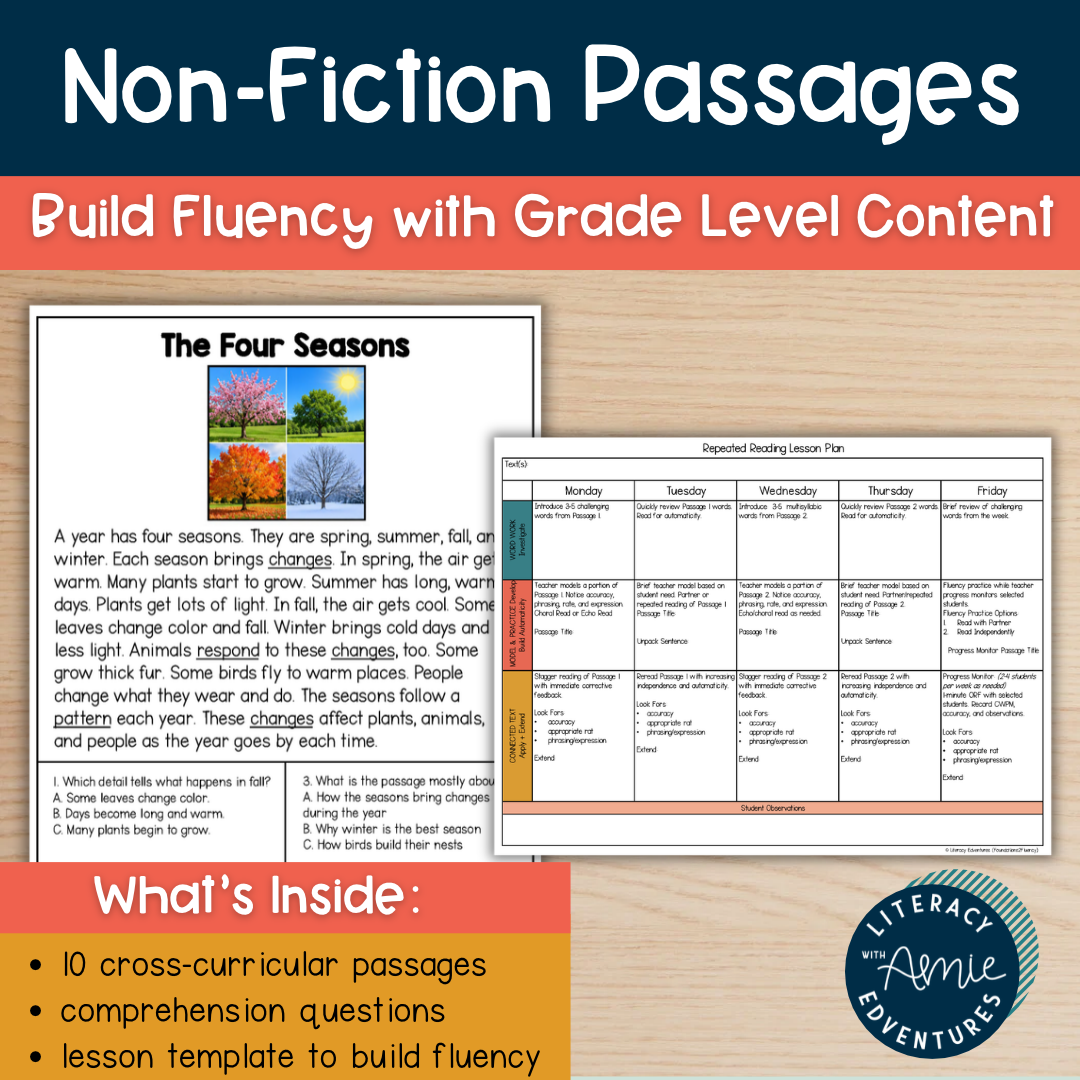
Stop just practicing fluency. Start teaching it!
Looking for a way to make fluency instruction more intentional without adding hours to your planning? These ready-to-use reading fluency passages are designed to help students build accuracy, automaticity, expression, and comprehension through a simple, consistent five-day routine.
Perfect for students who have developed foundational decoding skills and are ready to tackle more complex connected text, these informational passages provide meaningful opportunities to apply reading skills while building vocabulary and background knowledge.
And the best part? You're getting more than just passages!
What's Included?
11 Informational Reading Passages featuring engaging science and social studies topics.
44 Comprehension Questions targeting vocabulary, key details, main idea, and inferencing.
5-Day Fluency Lesson Plan incorporating explicit word work, teacher modeling, supported reading, repeated reading, sentence unpacking, and progress monitoring.
A Repeatable Instructional Routine you can use with other appropriately selected texts throughout the school year.
Why You'll Love It
No more handing students a passage and simply asking them to read it again! This resource helps you make repeated reading purposeful by combining explicit instruction, meaningful practice, and comprehension.
Use these passages during small-group instruction, targeted fluency lessons, or intervention with students who are ready for this level of text.
Whether you're working on accuracy, automaticity, phrasing, or expression, the routine provides a consistent structure while allowing you to adjust instruction based on student needs.
Less planning. More purposeful practice. More confident readers.
Grab your fluency passages and start building stronger readers today!

1-Minute Decodable Word Fluency Drills are timed reading activities that help students practice reading decodable words based on specific phonics patterns (e.g., short vowels, digraphs). Each drill contains 30 words, building fluency and speed.

Build decoding, fluency, and comprehension—all in one aligned resource.
This set of fully decodable passages helps young readers strengthen the foundational skills that matter most: decoding with accuracy, reading with fluency, and responding with understanding. Each passage aligns to a specific phonics skill—like short vowels, blends, digraphs, or r-controlled vowels—so students can read with confidence and purpose.

Decodable books and passages are critical to your student’s literacy journey. This decodable books and passages MEGA BUNDLE is aligned with the Science of Reading and include topics that interest students. These books and passages were carefully created and controlled by phonics skills that have previously been taught on our scope and sequence. As your students’ phonics skills grow, these decodable books and passages will grow with them. Embracing the power of decodables will help create successful and confident readers for years to come.
GET ALL ACCESS NOW!
OR