If you've ever taught inflectional endings in K–2, you know how easy it is for the lesson to become all about spelling rules.
Double the consonant. Drop the e. Add -ed. Add -ing.
And while those spelling conventions absolutely matter, I want students to understand something bigger.
When we change a word, we can change what it communicates.
Take the word paint. We can talk about someone who paints, someone who painted yesterday, or someone who is painting right now.
The base word stays connected to the same action, but the endings help us communicate different information.
That's morphology in action!
And the good news is that we don't need to carve out an entirely new instructional block to teach it. We can make these connections during the phonics lessons, word-building routines, reading, and writing activities we're already doing.
I want to share how I approach this with K–2 students, along with a few hands-on activities that make the learning stick.
Start With a Conversation
Before I ask students to spell a word with an inflectional ending, I want them to understand what that ending is doing.
One easy way to begin is with a quick classroom demonstration.
I might pick up a marker and draw a star on the board.
Then I'd ask, "What am I doing?"
Students respond, "You're drawing!"
Once I've finished, I ask, "What did I do?"
"You drew a star!"
Now we can talk about how our language changes depending on when something happens. Sometimes the entire word changes, as with draw and drew. Other times, we add an ending.
Next, I might use the word paint.
"Right now, I am painting. Yesterday, I painted. Listen to those words. What's different?"
From there, we can introduce the base word and suffix.
A base word is a word that can stand on its own, such as paint. A suffix is a meaningful word part added to the end of a word.
For kindergarten students, I would keep these conversations short, concrete, and connected to familiar actions. Students can act out words, describe pictures, or respond orally before we move into print.
It's a simple starting point, but it gives students a reason to care about the endings they're learning.
Build It. Change It. Explain It.
Once we've introduced an ending and its meaning, it's time to connect that understanding to spelling.
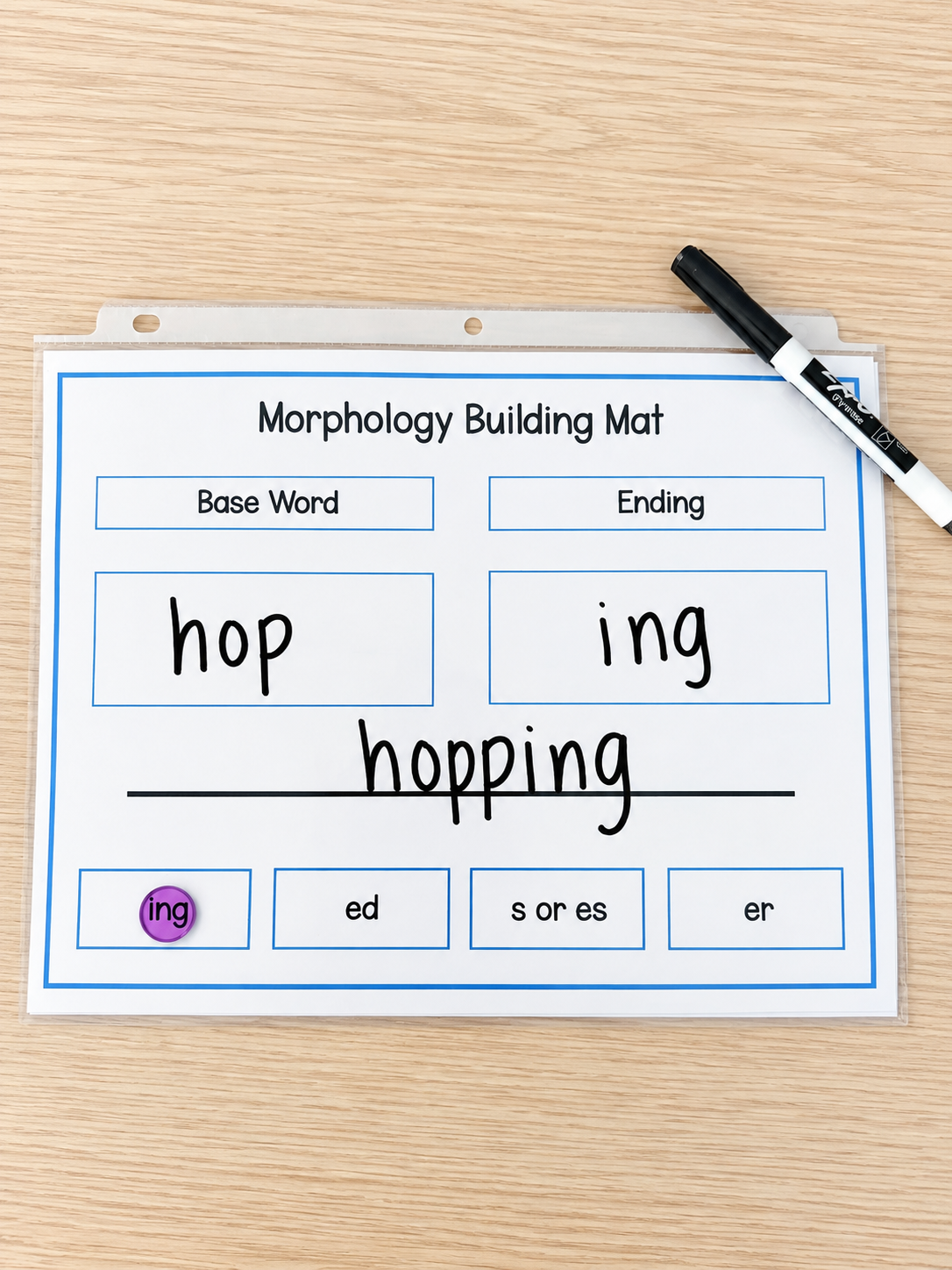
This is where my Build It. Change It. Explain It. Morphology Building Mat comes in.
The activity is straightforward. Students begin with a base word, add a suffix, write the new word, and explain what changed.
But here's the important part: I don't want students simply filling in boxes.
I want them thinking and talking.
Let's say we're working with the word camp.
I might say:
"Let's write our base word, camp. Now we're going to add -ing. Our new word is camping. What stayed the same? What did we add? What would it mean if I said, 'My family is camping'?"
We can follow that with camped and talk about how the meaning changes.
The mat gives students a consistent routine for looking at word structure, spelling, and meaning together.
For kindergarten, I might model the entire process and have students respond orally or use letter tiles. First and second graders can gradually do more of the building, writing, and explaining independently.
I also like using inflectional ending word chains during this part of instruction.
Rather than building a list of unrelated words, students make purposeful changes to one word at a time.
For example:
camp → camping → camp → camped
Each time, students read the word, identify the change, and discuss what it means.
This gives us an opportunity to reinforce the spelling pattern while keeping meaning at the center of the activity.
When Do We Double the Consonant?
One of the things I love about teaching morphology alongside phonics is that students begin to see how the two work together.
Take the words tap and rest.
When we add -ing, we get tapping and resting.
But why do we double the final consonant in one word and not the other?
Rather than asking students to memorize a list of words, I want to explicitly teach them what to look for.
This is where a simple little chant comes in!
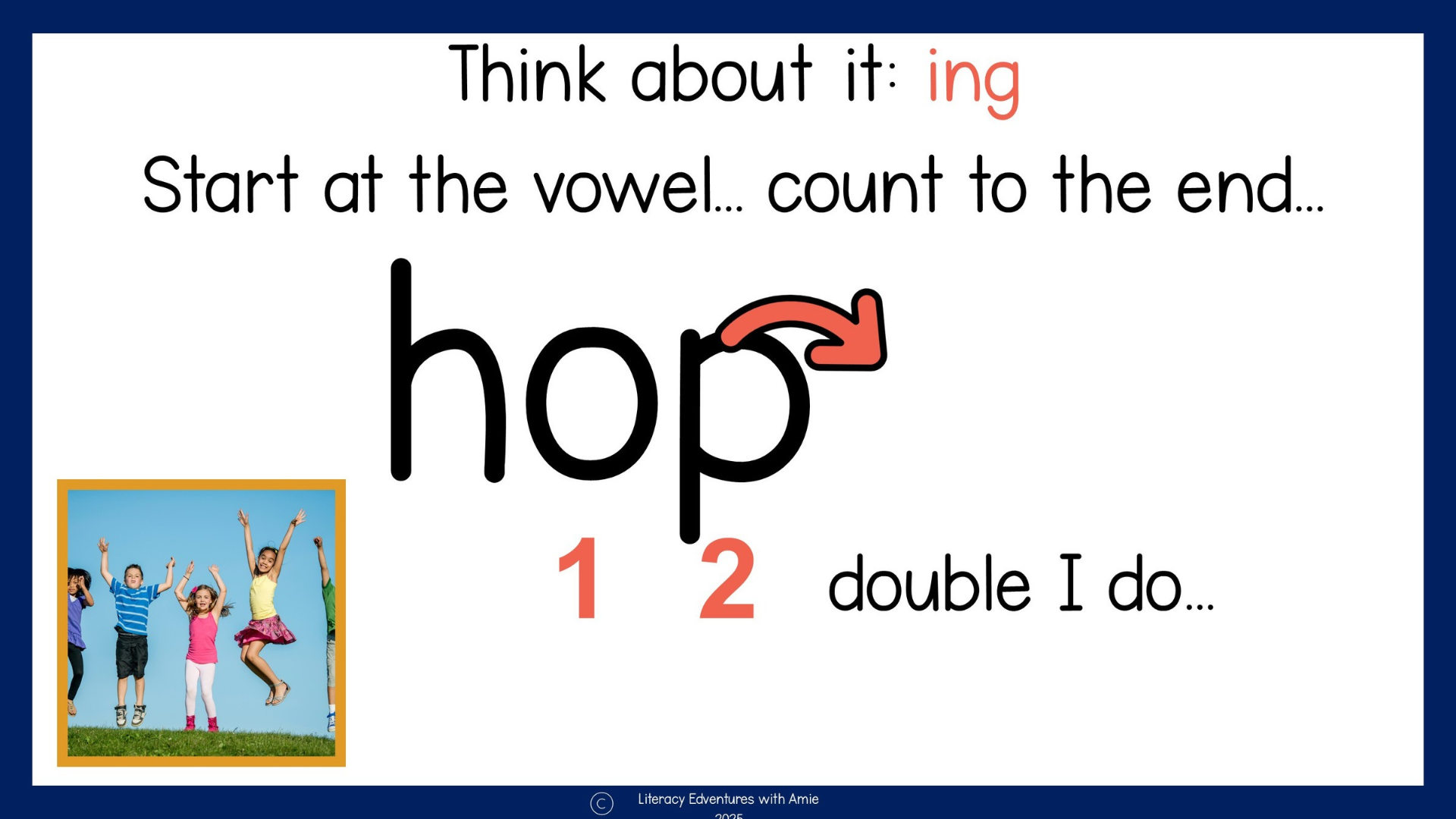
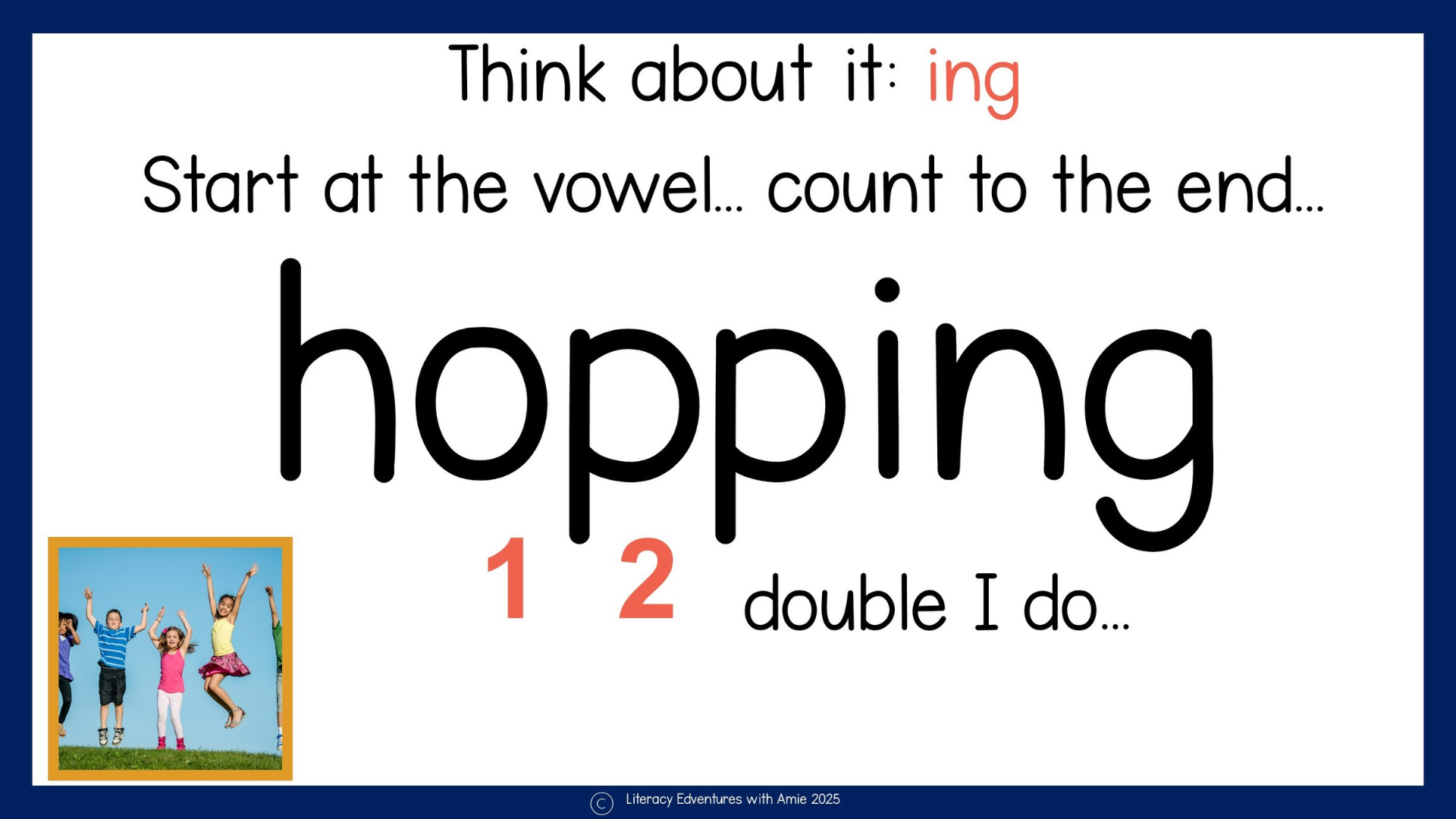
“1, 2, double I do!
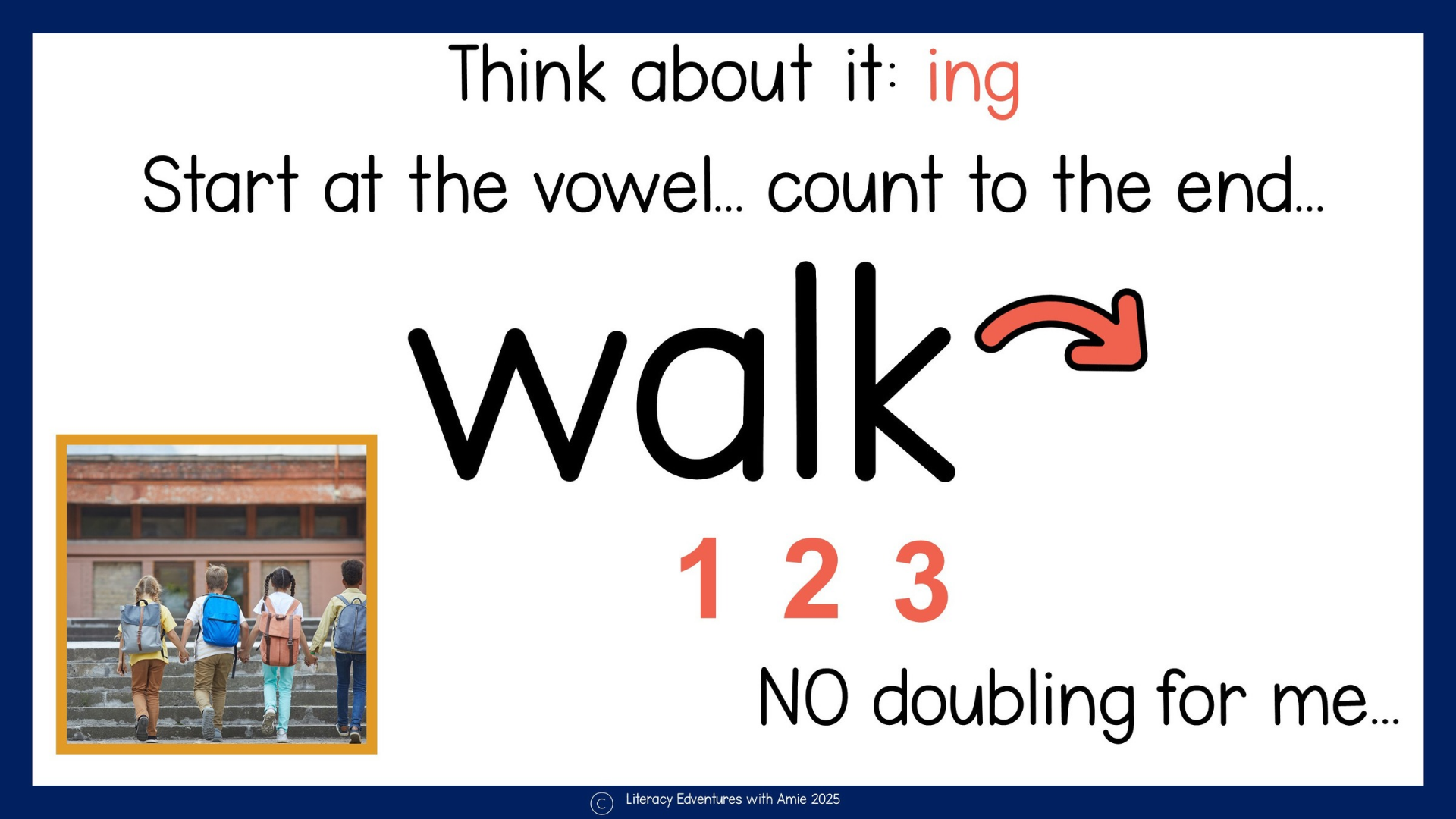
1, 2, 3, no doubling for me!”
Of course, the chant is just a way to help students remember. We still need to teach the spelling convention behind it.
With a one-syllable base word like hop, we have one short vowel followed by one final consonant. When we add a vowel suffix like -ing, we double that final consonant.
But look at walk. It already ends in two consonants, so we simply add -ing.
I might say:
"Let's look at hop. We have one short vowel and one consonant at the end. When we add -ing, we double the p. One, two, double I do!
Now let's look at stomp. We have one short vowel, but look at the end! We already have two consonants. Do we need to double anything? Nope! We just add -ing."
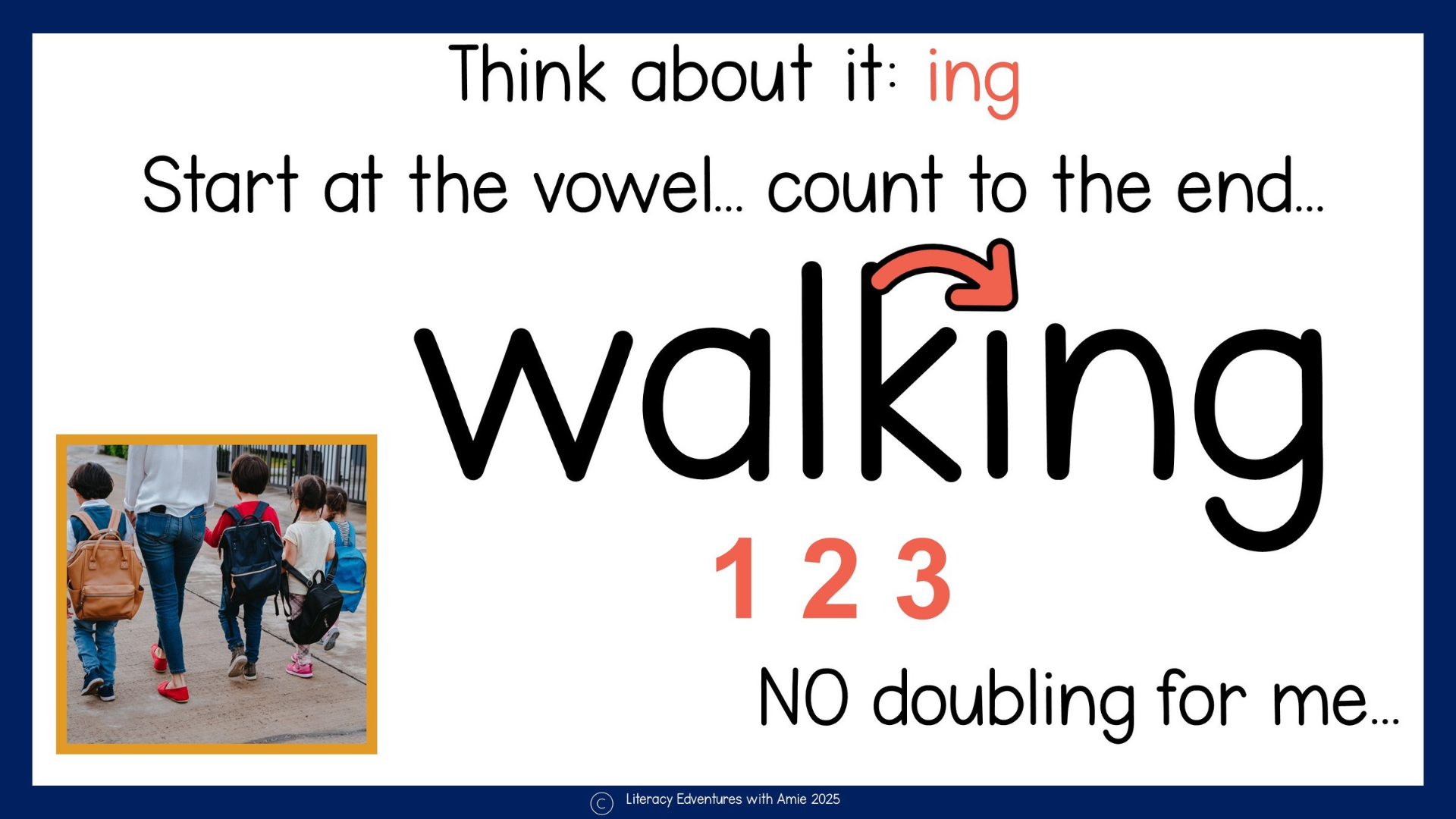
I'd also show students words like jump and help so they begin noticing that it's not just about the number of letters in a word. It's about the vowel and consonant pattern at the end of the base word.
Once students understand the convention and have practiced it with me, they're ready to apply it.
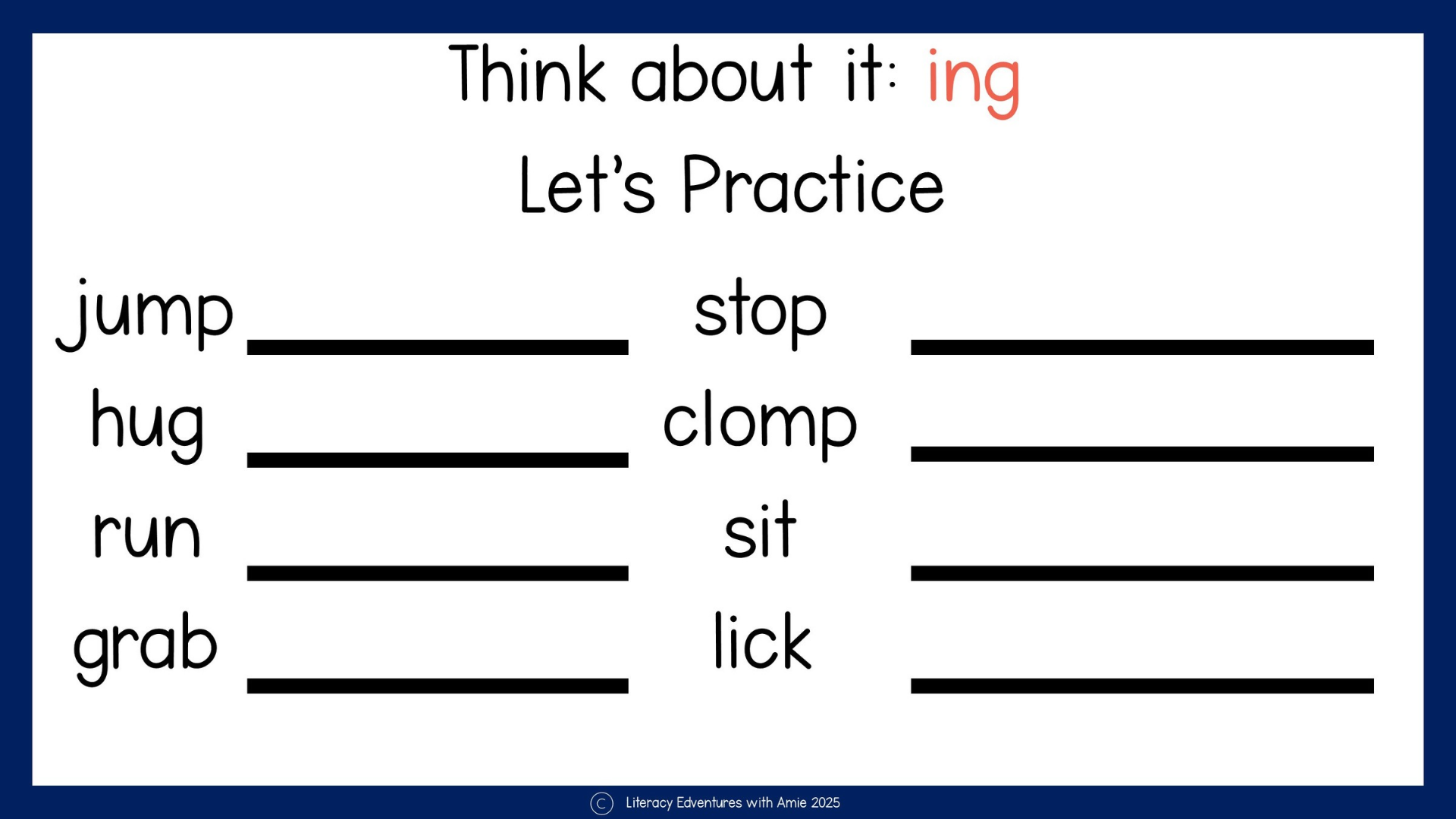
That's where my Double It or Just Add It? sort comes in!
Students sort familiar base words based on what needs to happen before adding the suffix. Then they build the new words and, most importantly, explain their thinking.
As they work, I might ask:
"How did you know tap needed another p?"
"What did you notice about the end of rest?"
"Would the same spelling convention apply if we added -ed?"
These conversations tell me so much more about student understanding than a completed sort ever could. I want students to recognize the pattern, understand why it works, and eventually apply it independently when reading and writing.
And remember, timing matters! I wouldn't rush into this activity with students who are still learning to read and spell basic CVC words. In kindergarten, we can begin exploring endings that don't require spelling changes. As students develop a stronger understanding of short vowels, consonant patterns, and base words, we can introduce the doubling convention.
The goal isn't simply for students to remember when to double a letter. It's for them to understand how the spelling of a base word can change when we add a suffix.
Practice With a Purpose
After explicit instruction and guided practice, students need repeated opportunities to use what they've learned. And yes, this is where we can bring in games!
But I want those games to do more than keep students busy.
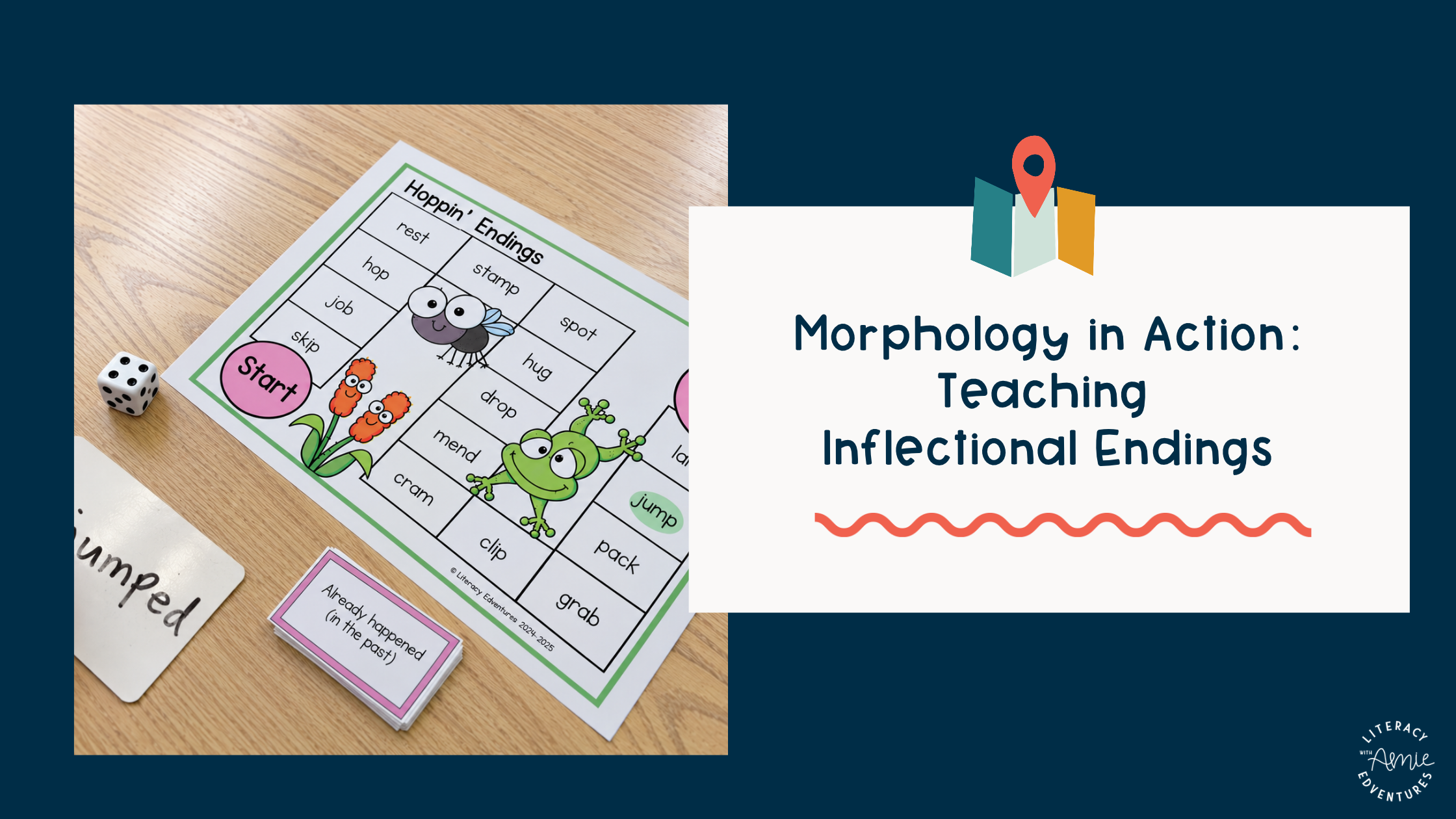
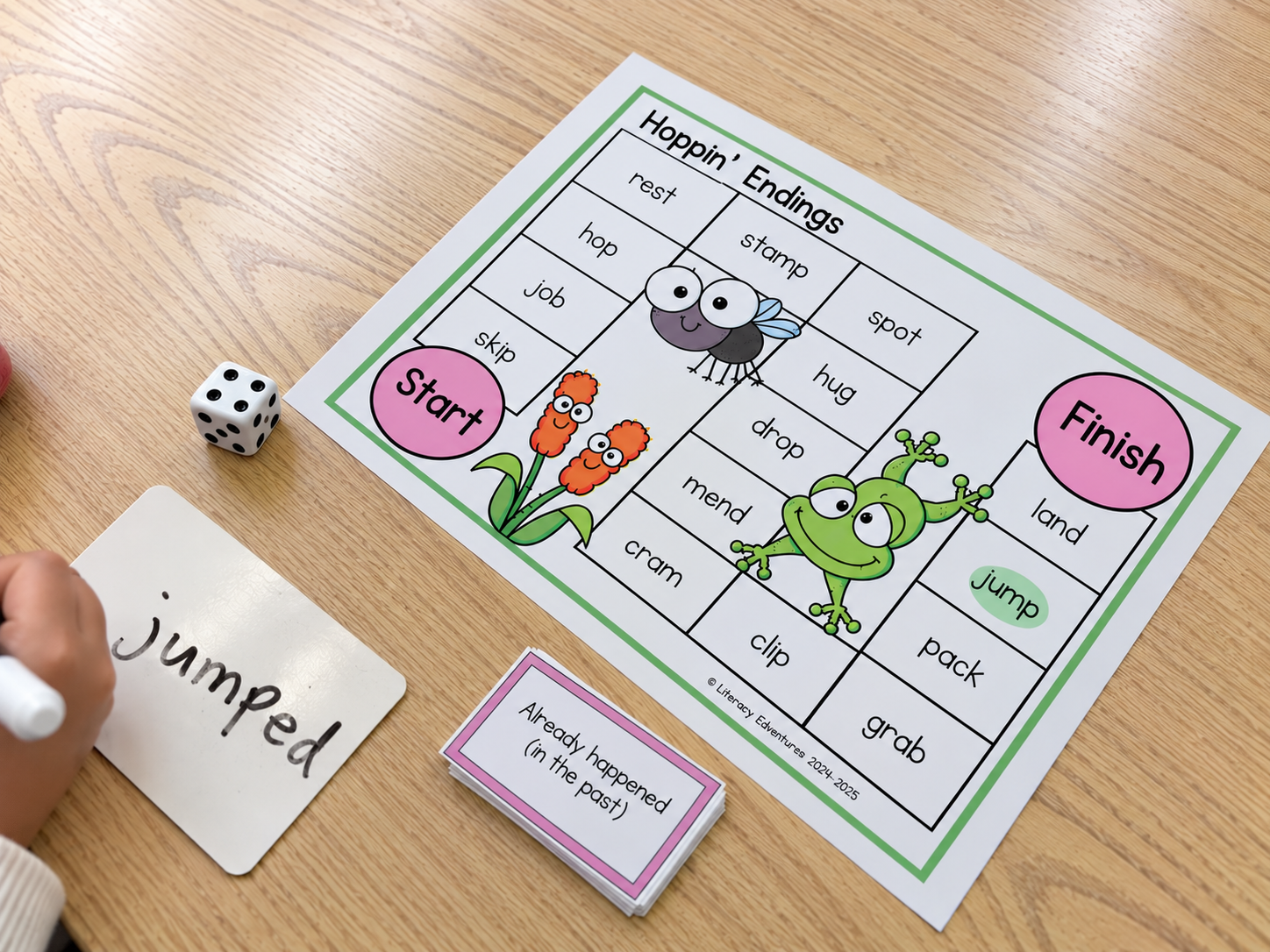
One of my favorite activities is Hoppin' Endings, a board game that gives students opportunities to work with -ed and -ing.
For this activity, students begin by rolling a die and reading the base word they land on. Next, they select a card that says either "Already Happened" or "Happening Right Now." Their job is to determine which ending makes sense, add it to the base word, and write the new word.
For example, a student might roll and land on the word kick.
If they select "Already Happened," they would say, "Yesterday, I kicked the ball." Then they would write the word kick and add /ed/ to show the past tense (see the extra meaning building that is happening there?) If they select "Happening Right Now," they might say, "The girl is kicking the ball." This time, they would add -ing and write kicking. As students work, I want them to do more than simply add an ending. I want them to think about what that ending means and how it changes the word. You can even extend the activity by asking students to explain their choices. "Why did you add -ed?" or "What does -ing tell us about when the action is happening?"
The ending isn't random. It has a job to do! And when students begin connecting those little word parts to meaning, they're doing so much more than practicing spelling.
Moving From Words to Sentences
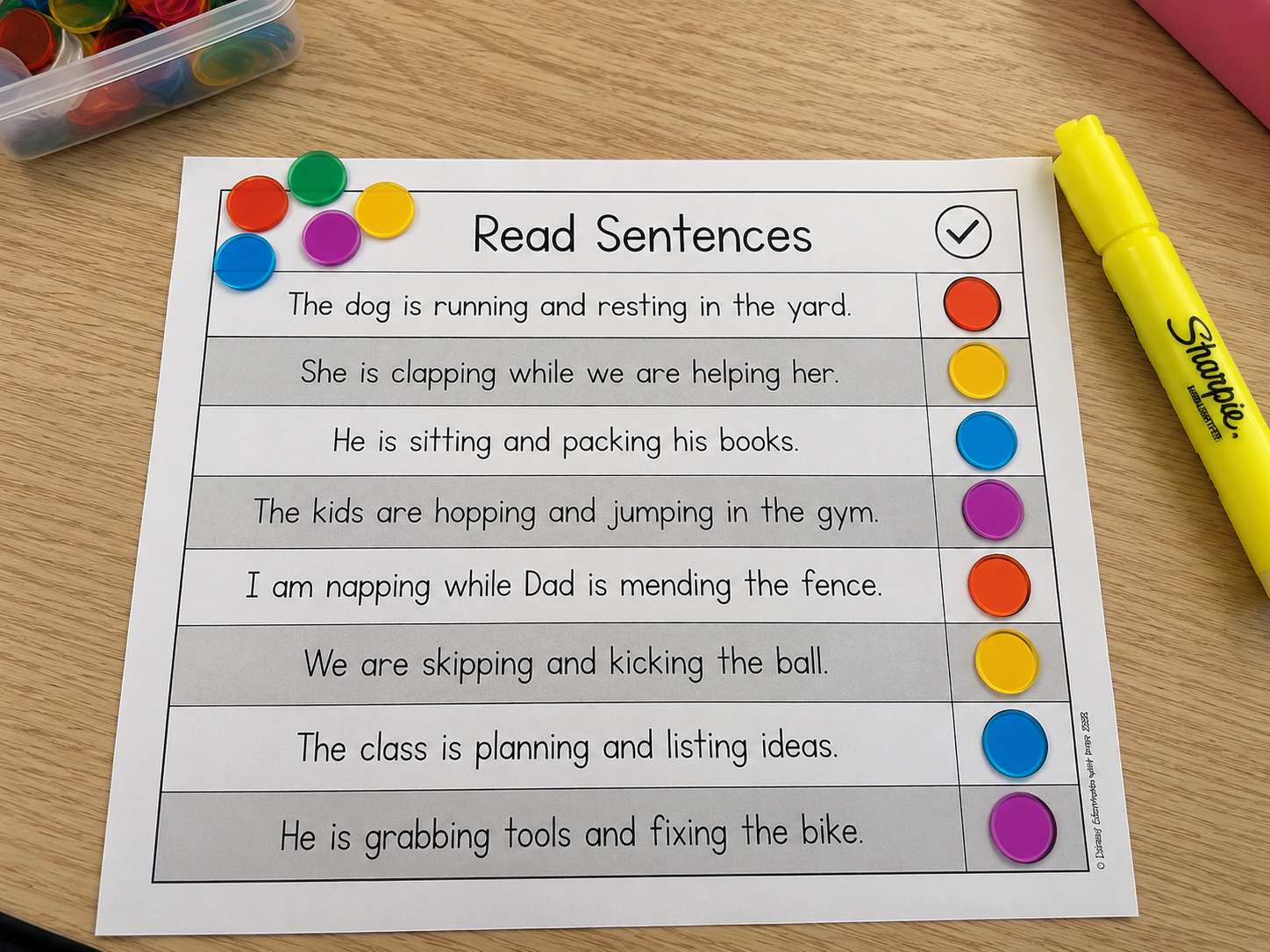
Once students have practiced building words with different endings, I want them to see those same words in sentences. After all, the goal isn't just to recognize a suffix in isolation. It's to understand what that suffix means when we read. One simple way to do this is with sentence-reading practice.
For example, students might read:
"The kids are hopping and jumping in the gym."
Or:
"She hopped and rested on the mat."
After reading, I might ask, "What do you notice about the words hopping and hopped? What does each ending tell us?" We can talk about how -ing helps us describe an action that is happening, while -ed often tells us that something already happened. I also like to have students go back into the sentence and underline or highlight words with the suffix we're studying. This encourages them to pay attention to the word parts rather than simply reading past them. And because we're connecting morphology with phonics, we can take it one step further. Why does hop become hopping or hopped, but jump becomes jumping or jumped?
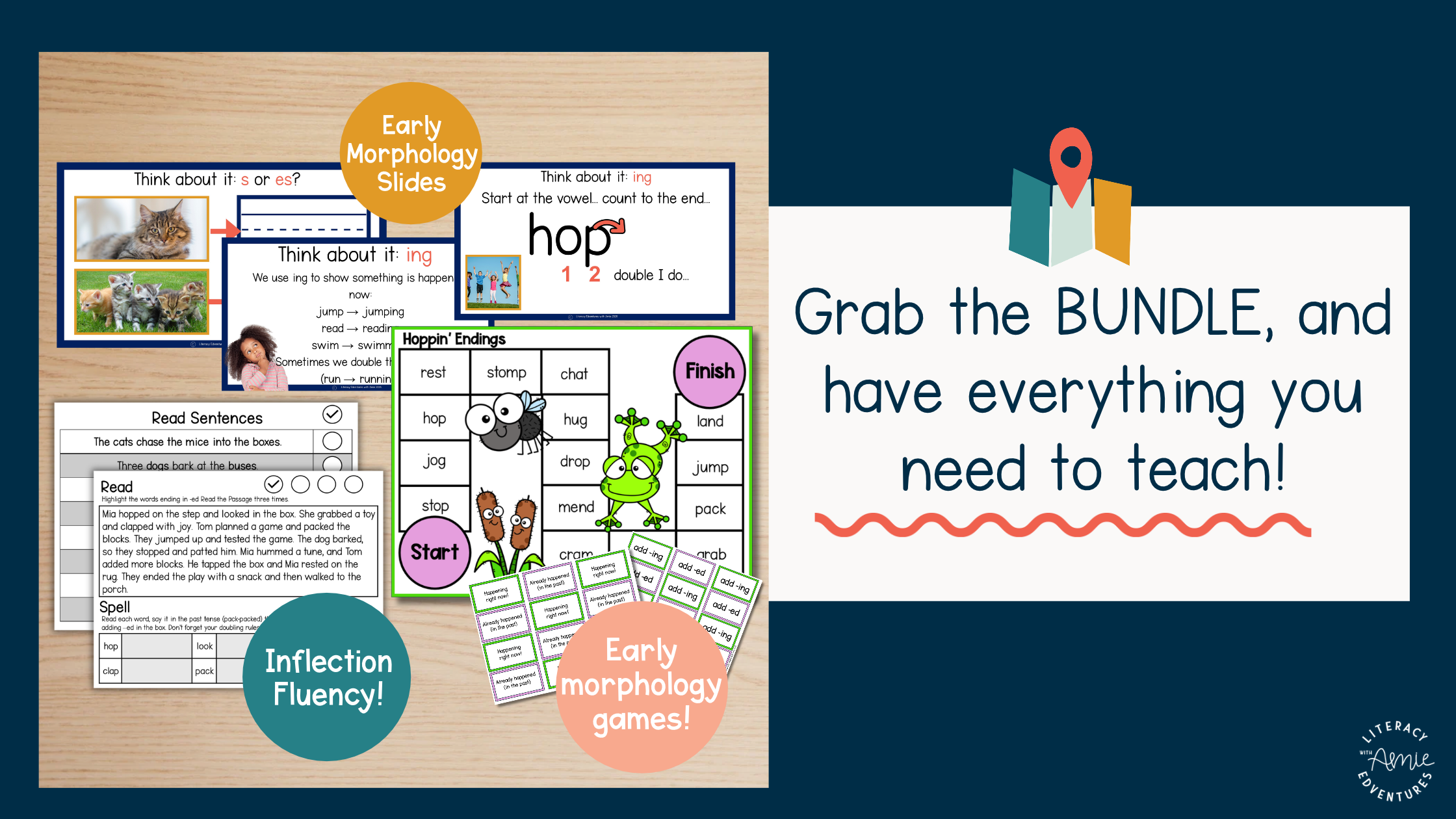
My Inflectional Endings Fluency Resources include sentence-reading activities that give students repeated opportunities to read words with -ing, -ed, and -s/-es in context. Students can practice reading the sentences accurately and smoothly while also noticing how those little endings change the meaning of the words.
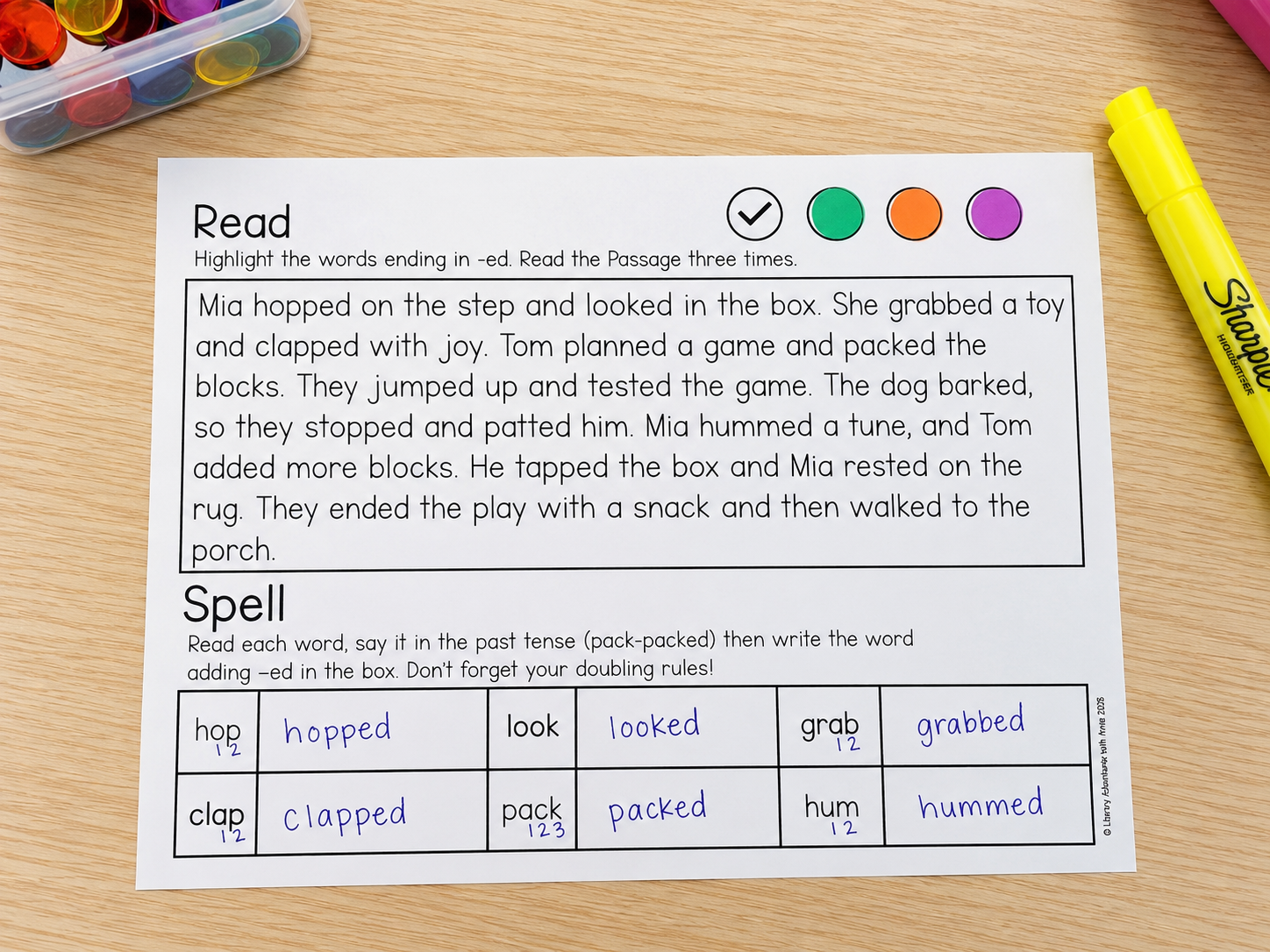
From there, we can move into short passages where students highlight words with the target suffix, reread for fluency, and even practice spelling some of the words they've encountered.
It's a simple progression, but an important one. We're moving from building words, to reading words, to understanding those words in connected text. And that's where all of this instruction starts coming together!
Help Students Notice Morphology While Reading
I don't want morphology to live only on a word-building mat or in a literacy center. I want students to notice meaningful word parts when they're actually reading. After students have read a decodable passage containing familiar inflectional endings, we can revisit a sentence and look more closely at one of the words.
Let's say the text includes:
The children planted seeds in the garden.
I might ask:
"What word tells us what the children did?"
Students identify planted.
Then we can look at the base word, plant, and discuss the ending.
But I wouldn't stop there.
I'd ask, "What does planted help us understand about what happened in the story?"
Then we might change the sentence:
The children are planting seeds in the garden.
"How is this sentence different? What would we picture now?"
Now students are using morphology to think about the meaning of what they're reading. You can even carry this into writing. After reading about planting seeds, students might write a sentence about something they did yesterday or something they're doing today. The goal is for students to use their understanding of word parts as they read, discuss, and write—not simply identify suffixes on a worksheet.
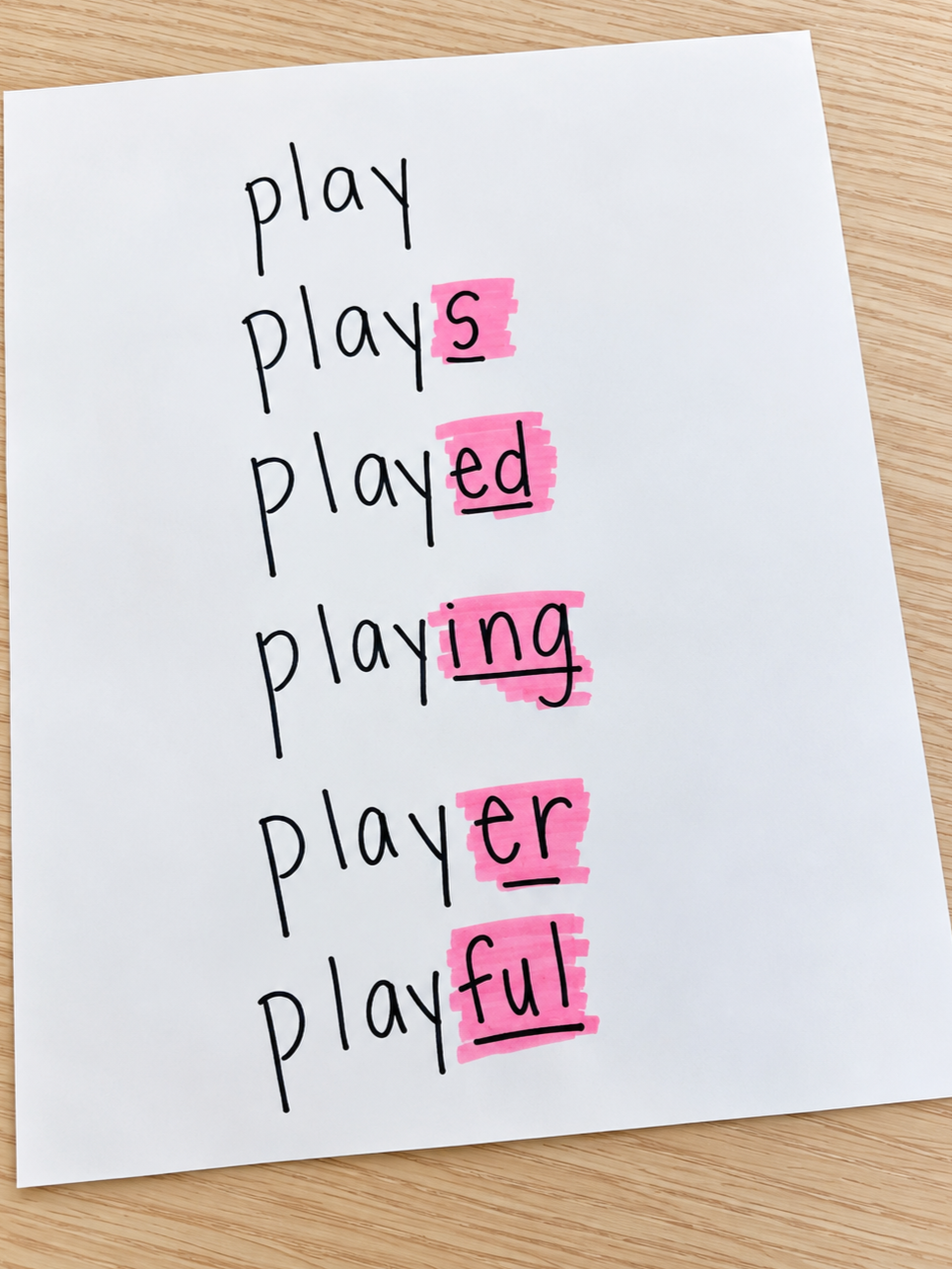
Word Chaining With Suffixes
Another simple way to build morphological awareness is through word chaining. We're still building and changing words, but instead of swapping out individual sounds, we're focusing on how adding different suffixes changes the meaning of a base word.
Let's take the word play.
I might write play on the board and have students read it. Then, we begin adding suffixes, one at a time.
play – to take part in a game or activity
plays – He plays outside every day.
playing – She is playing with her friends.
played – We played at recess yesterday.
player – A player is someone who plays.
playful – Someone who is playful likes to have fun.
As we build each word, I want students to do more than simply read it. I want them to think about what changed and why.
I might ask:
"What does -ed tell us about when the action happened?"
"When we add -er, what does the word player mean?"
"What about playful? How does adding -ful change the meaning?"
We can underline the base word in each example and circle the suffix. Students quickly begin to notice that while the base word stays the same, the suffix changes how the word is used or what it means.
And the best part? This takes just a few minutes! You can do it on a whiteboard, with magnetic letters, or even orally before students write the words.
It's another opportunity to connect phonics, spelling, and meaning without creating an entirely separate lesson.
Bringing It All Together
Here's what I hope you'll take away from all of this: morphology instruction doesn't have to be complicated, and it doesn't have to wait until students are reading multisyllabic words. We can begin building morphological awareness with our youngest readers through familiar base words, simple inflectional endings, and meaningful conversations about language. Whether we're building words with suffixes, sorting words based on spelling conventions, reading sentences, or exploring word chains, the goal is the same. We want students to understand that words are made of meaningful parts, that those parts can affect spelling, and that changing a word can change what we communicate. And remember, we don't need to introduce everything at once! Start with what students already know and build from there. As their phonics knowledge grows, so can the complexity of our morphology instruction. Sometimes all it takes is a familiar base word, a meaningful change, and a good conversation about why that change matters. Because we're not just teaching students to recognize spelling patterns. We're helping them understand how words work. And that's the kind of word work I want happening in K–2 classrooms!
Looking for ways to bring this into your phonics lessons?