Leveraging Decodable Texts: Making the Text Work for You
Have you ever sat next to a student while they’re reading and thought:
“They know these sounds… so why can’t they read the book?”
It’s frustrating. And honestly, it’s something a lot of teachers experience. One big reason this happens is the type of texts we give students while they’re learning to read. For a long time, early readers were given leveled books that looked simple, but those books often pushed students to look at pictures, guess words, or use context instead of actually decoding.
Decodable texts change that.
When used well, decodable texts give students a place to practice the phonics skills they are learning in real reading. They help students move from slow, sound-by-sound reading to fluent, confident reading.
Let’s talk about why they matter and how to use them in a way that actually supports students.
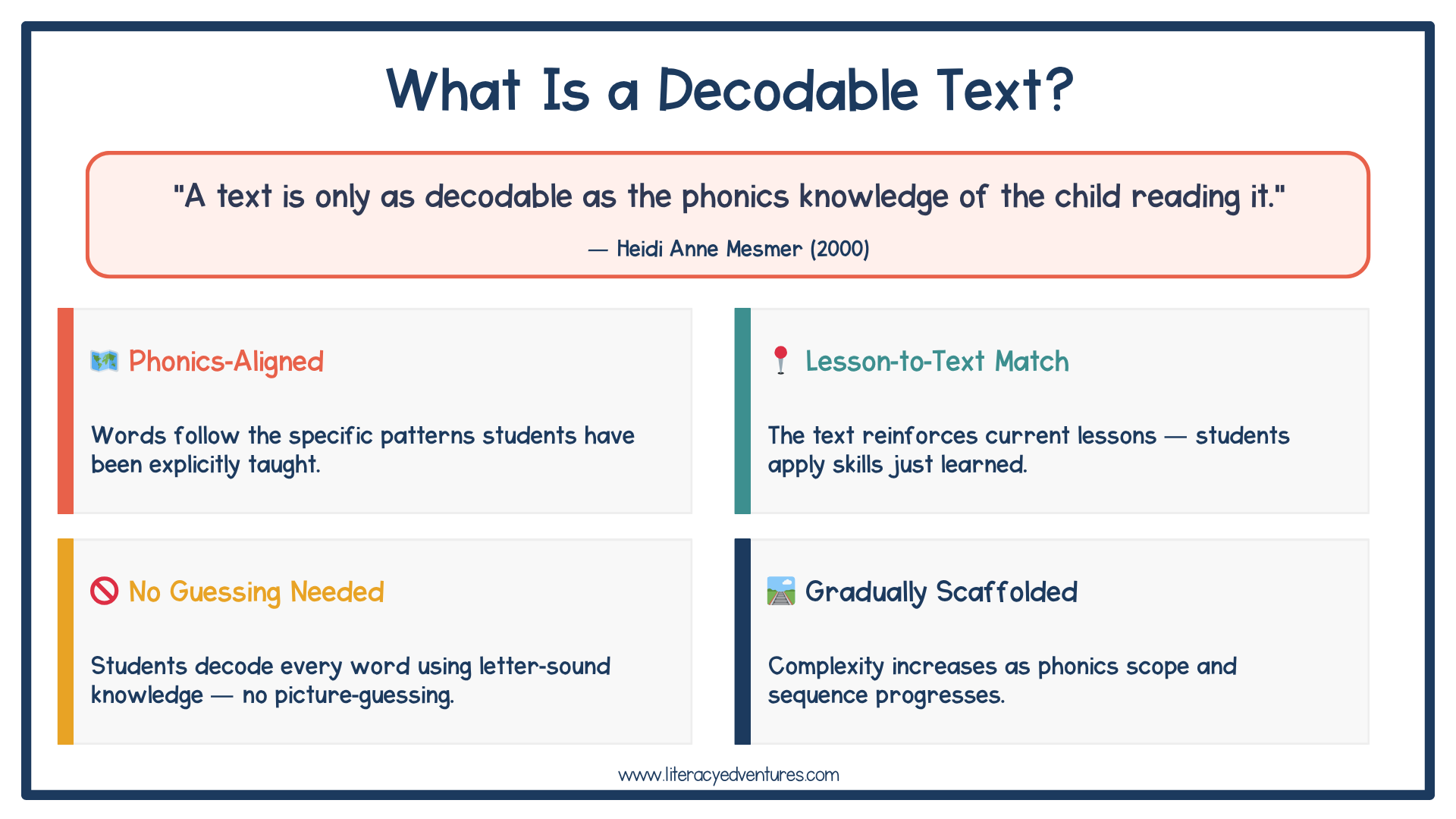
What Is a Decodable Text?
A decodable text is simply a text where most of the words follow phonics patterns students have already been taught. In other words, the text matches what the reader knows.
Literacy researcher Heidi Mesmer said it well:
“A text is only as decodable as the phonics knowledge of the child reading it.”
When students read a decodable text, they should be able to:
Use the letter-sound patterns they’ve learned
Decode words left to right
Apply their phonics skills in connected reading
Instead of guessing, they’re doing the real work of reading.
Decodable Texts vs Leveled Books
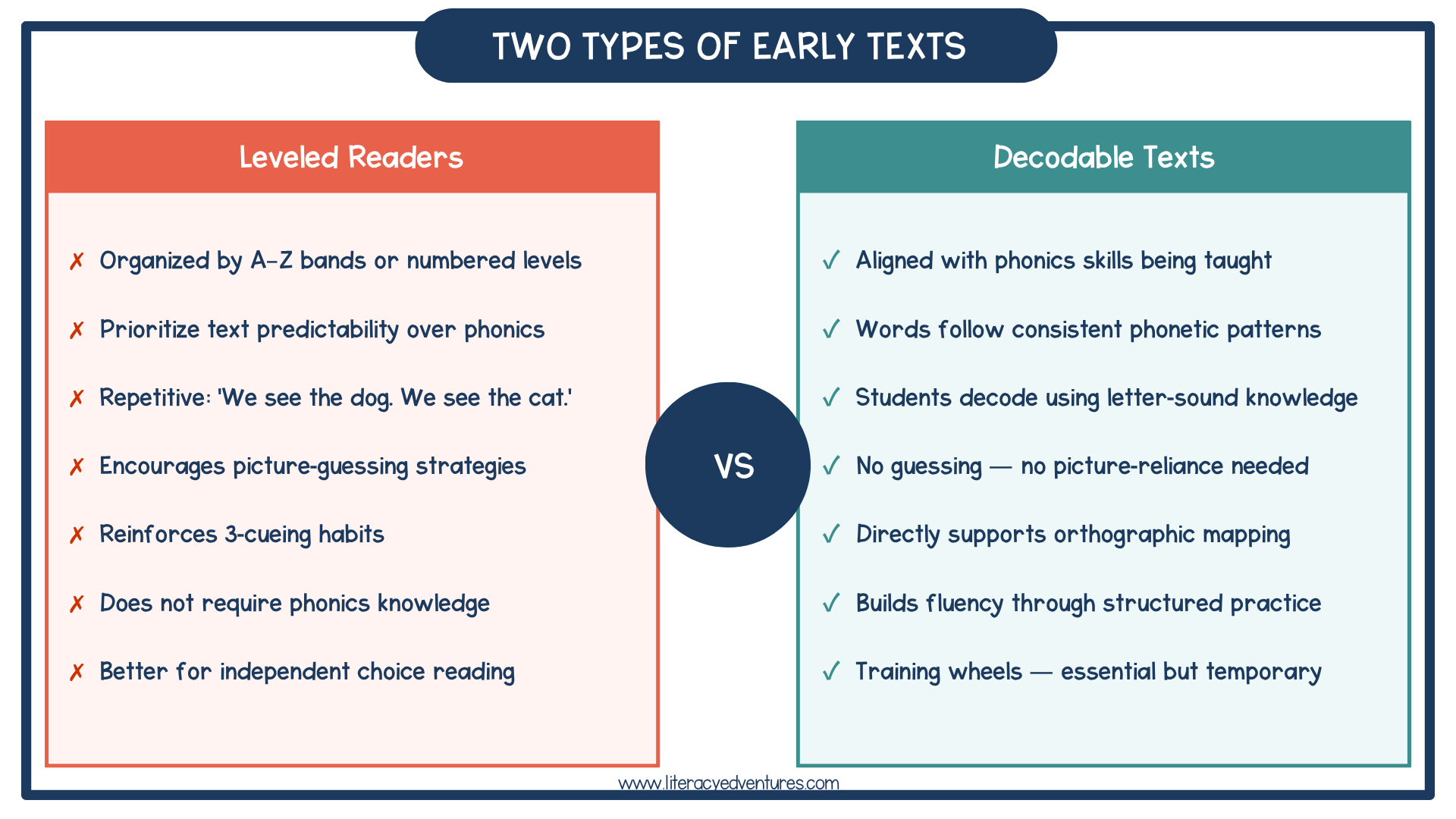
Most teachers are familiar with leveled readers. These are the books labeled A–Z or by reading levels. The challenge is that leveled books are not designed to support phonics instruction.
They often rely on:
Repetition
Picture clues
Predictable sentence patterns
Students might read something like:
"I see the dog."
"I see the cat."
"I see the pig."
Those texts often encourage students to look at the picture and guess the word, instead of decoding. Decodable texts work differently. They are built so students have to use their phonics knowledge.
Instead of guessing, students practice:
Looking at every letter
Applying sound-symbol relationships
Blending sounds together
Decodable texts are like training wheels for reading. They give students a safe place to practice until decoding becomes automatic.
Why Guessing Doesn’t Build Readers
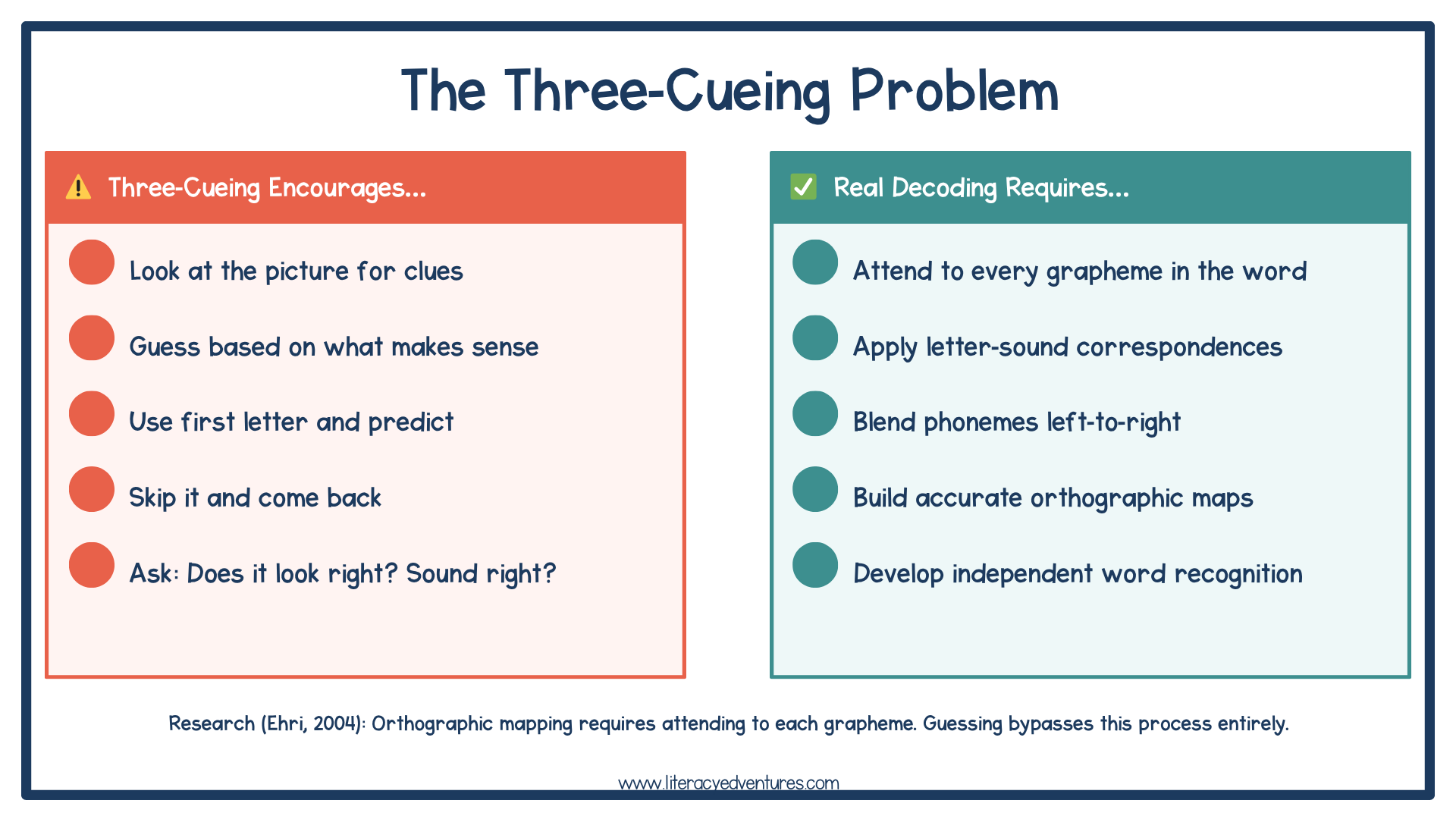
When students are encouraged to look at pictures or guess words based on context, they may appear to read — but they’re not actually building the skills needed to become strong readers. Research on orthographic mapping shows that students need to pay attention to every grapheme in a word in order for that word to become permanently stored in their memory.
For example, when a student decodes the word ship, they:
See the letters sh-i-p
Connect those letters to sounds
Blend the sounds together.
Every time they successfully decode that word, the brain strengthens the connection between the spelling, pronunciation, and meaning. That’s how words move from slow decoding to automatic recognition. Guessing skips that entire process. Decodable texts help ensure students are actually doing the work that builds reading.
Decodability Is Not All-or-Nothing
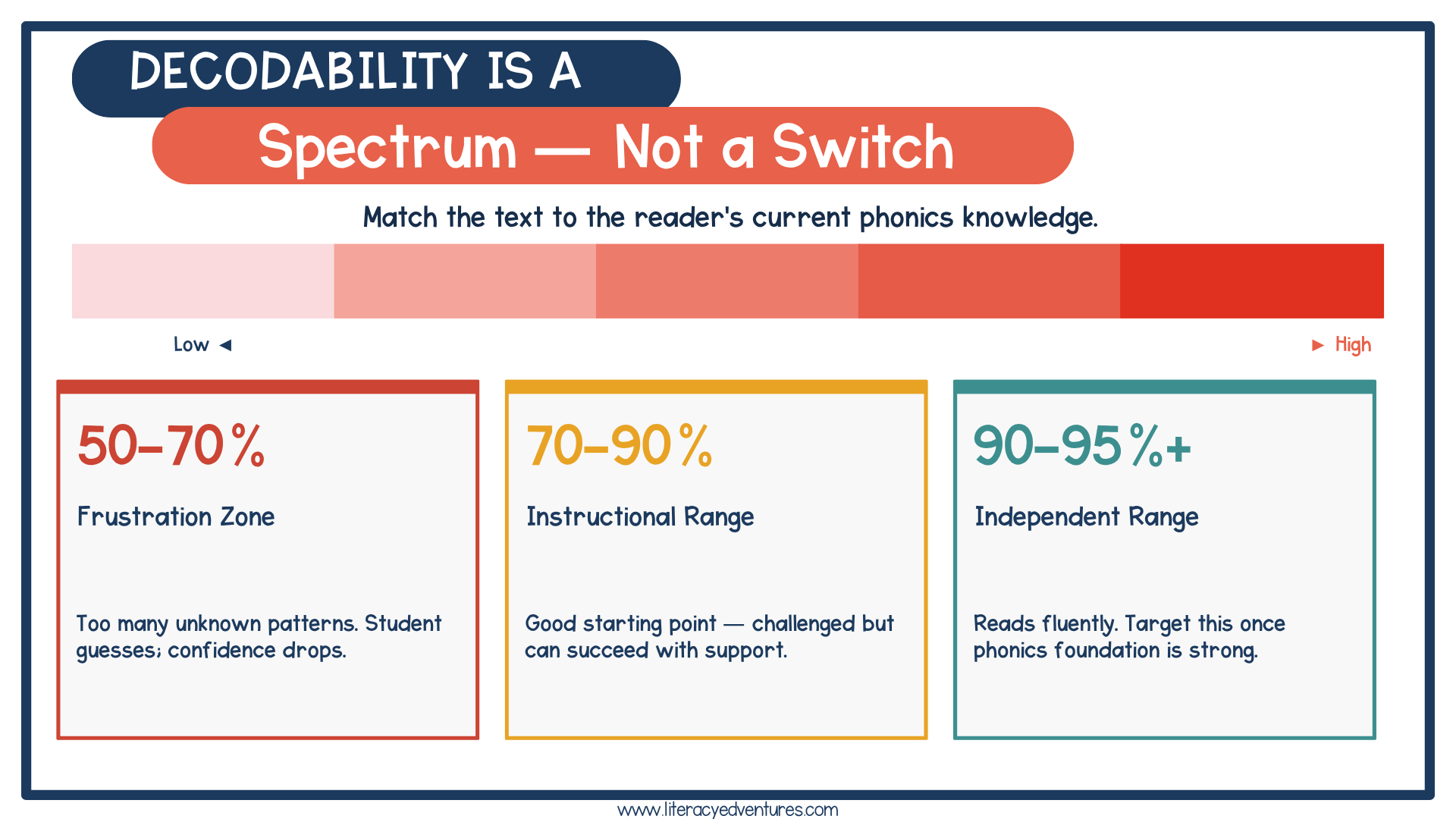
A text isn’t just decodable or not. It’s more helpful to think of it on a spectrum.
If too many words in a text contain patterns students haven’t learned yet, they will start guessing.
Generally speaking:
50–70% decodable
Too difficult. Students get frustrated and rely on guessing.
70–90% decodable
Good instructional range with support.
90–95% decodable
Students can read successfully and begin building fluency.
The key is matching the text to what students have actually been taught.
How Decodable Texts Build Word Recognition
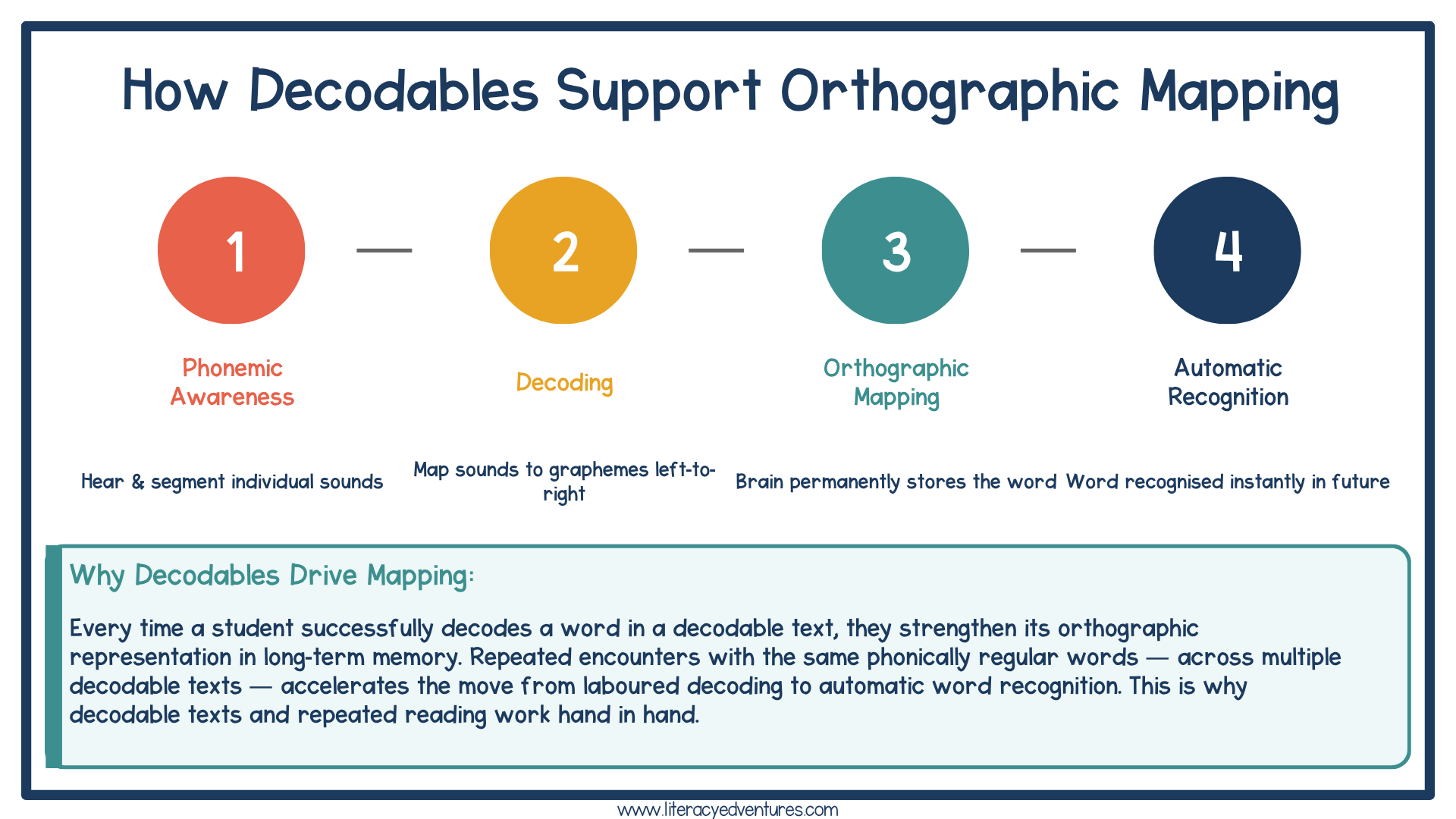
Decodable texts support something called orthographic mapping, which is how words become permanently stored in a reader’s brain.
The process looks like this:
Students hear the sounds in a word
They connect those sounds to letters
The brain stores the word
The word becomes instantly recognizable later
Every time students decode a word successfully in a decodable text, they strengthen that memory.
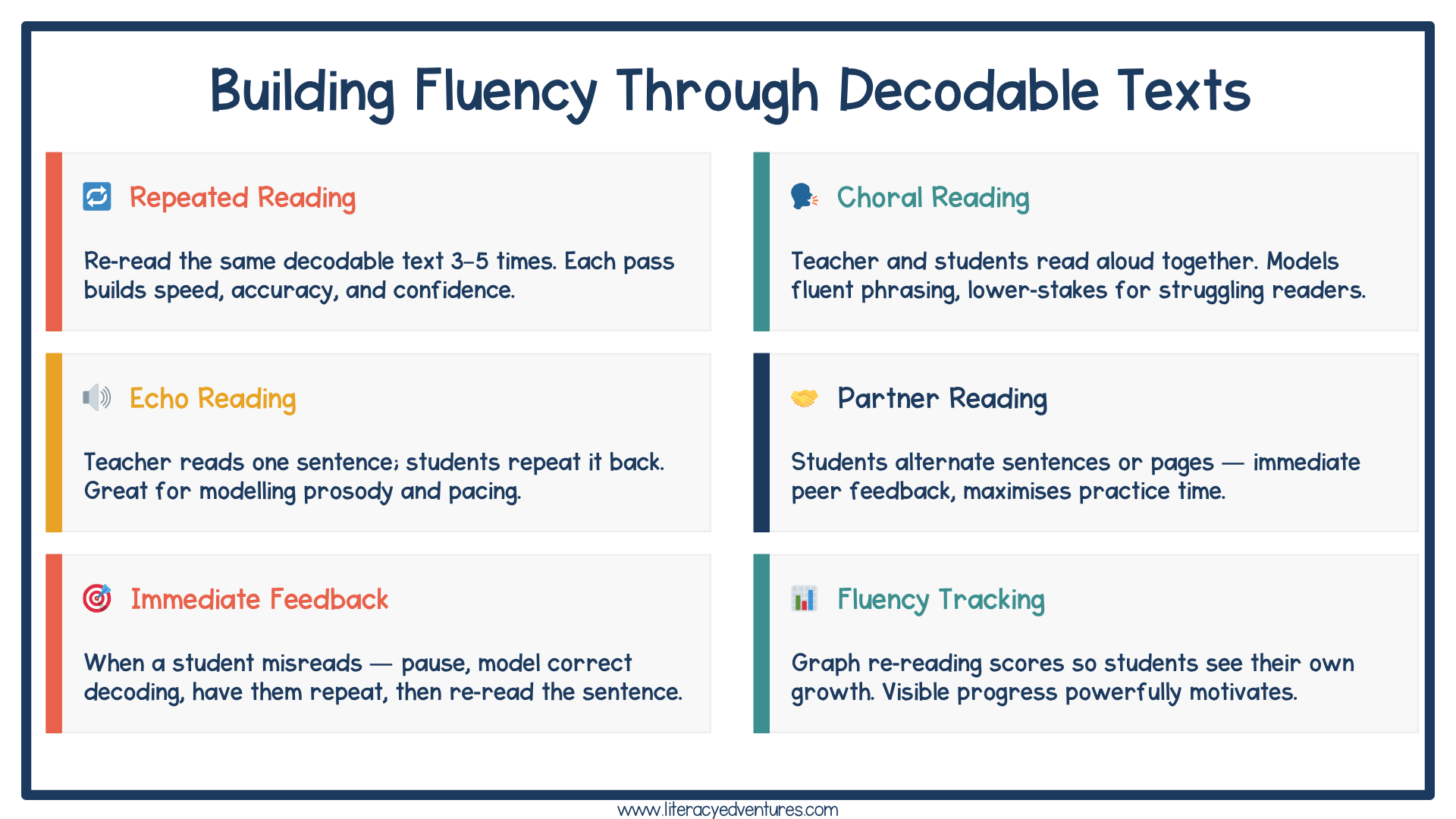
That’s why repeated reading is so powerful.
A Simple Routine for Using Decodable Texts
You don’t need a complicated lesson to make decodable texts effective.
A simple routine can work really well.
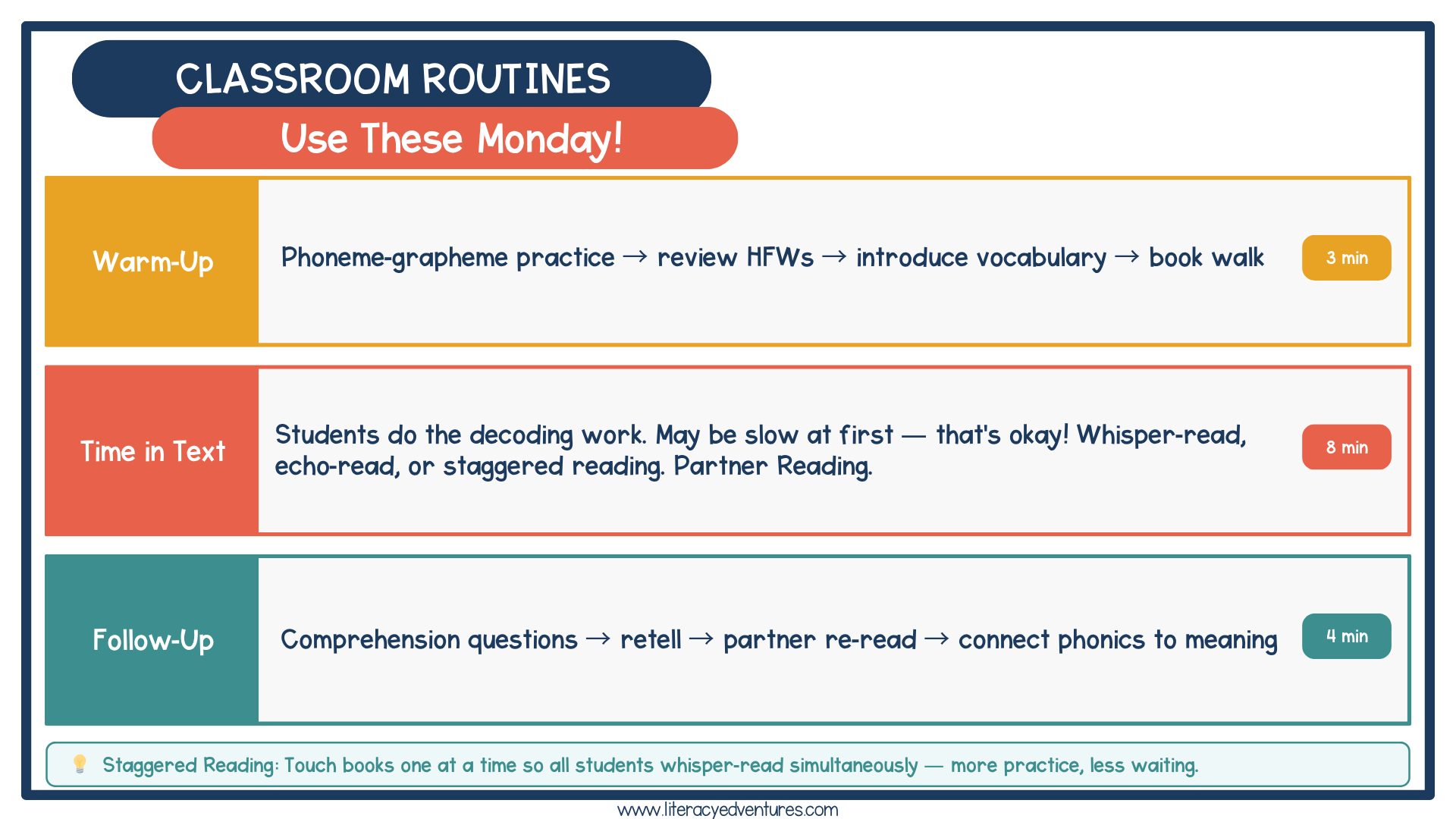
Step 1: Warm Up (3 minutes)
Before students read, quickly prepare them.
You might:
Review the target phonics pattern
Decode a few words they’ll see in the text
Practice high-frequency words
Preview tricky vocabulary
This gives students confidence before they start reading.
Step 2: Time in Text (5–8 minutes)
Now students read the decodable text.
Some options include:
Whisper reading
Echo reading
Choral reading
Partner reading
If a student makes an error:
Pause
Model the correct decoding
Have the student repeat it
Reread the sentence
This keeps the focus on decoding instead of guessing.
Step 3: Follow-Up (5–10 minutes)
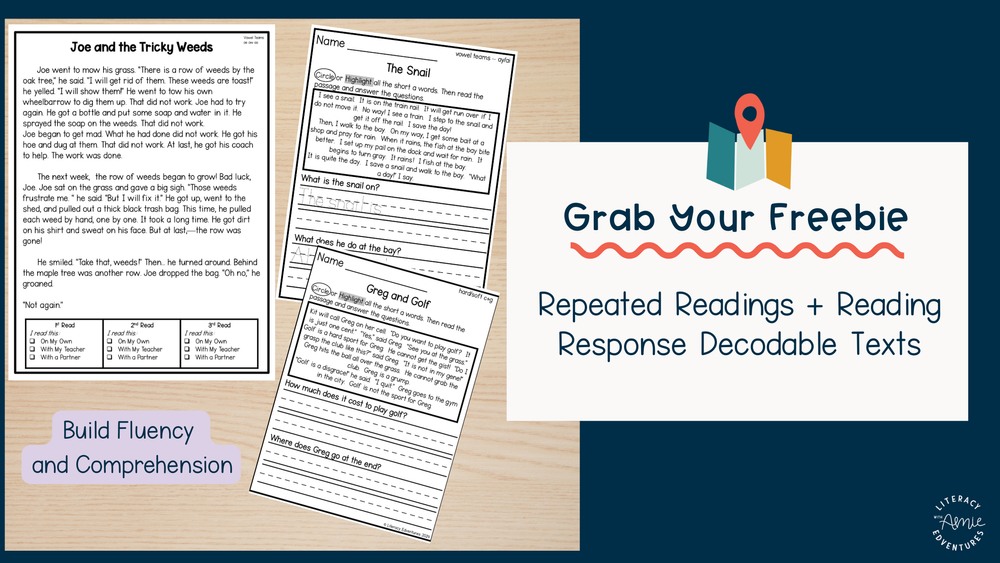
After reading, reinforce both fluency and meaning.
You might:
Reread the text
Ask a few comprehension questions
Have students retell the story
Dictate a sentence using the target pattern
Highlight the phonics pattern in the text
This helps connect decoding to comprehension.
Supporting Struggling Readers
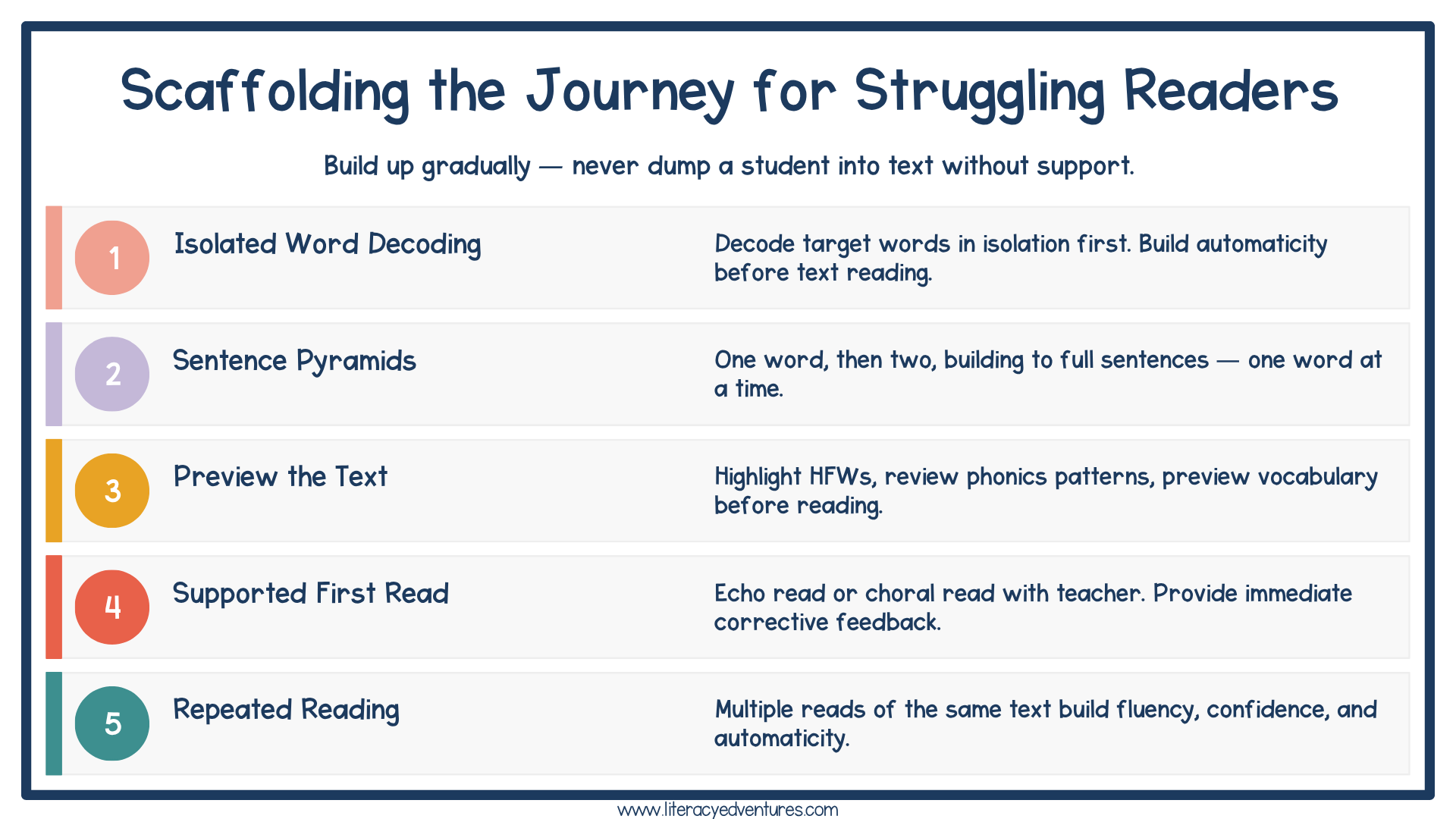
Some students need extra support before jumping into the text.
A few helpful scaffolds include:
Practicing target words first
Using sentence pyramids
Previewing vocabulary
Echo reading the first time through
Rereading the text across the week
These supports allow students to experience success while still practicing decoding.
Fluency Is the Bridge to Real Reading
Fluency is what tells us decoding is becoming automatic.
Fluent reading includes:
Accuracy – reading words correctly
Rate – reading at an appropriate pace
Expression – using phrasing and intonation
When students no longer have to think hard about decoding every word, their brains can finally focus on understanding the text.
That’s why fluency is often described as the bridge between decoding and comprehension.
When Are Students Ready for More Complex Texts?
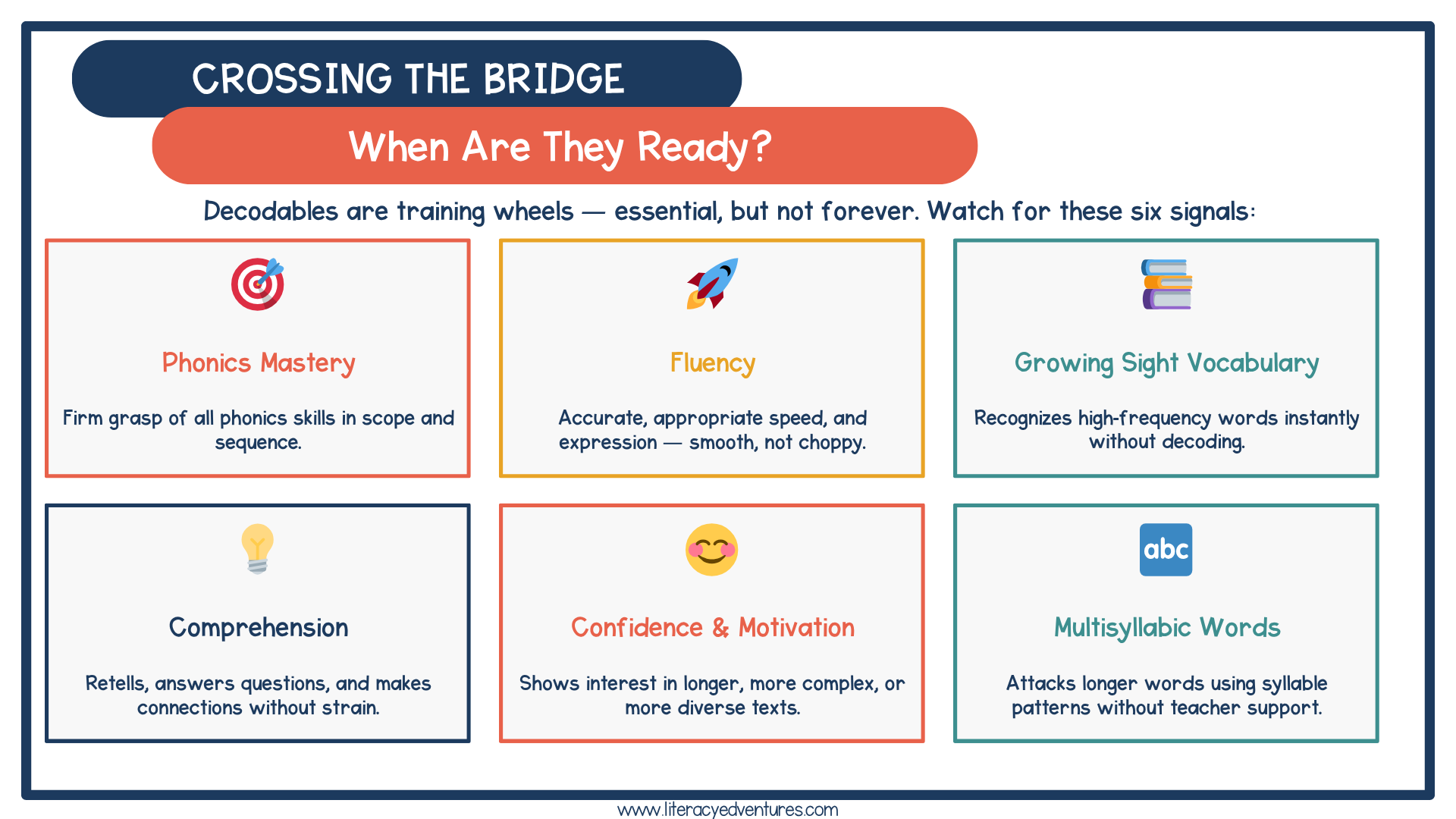
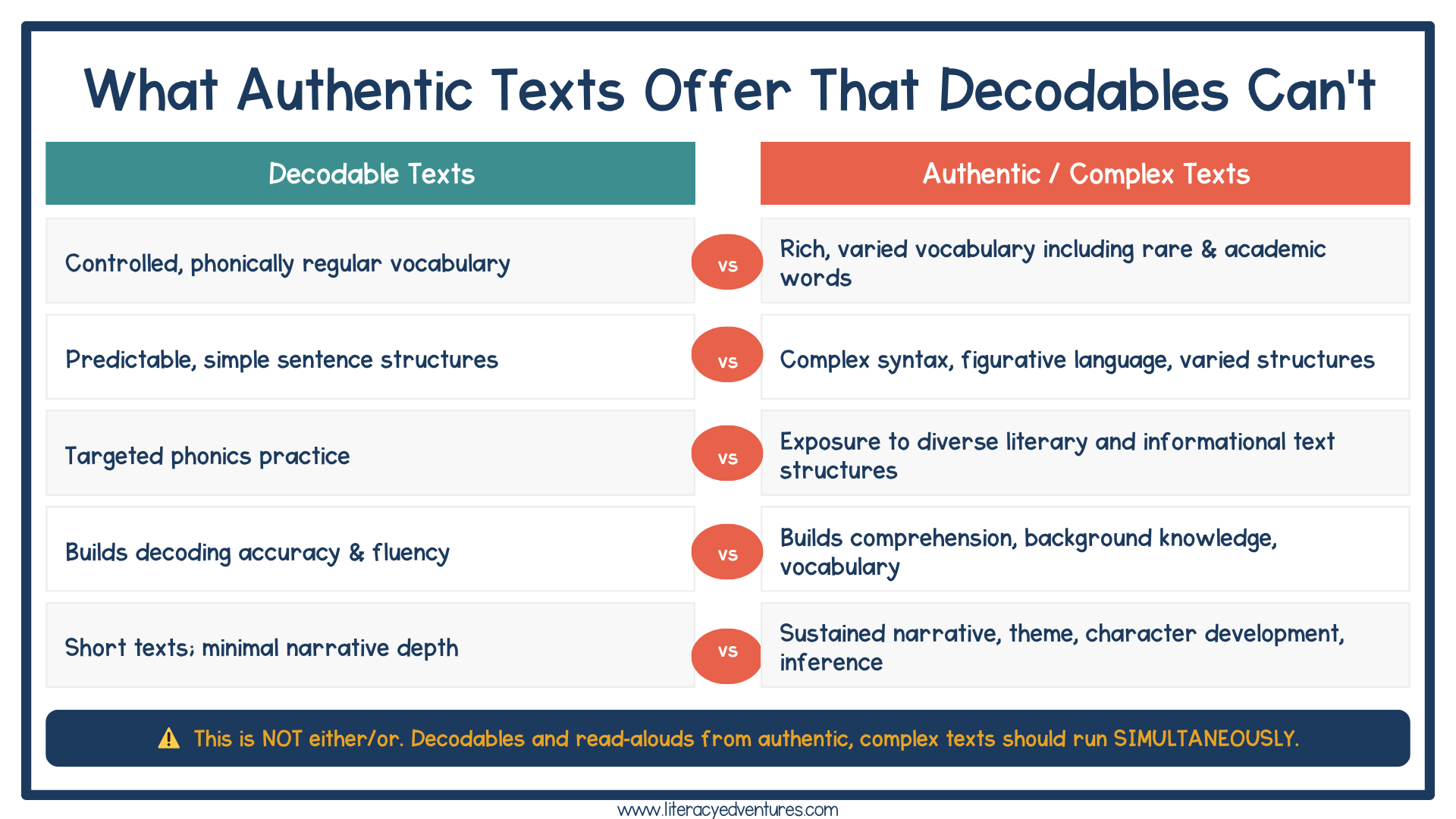
Decodable texts are essential — but they aren’t meant to last forever.
Students are ready to move beyond them when you see:
Strong phonics knowledge
Fluent reading
A growing bank of instantly recognized words
Solid comprehension
Confidence with longer texts
Ability to decode multisyllabic words
At that point, students can gradually begin reading more authentic texts independently.
The Big Picture
Strong reading instruction includes several pieces working together:
Explicit phonics instruction
Decodable texts for practice
Fluency routines like repeated reading
Daily read-alouds with rich literature
A gradual transition to authentic texts
When all of these pieces work together, students develop the skills needed to become confident readers who truly understand what they read.
Final Thoughts
Decodable texts are not the end goal of reading instruction.
They’re the practice field.
They give students the chance to apply phonics, build fluency, and develop the automatic word recognition that makes real reading possible.
And when that foundation is strong, everything else in reading becomes easier.