From Scribbles to Script: Where Letter Formation Truly Fits in the Writing Journey

If you’ve ever wondered when handwriting should actually be taught—or worried that you might be spending too much time on it—you’re not alone. Most teachers aren’t questioning whether handwriting instruction matters. They’re trying to figure out where letter formation fits alongside phonics, writing, and everything else in the literacy block.
The challenge isn’t effort or intention. It’s that early writing instruction is often treated as a series of disconnected skills instead of a developmental progression.
Writing Instruction Starts Before Letters Ever Hit the Page
Effective writing instruction doesn’t begin with letter formation. It begins with the body and with language.
Before students can form letters with control and consistency, they need foundational supports in place: posture, pencil grip, fine motor strength, and intentional movement across the page. Those early scribbles seen in pre-K and kindergarten aren’t random or wasted time. They are how students learn pressure, directionality, and coordination—how to make their hands do what their brains are asking.
At the same time, young writers are learning to use oral language to organize their thinking. Before children can write ideas, they need opportunities to talk about them—naming objects, describing actions, retelling experiences, and hearing their own thoughts spoken aloud. Oral language gives students something to write about once their bodies are ready to write.
When fine motor development and oral language are rushed or skipped, handwriting instruction often becomes a struggle later on—not because students can’t learn, but because the foundation isn’t solid yet. Strong early writing instruction honors both the physical readiness needed to write and the language development needed to express ideas. When these pieces are in place, letter formation doesn’t feel overwhelming when it’s introduced—it feels purposeful.
One of the most practical early supports you can teach is an efficient pencil grip routine. The short video below shows a student practicing the “pinch and flip” technique to quickly and correctly position the pencil. This simple routine builds muscle memory and helps students become automatic with their grip so they can focus their attention on forming letters and expressing ideas.
If pencil grip has been a sticking point in your classroom, I’ve included a free printable and step-by-step guide to help you teach and reinforce it with confidence.
But pencil grip is just one piece of the developmental puzzle.
Once students have the physical foundation in place, we move into the next critical stage of early writing instruction: letter formation.

Practice Pencil Grip
Letter Formation Is the Middle of the Writing Journey
Letter formation instruction sits right in the middle of early writing development. It’s not the starting point, and it’s not the final goal.
This is where many students get stuck. They may know letter sounds. They may even read simple words. But writing feels slow, effortful, and frustrating.
Teachers often describe it this way:
“They know it, but they can’t get it on paper.”
That disconnect is usually a sign that letter formation hasn’t become automatic yet.
Why Automatic Letter Formation Matters
Letter formation is a motor skill. Until students can form letters without consciously thinking about each movement, their brains are working overtime just to produce the letters. That effort competes with spelling, holding sounds in working memory, and constructing sentences.
When handwriting isn’t automatic:
writing stamina decreases
spelling accuracy drops
sentence writing feels overwhelming
Students may begin to avoid writing altogether—not because they lack ideas, but because writing requires too much effort.
When letter formation becomes automatic, cognitive energy is freed up. Students can focus on encoding sounds, choosing words, and building sentences instead of remembering how to start a letter or which direction it moves.
And that’s where the bridge begins.
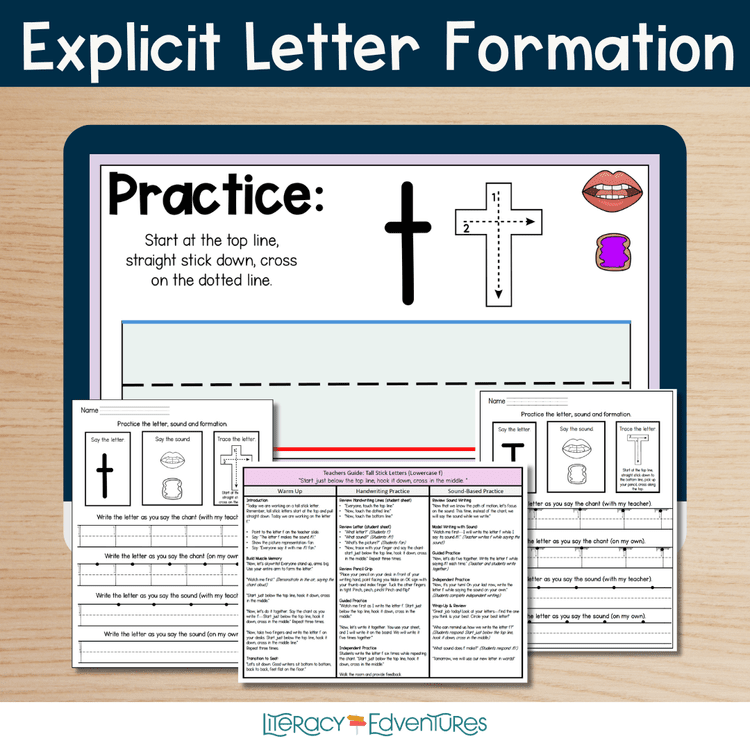
Letter Formation In Action
Letter Formation Bridges Phonics and Writing
This is why letter formation instruction plays such an important role in literacy development.
When letter formation is taught explicitly and practiced consistently, it frees up cognitive space. Students can focus less on how to write and more on what they want to say. Phonemic awareness connects more easily to spelling. Decoding supports encoding. Writing becomes more accessible.
When letter formation is weak or inconsistent, everything built on top of it feels fragile.
Letter formation is not separate from phonics instruction. It strengthens the alphabetic principle. When students say the sound while forming the letter, connect letters into words, and reread what they’ve written, reading and writing reinforce each other.
Daily Letter Formation Practice (Without Taking Over the Day)
Letter formation practice doesn’t need to dominate the schedule to be effective.
Short, focused practice done daily is far more powerful than longer, inconsistent sessions. Ten to fifteen minutes of explicit handwriting instruction builds the automaticity students need.
When letter formation is connected to literacy—saying the sound while writing the letter, using letters in words, rereading what was written—it reinforces phoneme-grapheme connections and supports spelling and reading at the same time.
Handwriting instruction stops feeling like “one more thing” and starts supporting the entire literacy block.
Knowing When to Slow Down in Writing Instruction
Knowing when to slow down is just as important as knowing when to move forward.
If students hesitate when writing letters, form letters differently each time, or struggle more with spelling than reading, that’s important instructional information. It doesn’t mean instruction has failed. It means letter formation needs more support before students are pushed into longer writing tasks.
Spending time strengthening letter formation isn’t remediation.
It’s foundation-building.
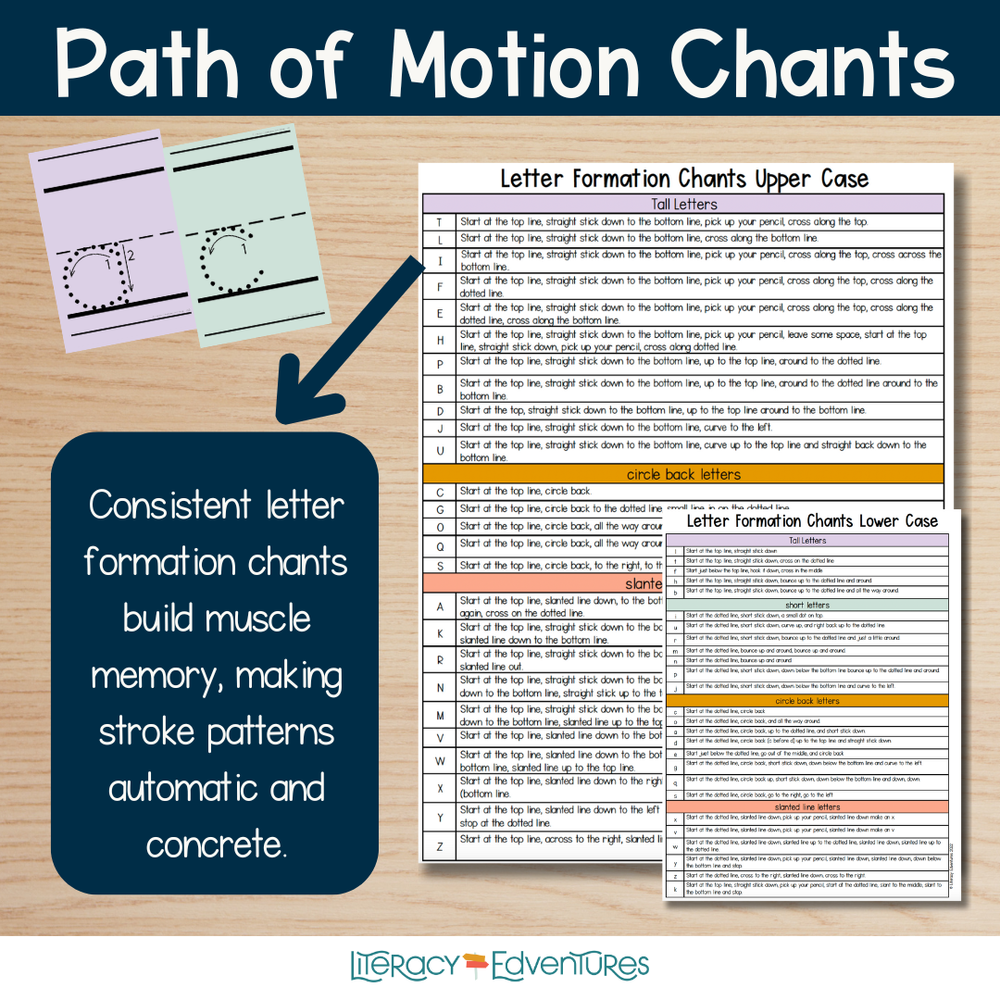
Consistent Language Matters
What Happens When Letter Formation Becomes Automatic
When letter formation becomes automatic, the rest of the writing journey opens up.
Students are better able to write phonetic words, participate in dictation, and begin constructing sentences with support. Because the motor work is secure, their cognitive energy can shift toward meaning, structure, and expression. Writing no longer feels like a barrier—it becomes a tool for communication.
Instead of focusing on how to form each letter, students can focus on what they want to say.
And that’s when real writing growth begins.
Final Thoughts on Letter Formation and Writing Development
Strong early writing instruction isn’t about doing more. It’s about building skills in the right order.
When we honor the progression—starting with the body, strengthening letter formation, and gradually moving toward words and sentences—we reduce frustration and increase confidence. We create writers who feel capable, not overwhelmed.
Letter formation isn’t a small detail in the literacy block. It’s the bridge between phonics and written expression.
And when that bridge is strong, everything built on it becomes stronger too.
That’s how we help students move from scribbles… to script.
Want Support Getting Started?
If you want a simple, structured way to strengthen letter formation in your classroom, I created a free Letter Formation Quick Guide for you.
Inside, you will find:
• The developmental progression from strokes to letters
• Clear teaching routines you can implement immediately
• Common formation mistakes to watch for
• Practical tips to reduce reversals and build automaticity
You do not need to overhaul your writing block. You just need a clearer starting point.
Download the free guide and begin building that bridge with confidence.