You've taught the syllable types. Your students can identify closed syllables, open syllables, vowel teams, and even divide multisyllabic words into smaller, more manageable parts.
But what happens when they decode a word, and it doesn't sound quite right?
Maybe they're reading wagon and pronouncing every vowel exactly as they would in an isolated closed or open syllable. Or they're working through a word like teachable and don't quite recognize how the vowel sounds change in an unstressed syllable.
Sound familiar?
Here's something I want us to think about.
Knowing the syllable types and their patterns is important. But knowing how to be flexible when decoding those syllables is just as important.
We want students to understand syllable types and how they work. But we also want them to recognize that the pronunciation of a vowel can change when it appears in an unstressed syllable. Sometimes the first pronunciation they try won't sound like a word they know. And that's when we need to teach them what to do next.
We need to teach them to be flexible!
Today, I'm sharing how I think about teaching syllable flexibility, why it matters, and how we can intentionally build it into our daily phonics and decoding instruction.
What Does It Mean to Be a Flexible Decoder?
When we teach syllable types, we're giving students important information about how words work.
They learn that closed syllables typically have a short vowel sound, open syllables typically have a long vowel sound, and vowel teams work together to represent vowel sounds.
These patterns give students a starting point when they encounter unfamiliar words.
But here's where things get interesting.
Not every vowel will make the sound students expect when they first apply a syllable pattern.
Think about a word like wagon.
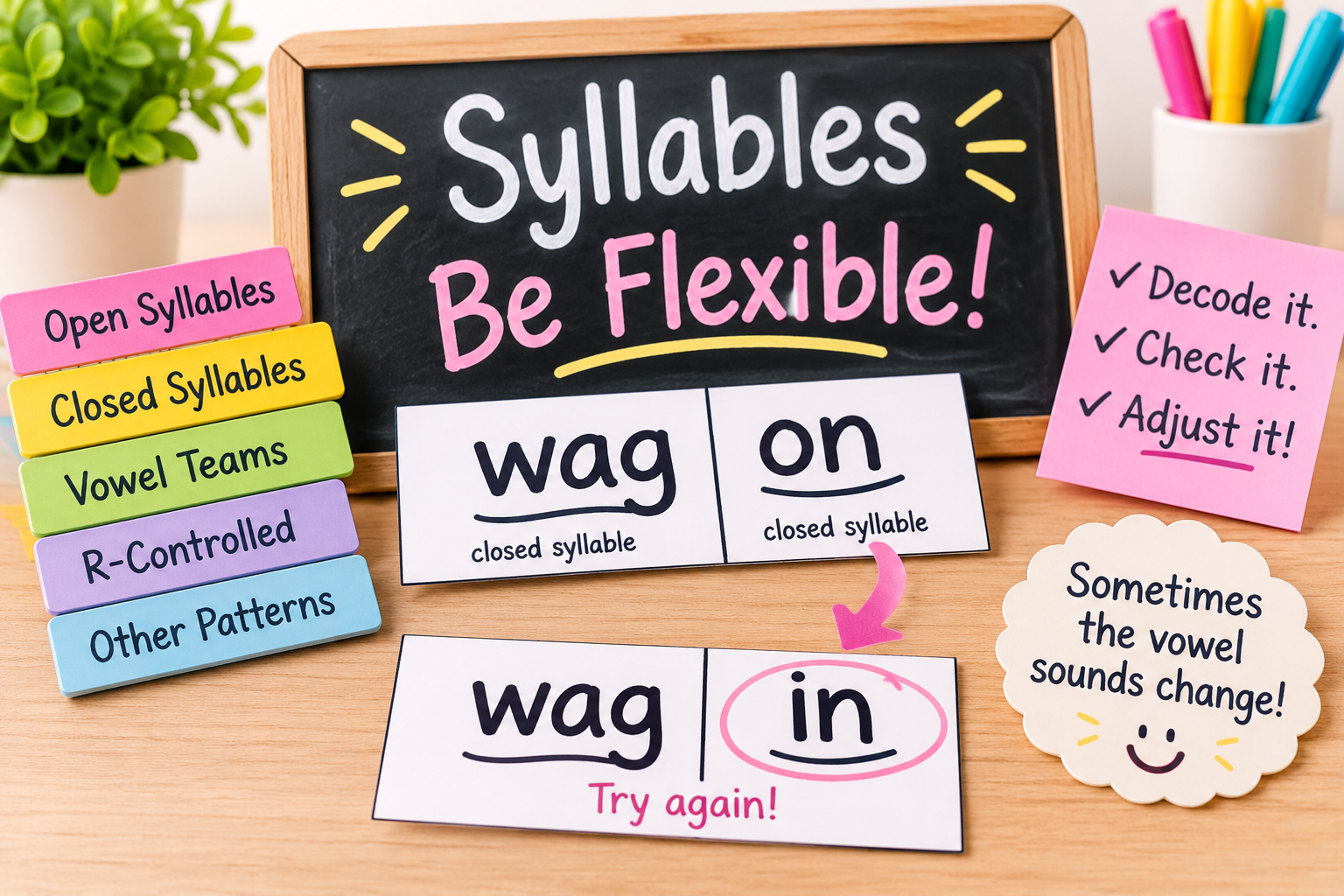
Students may divide the word into two syllables: wag-on. They recognize the closed syllable wag and the closed syllable on. They can identify the patterns, but when they blend the word, they may pronounce the second vowel with a strong short O sound.
That's not how we typically say the word!
The O in the second syllable is unstressed and is often pronounced with a schwa sound.
This is where flexibility comes in.
We want students to be able to look at the word, apply what they know about syllables, decode the word, and then adjust the pronunciation when needed.
It's not about throwing away the syllable rules. It's about understanding that those rules give us a starting point, not always the final pronunciation.
And that's an important distinction!
Why I Started Using the Word "Flexible" With My Own Son
I remember working with my son and realizing how important the language we use during decoding really is.
From the very beginning, I used terms like open syllable and closed syllable. I wanted him to understand the different syllable types and how to apply those patterns when reading.
But I also started using another word with him: flexible.
When we came across an unfamiliar word, I would have him break it apart, identify the syllables, and blend the sounds together.
One word I remember working through was devastation.
He initially sounded it out as de-va-sta-tion. I would listen and then say something like:
"That doesn't sound quite right. Let's be flexible with those vowel sounds. Can we try breaking it apart another way?"
He tried again, adjusting how he pronounced the vowel in the unstressed syllable. Eventually, he was able to recognize the word and pronounce it correctly.
What I loved about this moment wasn't just that he figured out the word.
It was that he was learning WHAT TO DO when his first attempt didn't work!
He knew how to identify syllables and apply the patterns he had learned. But he was also learning that he could adjust the pronunciation of a vowel, particularly in an unstressed syllable, until the word sounded like a word he recognized.
Now, this didn't happen overnight.
It happened through lots of repetition, explicit instruction, modeling, and opportunities to work with words.
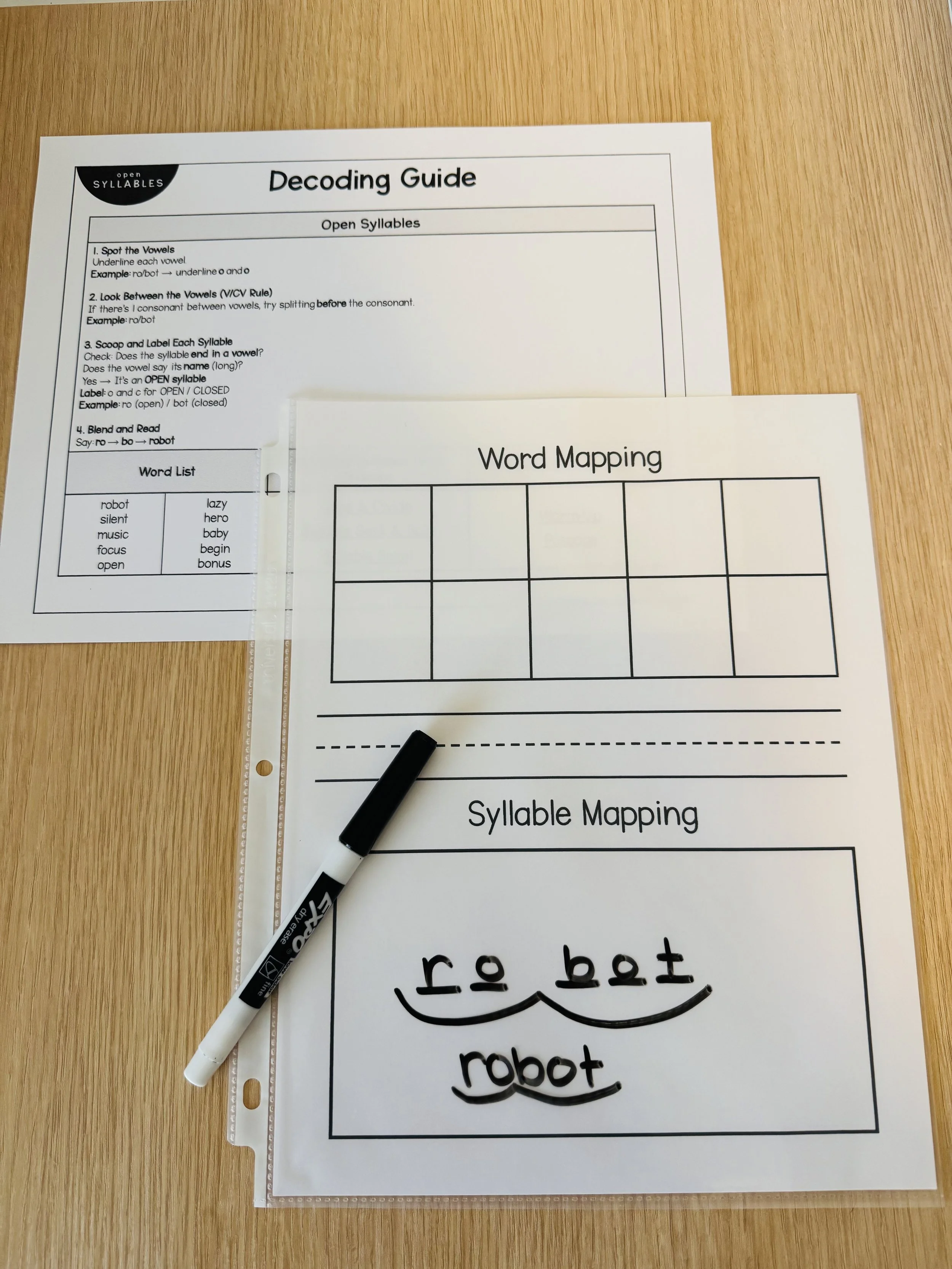
Something else I loved doing with him was our weekly spelling practice. We didn't just memorize spelling words for a Friday test. We syllable-mapped them every single week.
We broke the words apart, discussed the syllables, looked at the spelling patterns, talked about the morphemes and their meanings and talked about the sounds we heard. We also practiced being flexible when a vowel didn't sound exactly as we might expect.
All of that word work helped him become more comfortable working through unfamiliar words.
And this is something we can absolutely bring into our classrooms!
Decoding Comes First: Then We Teach Students to Be Flexible
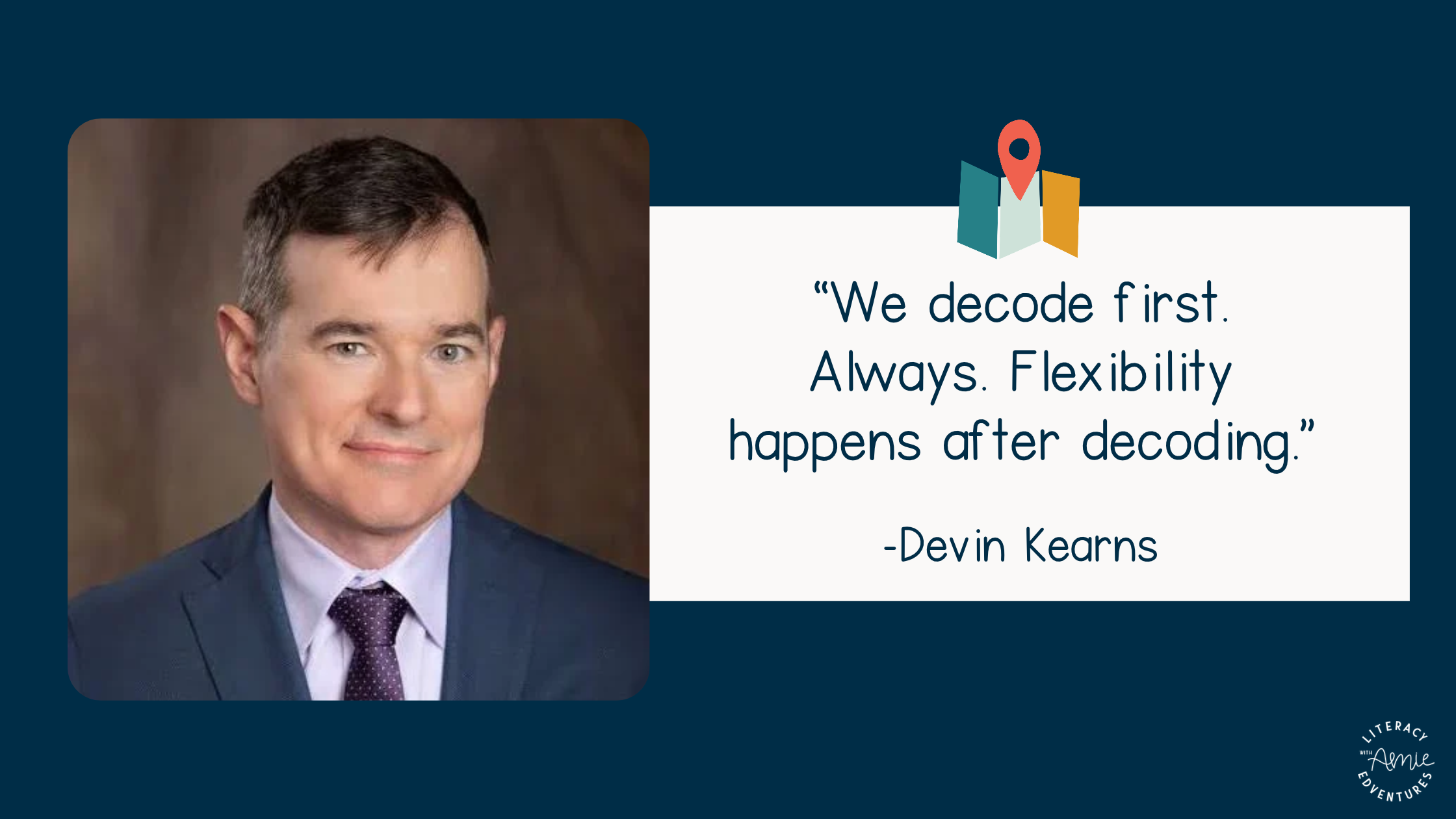
When I sat down with Devin Kearns on my podcast, we talked about something that really stuck with me: set for variability.
He explained:
"We decode first. Always.
Set for variability happens after decoding — when students adjust the pronunciation to match a word they already know."
I LOVE this!
Because there's an important difference between teaching students to be flexible and teaching them to guess.
Decoding isn't guessing. It isn't skipping over a word. And it isn't looking at a picture to figure out what might make sense.
We teach students to read the word FIRST. Then, if their pronunciation doesn't match a word they know, we teach them to adjust it.
That's set for variability.
Devin also made another point that I think is so important for our instruction:
"We cannot teach 350 rules. At some point, flexibility becomes more powerful than another rule."
Think about that for a minute.
Our students don't need a binder full of tiny, disconnected rules that they have to remember every time they encounter an unfamiliar word.
They need strong decoding skills, knowledge of spelling patterns, an understanding of syllables, and the ability to adjust when their first attempt doesn't sound quite right.
That's the real work.
Not collecting more rules, but building adaptable, confident readers.
How to Teach Syllable Flexibility in Your Classroom
So, what does this actually look like during a phonics or syllable lesson?
Let's walk through an example.
Day 1: Introduce the Syllable Type and Begin Building Flexibility
Let's say you're introducing closed syllables.
Start with explicit instruction. Teach students what a closed syllable is, how it works, and what vowel sound they typically expect to hear.
Then move right into syllable mapping.
Have students work with several closed-syllable words. They can identify the sounds, map the graphemes, identify the syllable, and blend the word.
But here's where I would begin introducing flexibility.
Let's use the word wagon.
Have students look at the word and divide it into two syllables:
wag / on
Ask students to identify each syllable type. They can see that both syllables follow a closed-syllable pattern.
Now, have them blend the word.
If they pronounce the second syllable with a strong short O sound, model what happens when we say the word naturally.
You might say:
"Let's listen to that word. Does that sound like a word we know? We know the O is in a closed syllable, but sometimes vowels in unstressed syllables make a different sound. Let's try saying it again. Be flexible with that vowel!"
This gives students an opportunity to hear the difference between applying a pattern and adjusting a pronunciation to recognize a familiar word.
You're not replacing explicit syllable instruction. You're adding another layer to it.
And that starts with the language we use!
Day 2: Practice With Words and Build in Opportunities to Adjust
Once students have been introduced to the syllable type, continue practicing with words.
Give students opportunities to break words apart, map the sounds, identify syllable patterns, and blend them back together.
But don't stop there.
Intentionally include words that provide opportunities to hear and discuss unstressed vowels.
For example:
wagon
lemon
pilot
teachable
Ask questions such as:
What syllable types do you see?
What sounds do you expect the vowels to make?
Does the word sound like a word you know when you blend it?
Is there an unstressed syllable where the vowel sound might change?
Can we try adjusting that pronunciation?
The goal isn't to have students randomly change vowel sounds until something works.
The goal is to help them recognize when a pronunciation needs adjusting and understand why.
Day 3: Apply Flexibility to Connected Text
Now it's time to take those skills beyond isolated words!
This is one of my favorite ways to reinforce a new syllable type. After explicitly teaching a skill and providing opportunities for word-level practice, I want students to apply that knowledge to actual reading.
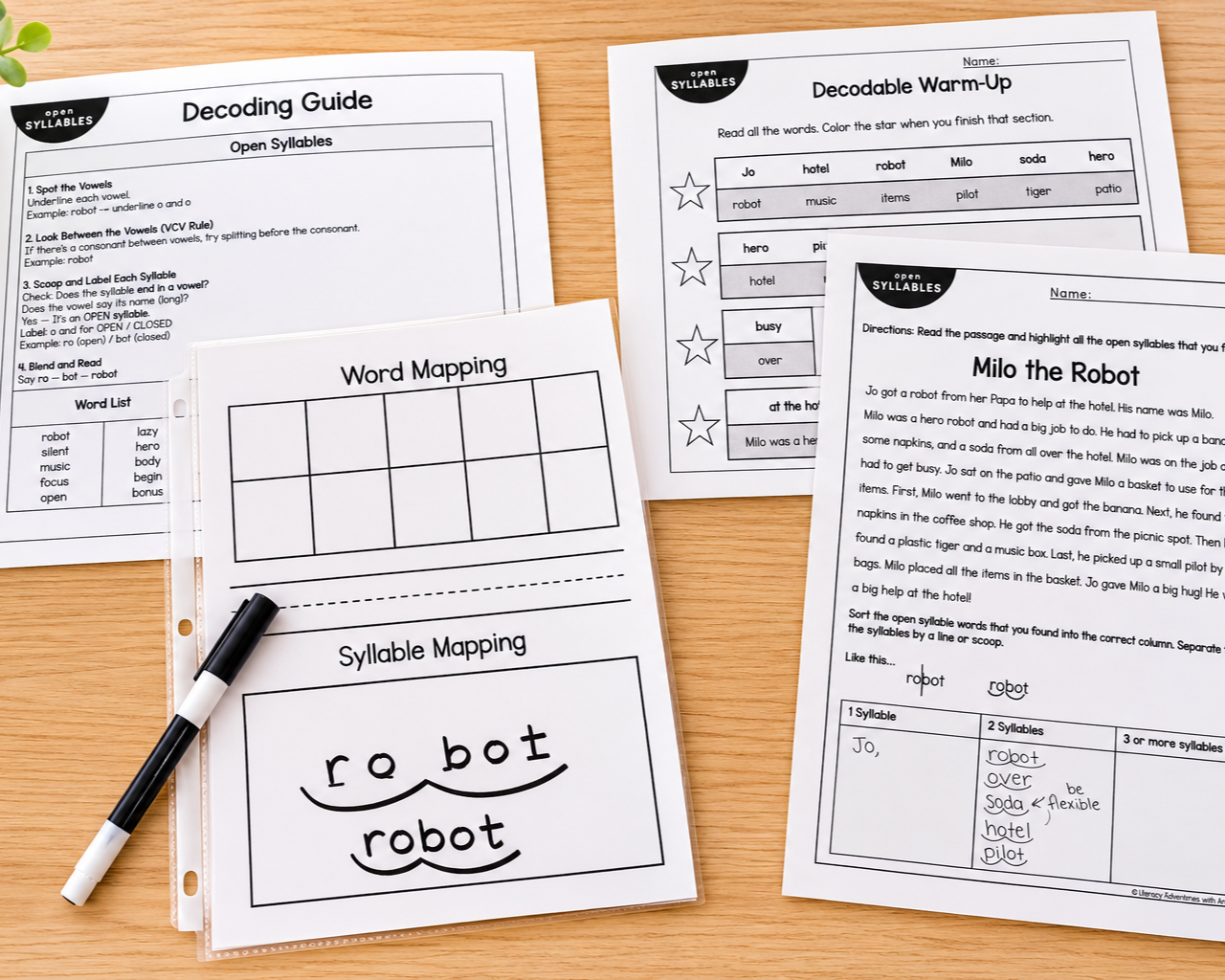
I love using a decodable warm-up to do this.
Before reading, have students preview the passage and highlight words that contain the syllable type you're focusing on.
Then, look at those words together.
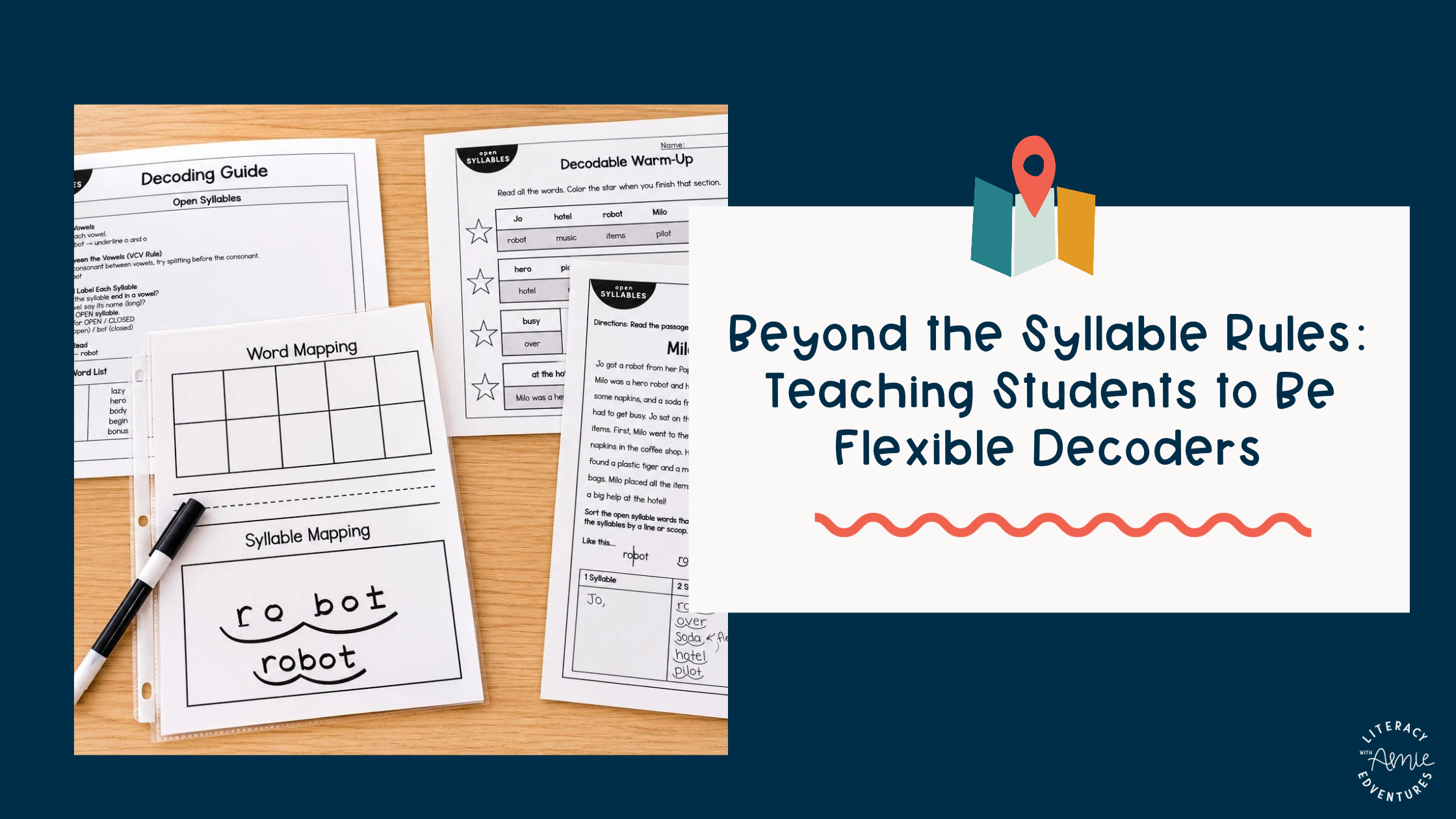
At the bottom of my syllable types decodables, I include a space for students to pull words directly from the passage, break them apart, and blend them back together.
Here's how I like to use it:
Preview the text. Have students look through the passage and highlight words containing the target syllable type.
Select words for word work. Choose a few words from the passage to investigate together.
Break the words apart. Have students identify the syllables, map the sounds, and discuss the spelling patterns.
Blend the words together. Practice reading the words accurately and fluently. If a pronunciation doesn't sound right, model how to be flexible.
Read the passage. Now students have already worked with some of the words they will encounter in connected text.
I love doing this BEFORE students read the passage.
They're not just encountering these words for the first time and trying to figure them out on the spot. They've already had an opportunity to break them apart, blend them together, and practice reading them.
And now they get to apply those skills in connected text!
Don't Forget About Morphology!
Here's another piece of instruction that I think works beautifully alongside syllable flexibility: morphology.
As students begin reading longer, multisyllabic words, we also want them to recognize meaningful word parts.
Think about a word like teachable.
Students can identify the base word teach and the suffix -able. They can discuss what the suffix means and how it changes the meaning of the base word.
As students develop their morphological knowledge, they're building another tool they can use when approaching unfamiliar words.
They begin to recognize familiar prefixes, suffixes, and roots. They can use those meaningful word parts to help them understand how a word is constructed and what it means.
And this matters for comprehension!
The more students understand the words they're reading, the better equipped they are to make connections, build vocabulary, and understand the text.
Look at how all of these pieces work together:
Phonics: Understanding the relationship between sounds and spellings.
Syllable instruction: Recognizing syllable types and using patterns to decode longer words.
Flexibility: Adjusting pronunciation when the first attempt doesn't match a known word.
Morphology: Recognizing meaningful word parts and how they contribute to a word's meaning.
Comprehension: Using word knowledge and vocabulary to understand what they're reading.
These aren't isolated skills that we have to teach separately and hope students connect later.
We can intentionally bring them together during our daily reading instruction!
Helping Students Become Flexible, Confident Readers
I think sometimes we get so focused on teaching students the rules that we forget to teach them what to do when those rules don't give them the pronunciation they expect.
Yes, students need explicit, systematic syllable instruction.
Yes, they need to understand syllable types, patterns, and how to divide multisyllabic words.
But they also need opportunities to manipulate words, listen to their own pronunciation, and make adjustments when something doesn't sound quite right.
And that takes practice!
It takes modeling. It takes repetition. It takes intentional word work. And it takes teachers who are willing to stop during decoding and say:
"Let's be flexible. Try that again."
Because ultimately, we don't just want students who can follow a set of syllable rules.
We want students who can take what they know, apply it to unfamiliar words, and confidently work through the words they encounter in their reading.
That's how we build stronger, more independent readers!
And sometimes, the most powerful thing we can teach isn't another rule.
It's how to be flexible.
The Takeaway for Teachers
1. Make flexibility part of your teacher language.
Some phrases you can use:
"Let's try that vowel sound another way."
"Does that sound like a word you know?"
"You decoded it. Now let's listen to how the word sounds."
"Is that vowel in an unstressed syllable?"
"Let's be flexible and try again."
2. Don't skip the word-level practice.
3. Keep the connection to morphology and comprehension.
Flexibility doesn't mean every vowel can make any sound. Students still need to attend to the spelling, syllable structure, stress, and known word patterns. The goal is a reasoned adjustment, not random guessing.
Don't just teach students to identify syllables. Teach them to be flexible when they decode them.
Ready to Strengthen Multisyllabic Word Instruction?
If you’re working with students who can decode simple words but struggle when texts become more complex, flexible decoding may be the missing piece.
Inside my Route2Reading membership, I walk teachers step-by-step through multisyllabic word instruction, decoding routines, fluency strategies, and practical ways to apply structured literacy in real classrooms.
Because strong readers don’t just follow rules — they know how to adjust.
And that’s a skill we can intentionally teach.
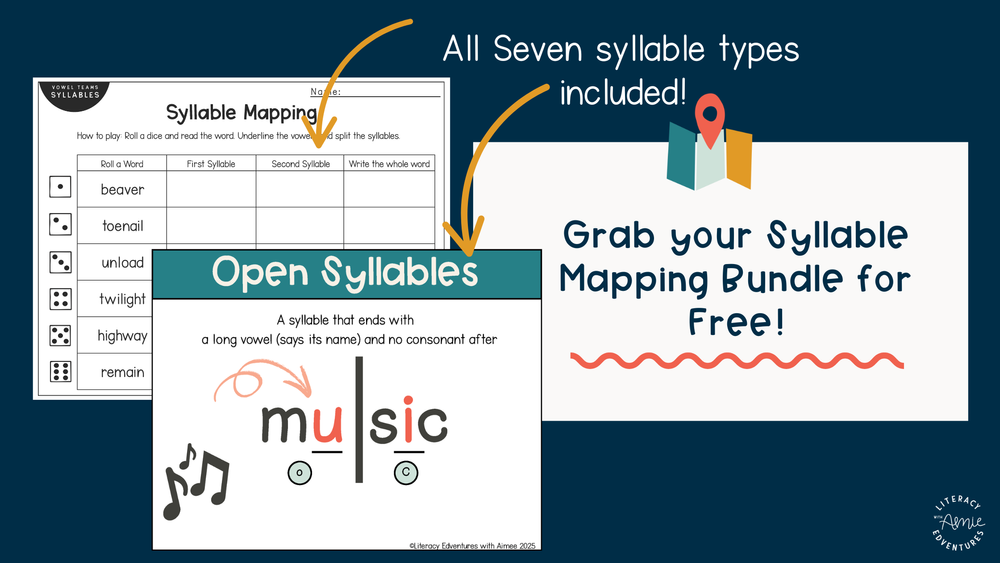
👉 Grab some of my syllable resources! They teach multisyllabic decoding while reinforcing flexibility.