Early Morphology: Why K–2 Is the Perfect Time
Have you ever wondered if morphology is “too hard” for the early grades, especially kindergarten? Good news: it isn’t. Our youngest learners are wired for pattern-finding, and K–2 is a fantastic time to begin. Start small, keep it playful, and watch their confidence, decoding and spelling grow.

What is morphology?
Morphology is the study of word structure and meaning. Morphemes are the smallest units of meaning in a word, think bases, prefixes, and suffixes. When students learn that -s can mean “more than one” and -ed can mean “happened in the past,” they start seeing words as buildable, meaningful parts rather than long, mysterious strings of letters.
Begin with oral language (yes, in kindergarten!)
Keep it conversational at first. Recycle an Anglo-Saxon base and shift meaning by changing the ending:
“I walk to the store.”
“She walks to the store with her friends.”
“Yesterday, she walked to the store with her friends.”
You’ve just modeled how the same base (walk) changes tense and number with meaningful endings. No worksheets required, just talk it out together.
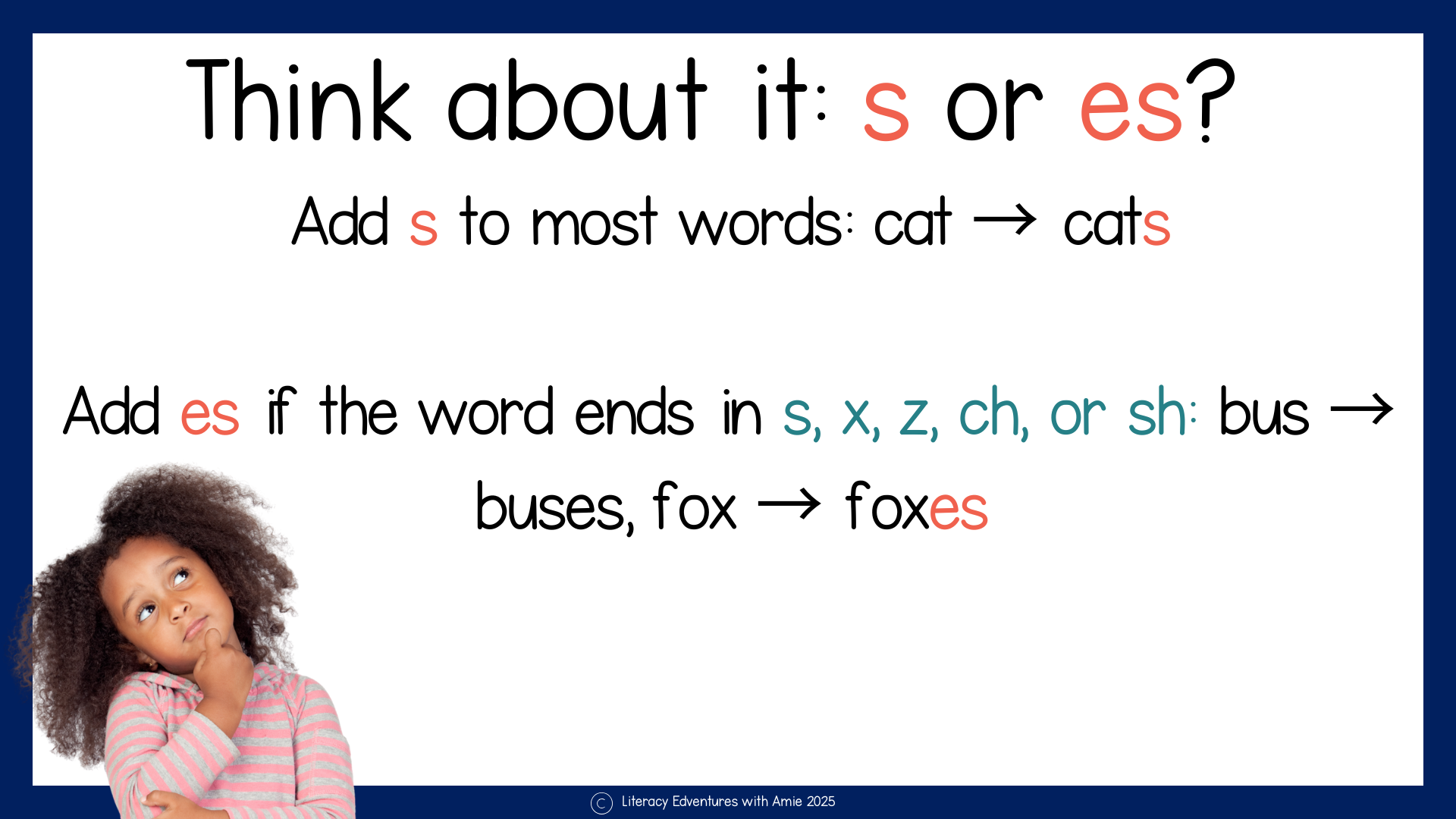
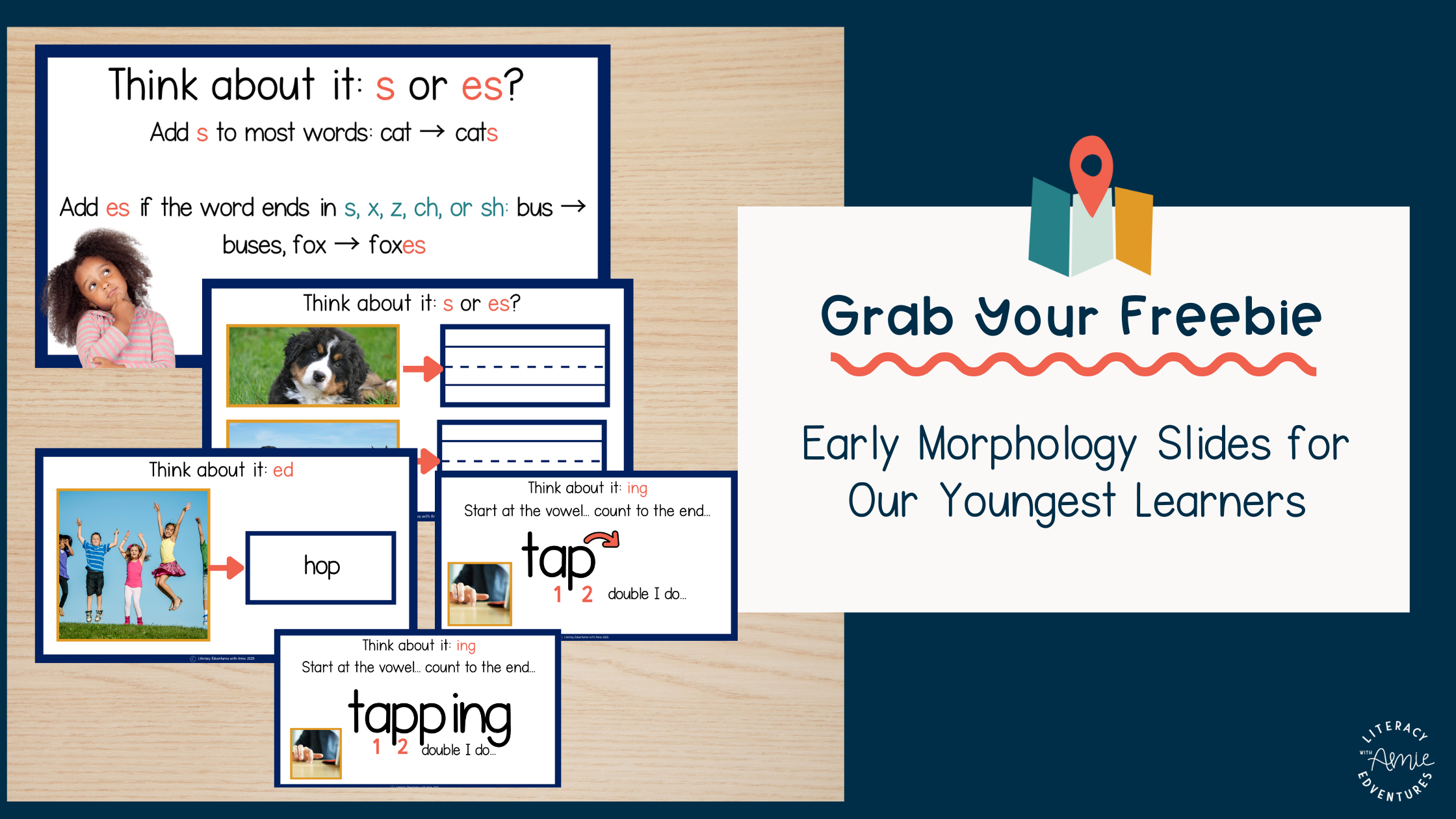
A favorite K lesson: the plural -s
I first heard a version of this routine from Sarah Paul and have adapted it over time. After students can read basic CVC words, introduce the suffix -s (“more than one”).
Write cat on the board. Read it together.
Draw one cat (your students will have a hoot watching you try!).
Say, “Then I get some more. Now I have lots of ______.”
Students respond: “cats.”Add -s to the word: cat → cats. Add a visual with lots of cats to cement the learning.
Teach: “-s means more than one.” Add a hand signal: hold up one finger as you say “more… than… one.” By the end: three fingers up.
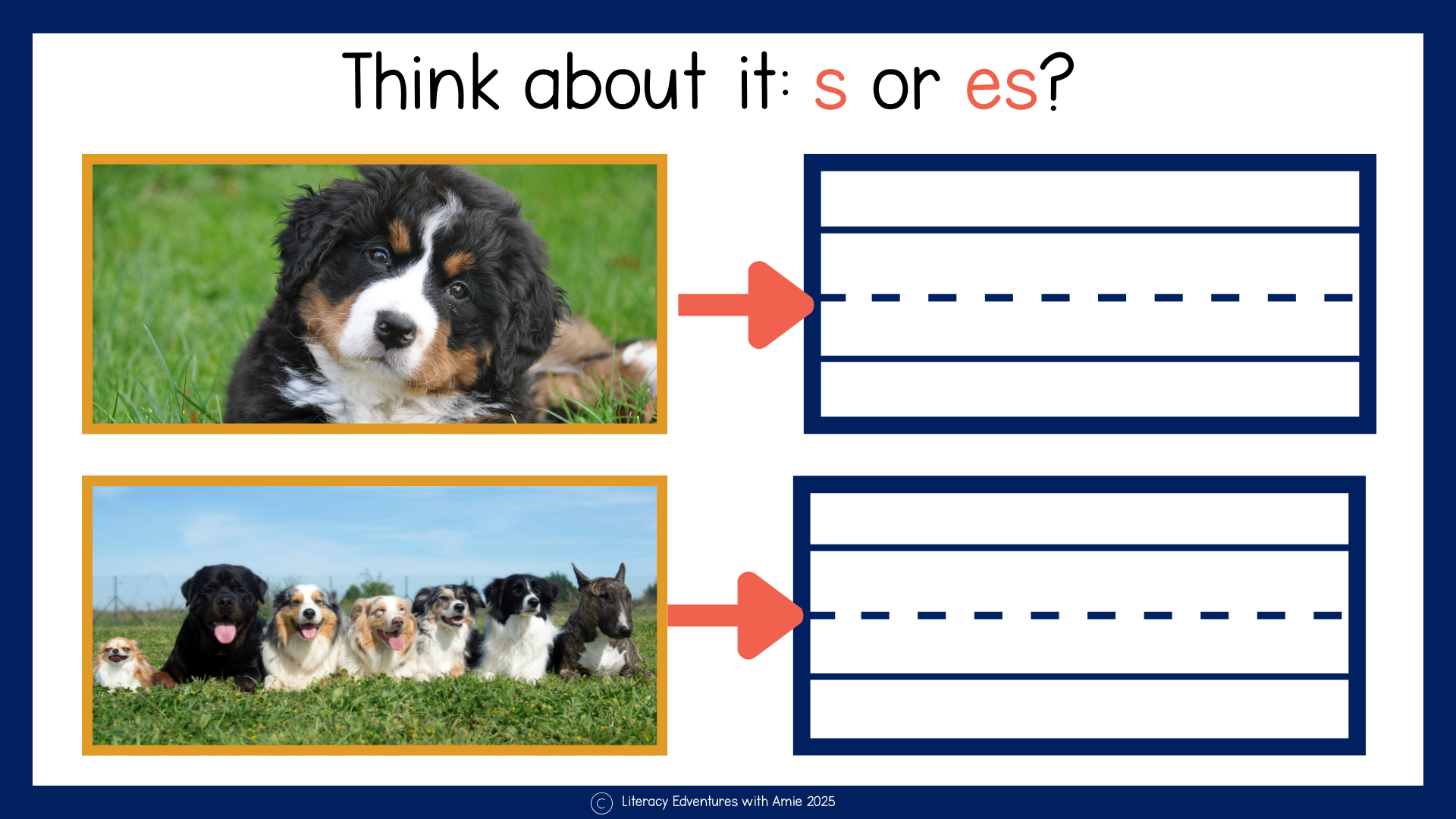
Then have students dictate dog. Then ask: “Make it more than one. I had one dog, now I have lots of ______.” Students say and write dogs and repeat the meaning with the hand signal.
In a few joyful minutes, your kindergartners have used morphology to read, spell, and explain meaning.
Adding -ed: Talking About the Past
Students love telling stories about what already happened, so -ed is a natural next step.
I Do. Write jump. Act it out. Say: “Yesterday I ___.” Students: “jumped!” Add -ed → jumped.
Teach the Three Sounds. Explain: -ed always means “happened before,” but it can sound different:
/t/ after unvoiced sounds (jump → jumped)
/d/ after voiced sounds (play → played)
/ɪd/ after t/d (want → wanted)
Chant it: “t, d, or id… it still means the past.”
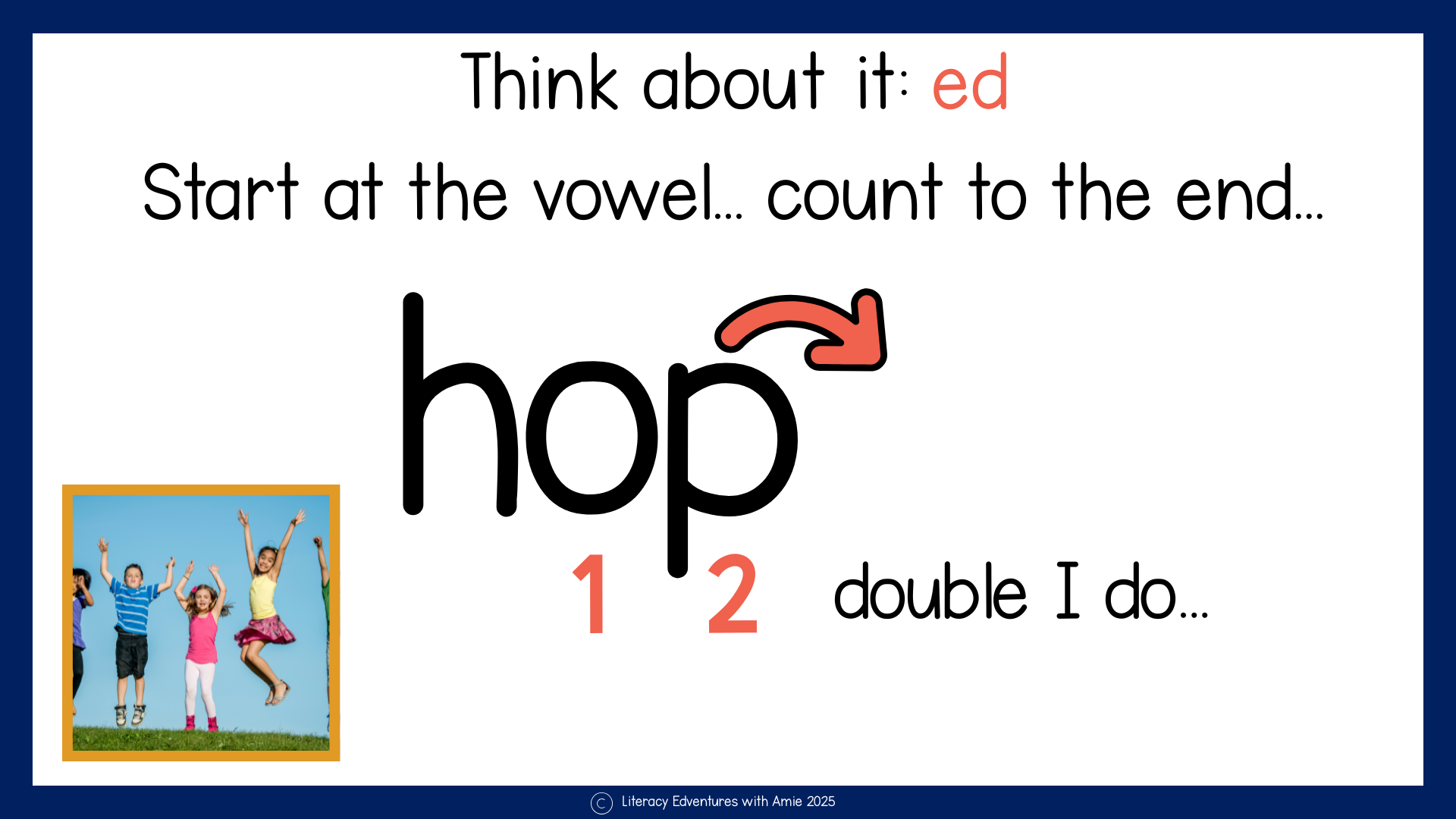
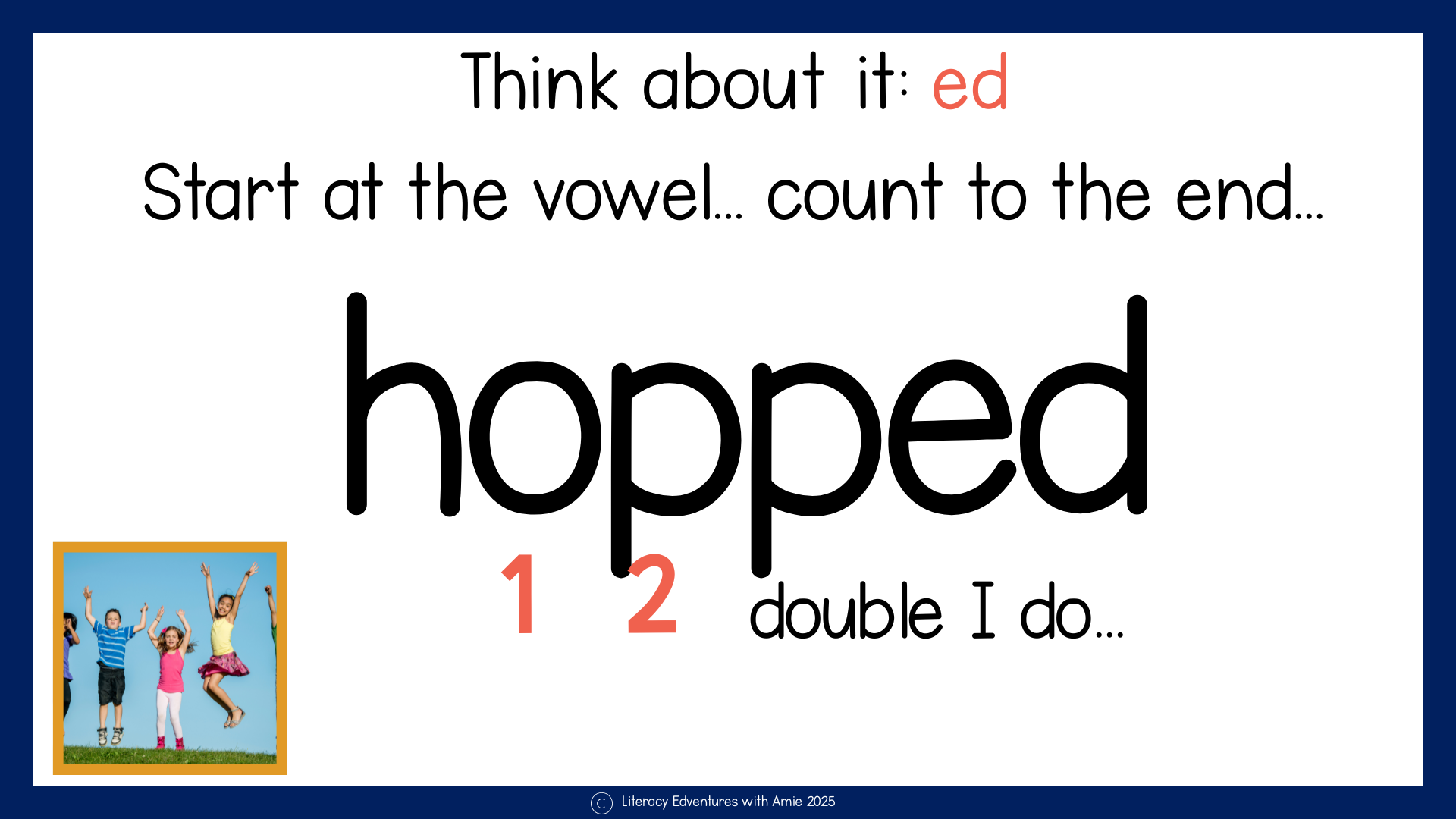
We Do. Practice with hop → hopped.
You Do. Dictate bases: dash→ dashed, fix → fixed, need → needed. Students write and explain the meaning.

Adding -ing: Happening Right Now
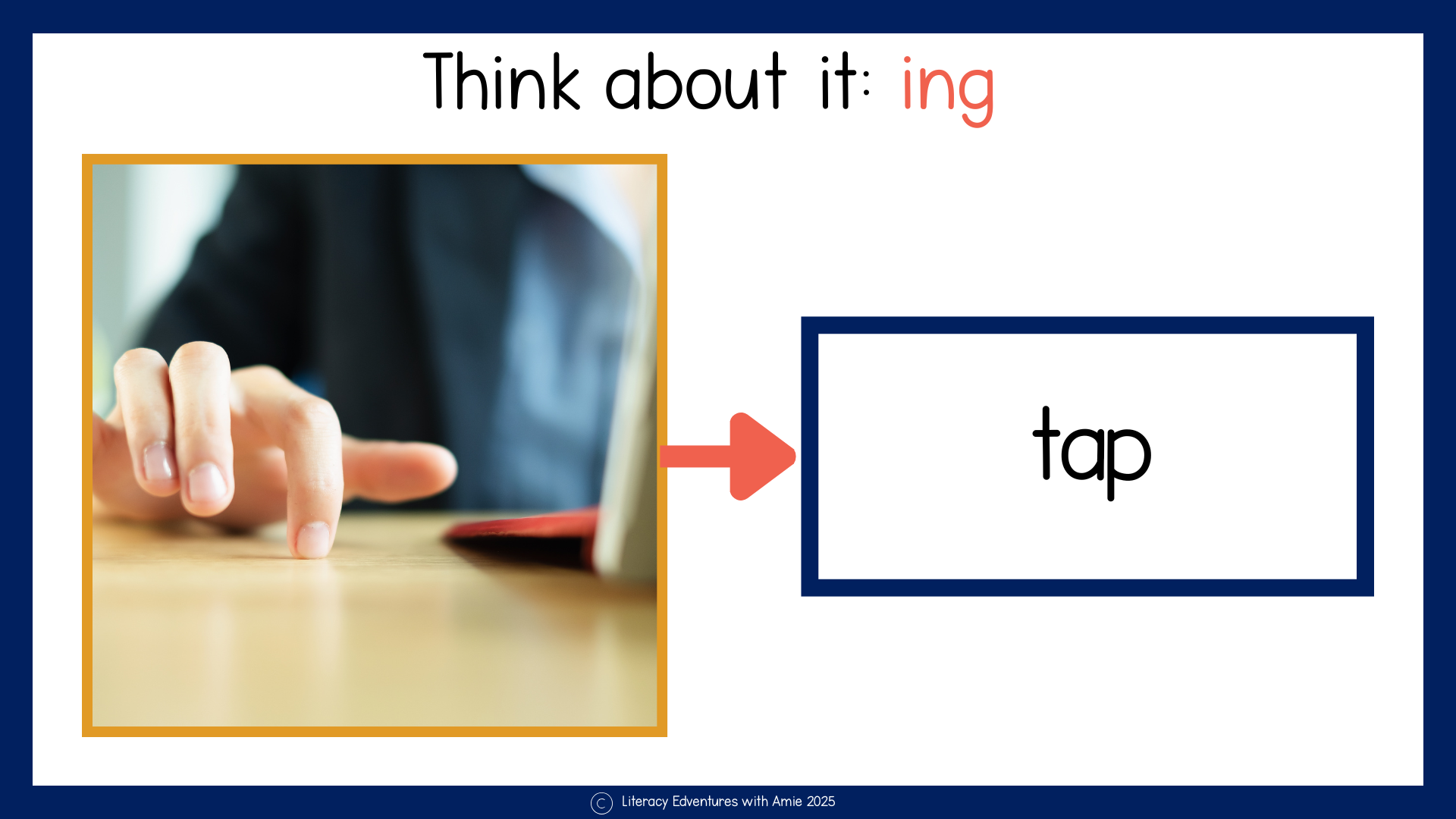
Once -ed feels familiar, bring in -ing to show action happening in the present.
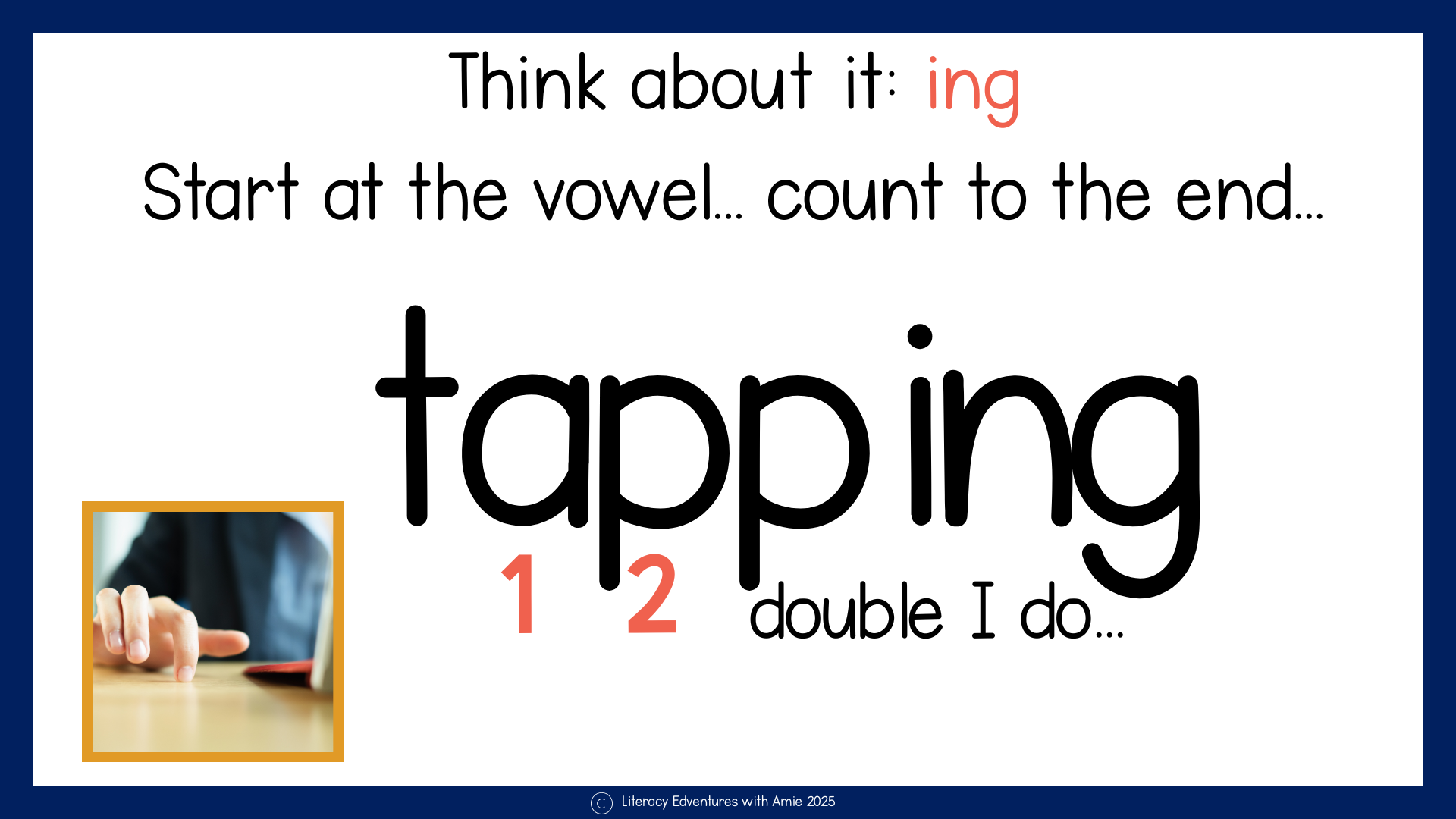
I Do. Write hop. Act it out. Say: “It’s happening now… he is ___.” Students: “hopping!”
Teach the Chant.
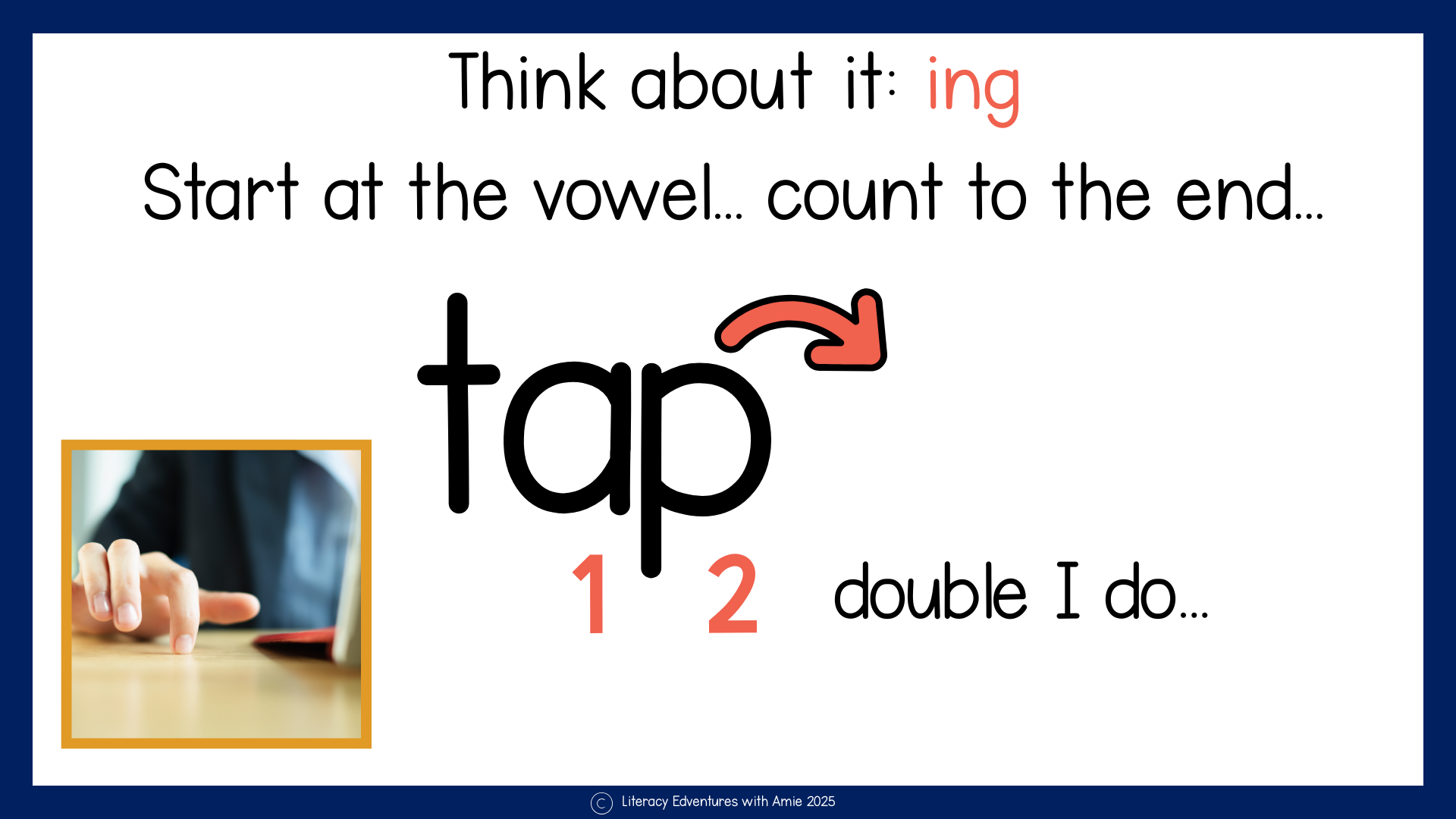
“One, two, double— I do.”
(Short vowel + one consonant → double. hop → hopping, run → running)“One, two, three— no doubling for me!”
(Two consonants, vowel team, or silent e → just add -ing. jump → jumping, rain → raining, make → making)
We Do. Try sit → sitting, clap → clapping Say the chant each time.
You Do. Dictate bases: win → winning
Warming up morphology in grades 1–2
Blend morphemes into routines you already do.
Visual drill
Flash a card with a familiar prefix or suffix. Students say the meaning and perform a quick motion tied to it ( re- = “again,” pretend to rewind).
Auditory drill
Say a meaning; students write the morpheme on whiteboards.
“Which suffix means happened in the past?” → -ed.
Dictation with a twist (base → build)
Dictate a base, then give only the meaning of the affix.
“Write jump. Now make it past tense.” → jumped.
Extend with prefixes: “Make do mean again.” → redo.
These micro-routines take 2–3 minutes, reinforce phonics you’re already teaching, and make morphology feel natural.
Pro Tip: Spell Morphemes Out
A powerful insight (highlighted by Pete Bowers) is that a morpheme doesn’t have a fixed pronunciation until it’s attached to a word. That’s why it helps to spell morphemes out in isolation:
Say “i-n-g” instead of pronouncing -ing alone.
Say “p-r-e” for pre- until it’s attached (e.g., preheat).
Say “a-b-l-e” for -able; its vowel often reduces to a schwa in words like stoppable and comfortable.
Spelling morphemes explicitly boosts accuracy and keeps meaning front and center, even when pronunciations shift from word to word. (Shout-out to Michelle at The Colorful Classroom for championing this tip!)
Why start early?
Meaning sticks. Kids love discovering that parts of words carry power.
Transfer happens. The same morpheme shows up in dozens of words.
Confidence grows. Students feel like word scientists because they are.
Morphology is not an “upper-grade only” skill. With quick, playful routines and clear meanings, our K–2 students become eager word investigators, one tiny, meaningful part at a time.
Resources to Keep Learning
If you’re excited to bring more morphology into your classroom, here are some fantastic resources from my friends Michelle and Sarah at Logos Literacy Academy:
For K–2 Teachers (Sarah Paul & Michelle Sullivan, Logos Literacy Academy):
Michelle’s Morpheme Deck for Prefixes & Suffixes.
Sarah’s Suffix bundle
Sarah’s Base Activities (with free bases)
Learn more from Sarah & Michelle:
Watch Sarah Paul share about Suffix -s here.
Watch Michelle Sullivan share about spelling out morphemes.
Visit Sarah Paul & Michelle Sullivan on Instagram @logosliteracyacademy
Podcast Episode: Mastering Morphology with Sarah Paul & Michelle Sullivan on Literacy in Color
For Grades 3–5 Teachers (Savannah Campbell, Campbell Creates Readers):
Morphology Sound Decks for Reviewing Morphemes
Morphology Interactive Notebooks – Anglo-Saxon
Morphology Interactive Notebooks – The Bundle (Anglo-Saxon, Latin & Greek)
Find Savannah here:
Wish you had a literacy coach and resources in your back pocket?
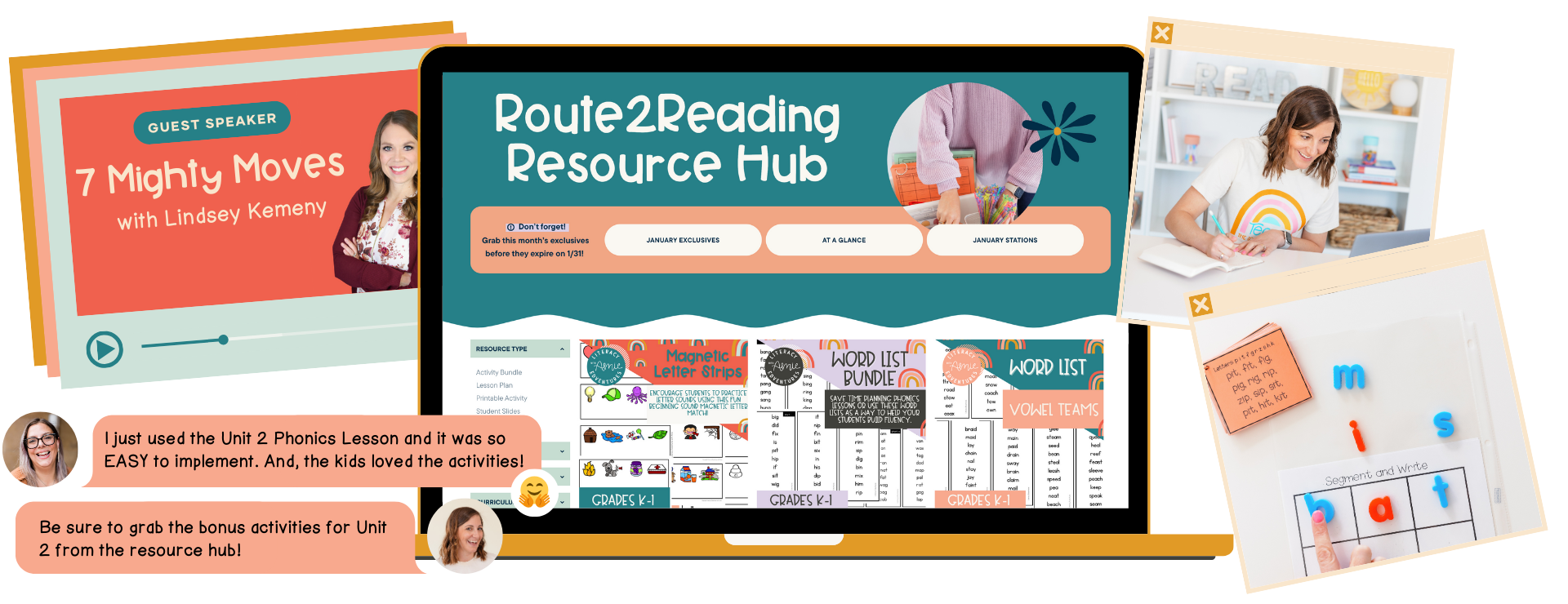
I understand that buying each resource separately can quickly ADD UP. As a teacher, I know we have to make the money we spend COUNT! But don’t worry—there’s a more straightforward, more efficient solution with Route2Reading, my K-2 membership designed to streamline planning, prepping, and teaching small group instruction. Rather than spending your weekends glued to your computer, searching for Science of Reading-aligned phonemic awareness, phonics lessons, and decodable texts for your small groups, you can log in to Route2Reading. Choose the focus skill for the week, download the detailed, step-by-step lesson plans and activities, and your small group instruction is ready to go in just a few clicks. Planning has never been easier!
I hope that you found today’s post helpful. Whether you choose to join the membership or not, I am always here to help you in any way that I can. Leave your questions below or send me an email Amie@literacyedventures.com