
How Timed Repeated Reading Builds Fluency in Young Readers
If you’ve ever listened to a student stumble —slowly, word by word—you know how much fluency matters. Fluency isn’t just about reading fast. It’s about reading accurately, smoothly, and with expression so the brain can focus on understanding the text instead of working so hard to decode every word.

One powerful, evidence-based way to support fluency is timed repeated reading. The best part? It only takes a few minutes a day and can make a huge difference in helping students become confident, engaged readers.
What Is Timed Repeated Reading?
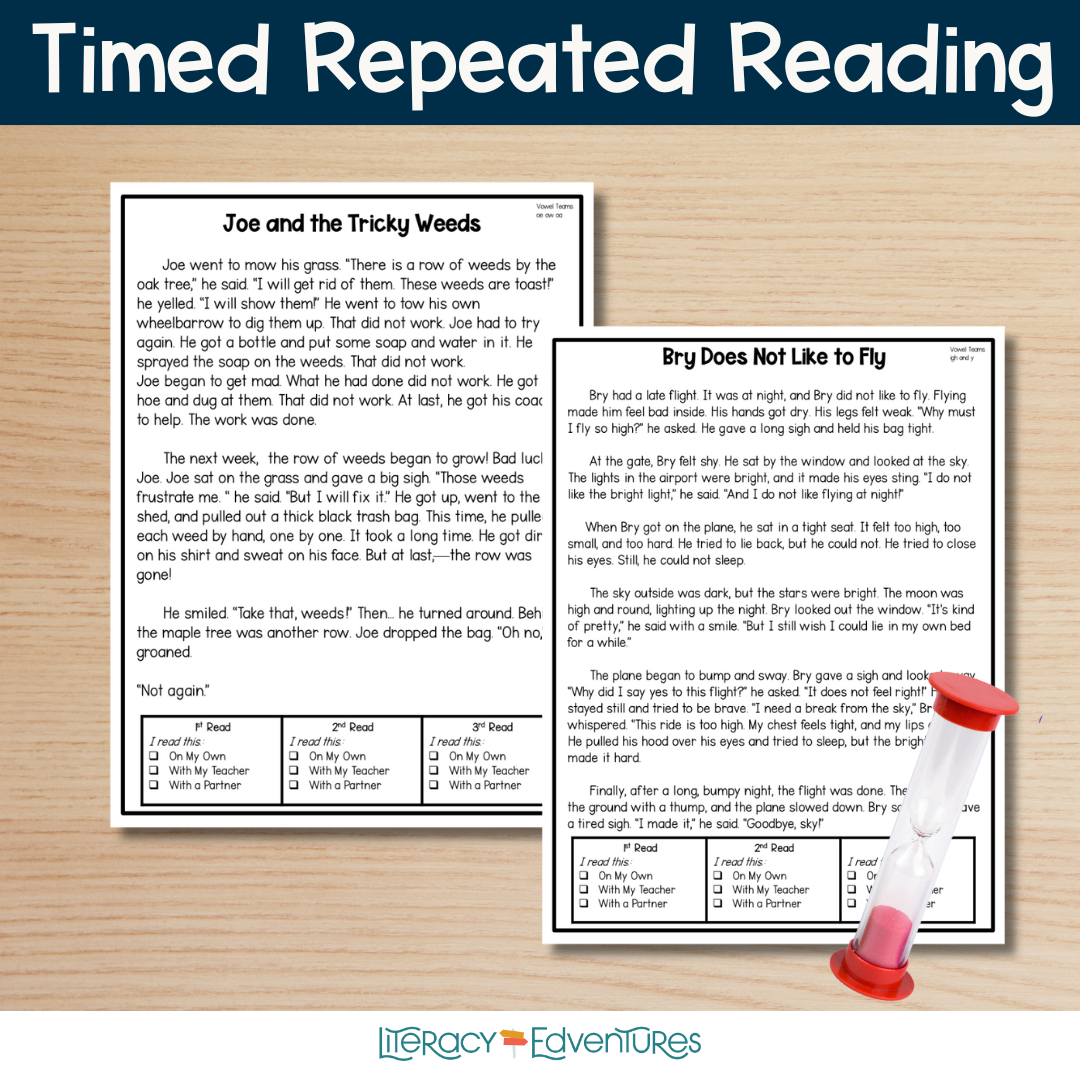
Timed repeated reading is exactly what it sounds like: students read the same short passage several times while a timer is running. Each time they read, the goal is to improve—fewer errors, smoother phrasing, and often, more words read correctly per minute.
The key isn’t racing against the clock. It’s about progress with practice. Just like athletes run drills or musicians practice scales, readers build fluency by revisiting a text multiple times.
A Quick Story From My Classroom
I’ll never forget a second grader named Emma. She was a strong decoder, but when it came to reading connected text, she sounded robotic—pausing at every word. The first time she tried a timed repeated reading, she looked nervous. After her second try, she smiled and said, “I read more words this time!”
By the fourth read, her voice had smoothed out and her confidence had grown. It wasn’t about racing—it was about realizing she could get better in just a few minutes.
That’s the power of repeated reading. Students can see and feel their growth right away.
Why Fluency Matters in the Science of Reading
The science of reading reminds us that reading is not a single skill, but a combination of word recognition and language comprehension (the Simple View of Reading). Fluency is the bridge between the two.
When students can read with accuracy and automaticity, their brains are freed up to focus on meaning. Without fluency, comprehension suffers—even when a child can decode words correctly.
Researchers like Tim Rasinski and the National Reading Panel (2000) have confirmed that repeated reading is one of the most effective strategies for improving fluency. Studies show it strengthens not just speed and accuracy—but also comprehension.
How to Do Timed Repeated Reading in the Classroom
1. Choose a passage
Younger students: Select a decodable text that matches your current phonics focus.
Older students: Use short informational or literary passages (100–250 words) that are at or just above the student’s instructional level.
2. Set the timer
A one-minute read keeps the practice short, focused, and motivating.
3. First read (cold read)
The student reads aloud while you follow along.
Track accuracy and automaticity—note any hesitations, substitutions, or skipped words.
Focus on patterns in errors rather than total “miscues.” (For example, are errors tied to decoding, morphology, or word recognition?)
4. Give feedback
Affirm success: “You read those blends smoothly!”
Correct explicitly and briefly: “That word is ship. Let’s tap and blend it again.”
Connect the feedback to phonics patterns or word-reading strategies, not guessing from context.
5. Reread 2–4 times
Each reread builds accuracy, automaticity, and prosody. Students gain confidence as reading becomes smoother and more expressive.
6. Track growth
Chart Words Correct Per Minute (WCPM) and accuracy over time. Graphs or goal trackers help students visualize progress and stay motivated.
7. Celebrate effort
Highlight improvement, not perfection. Remind students that fluency comes from practice and that every reread builds stronger reading muscles.
Quick Activity Variations
Word-Level Fluency Practice
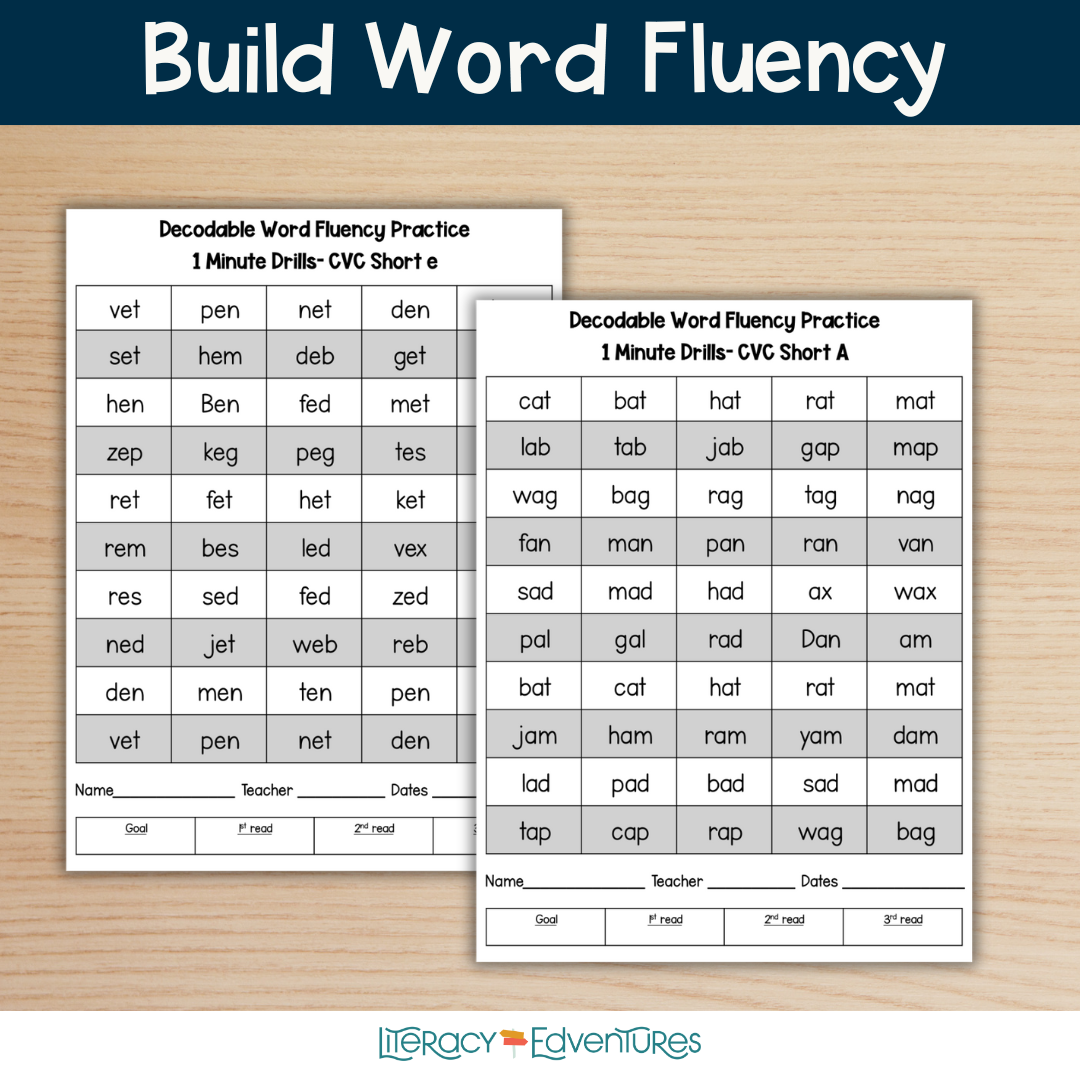
Fluency starts before passages—with words. Add quick drills that help students build automaticity and smooth blending:
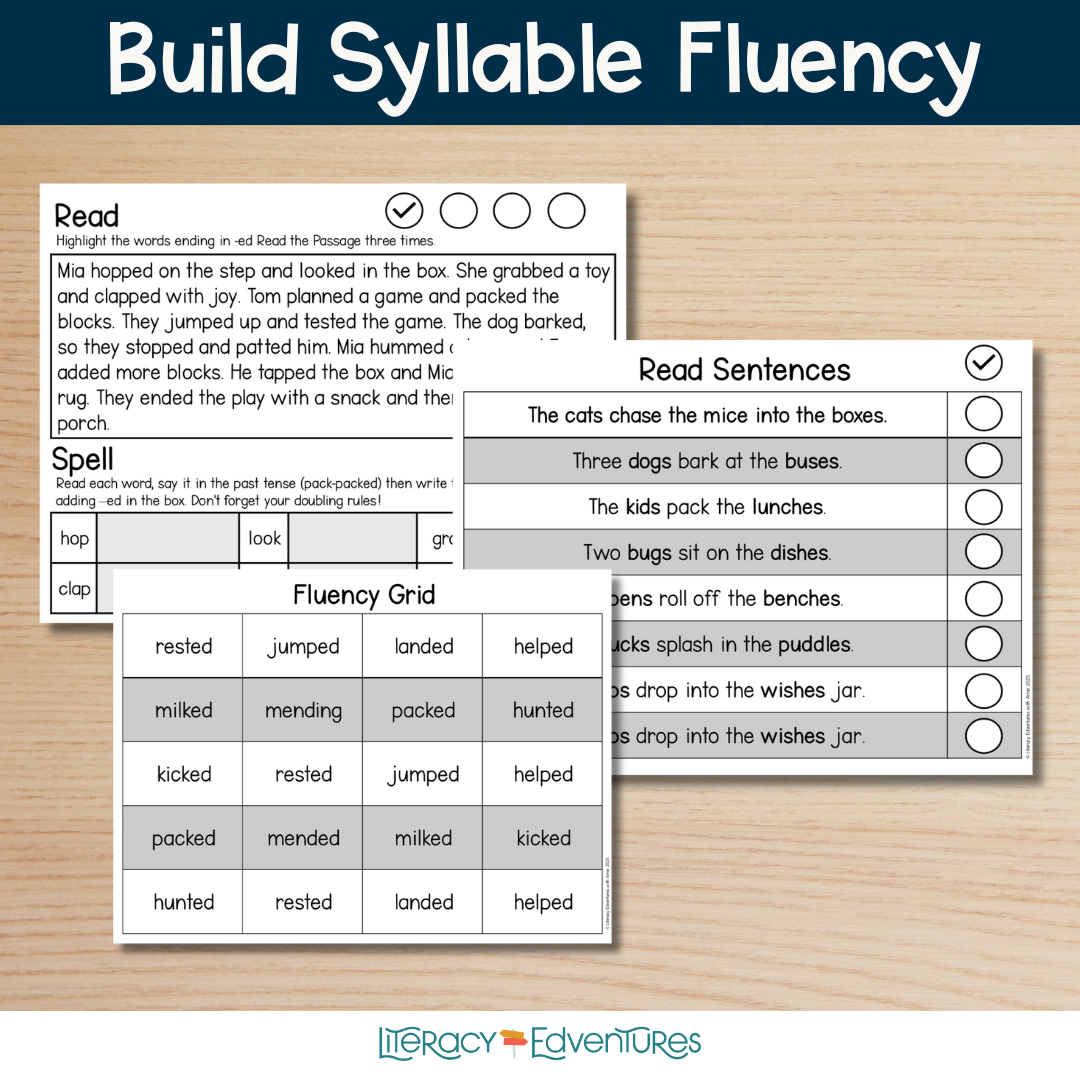
Blending lines: Have students read connected CVC or multisyllabic words in a continuous flow, avoiding sound-by-sound reading.
Word lists or grids: Focus on one phonics pattern (like short a or -ed) to reinforce accuracy and pace.
Partner speed reads: Students take turns reading word lists for 30 seconds, aiming to improve their previous score while keeping accuracy high.
Warm-Up Rereads:
Use a short passage or sentence strip as a 2–3 minute warm-up before phonics or comprehension lessons.
Partner Practice:
Pair students—one reads, the other tracks accuracy and smooth phrasing—then switch roles.
Fluency Friday Challenge:
Students choose their best reread or word list of the week and chart their progress on a classroom graph.
Teacher Tips for Making It Work
Model fluent reading before asking students to do it themselves.
Keep practice short—5–7 minutes a day is enough.
Use content-rich passages (when possible) so students build background knowledge while practicing fluency.
Pair students strategically and teach them how to give kind, constructive feedback.
Rotate passages often to keep engagement high.
💡 Psst… inside the Route2Reading Membership, you’ll find a full library of ready-to-go fluency passages and trackers—no extra prep required.
Clearing Up Common Misconceptions
❌ It’s about speed only.
✅ The focus is on accuracy, automaticity, and expression—not racing the clock.
❌ Fluency practice replaces phonics.
✅ Students still need explicit decoding instruction. Fluency practice builds on that foundation.
❌ Only struggling readers benefit.
✅ All readers—even your most advanced—gain from practicing fluency.
Fluency doesn’t develop overnight, but small, consistent practice makes a big impact. By carving out just a few minutes each day for timed repeated reading, you’re giving students the tools to read more smoothly, confidently, and with joy.
The next time you see a student’s eyes light up after realizing they read more words than yesterday—smile. You’re not just building fluency. You’re building readers.
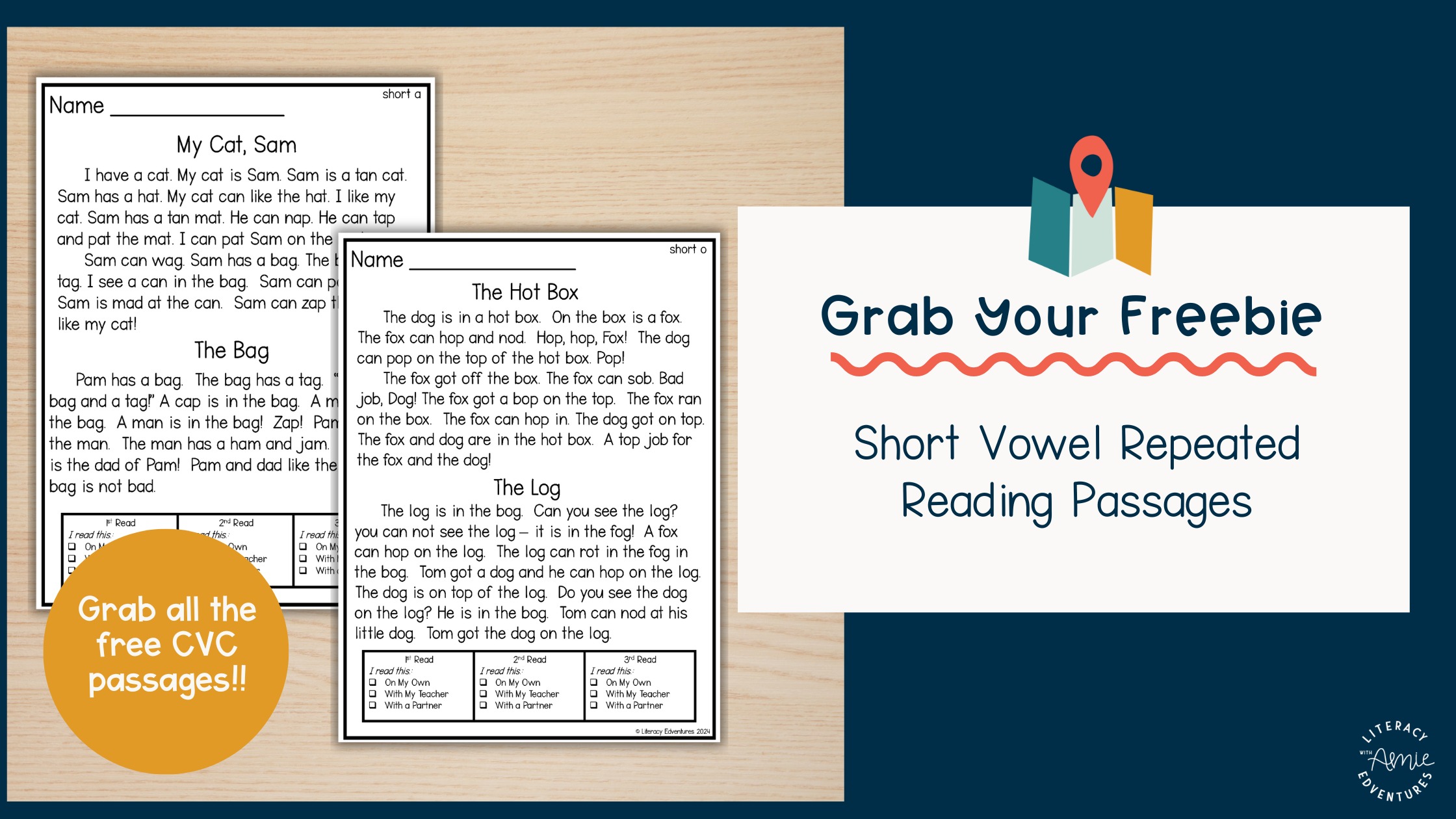
Free CVC Timed Repeated Reading Passages
To help you get started, I’ve created a free set of CVC timed repeated reading passages you can download today. These short, engaging passages are perfect for beginning readers and come with a simple progress tracker to build motivation..
Looking for more ways to build fluency?


Wish you had a literacy coach and resources in your back pocket?
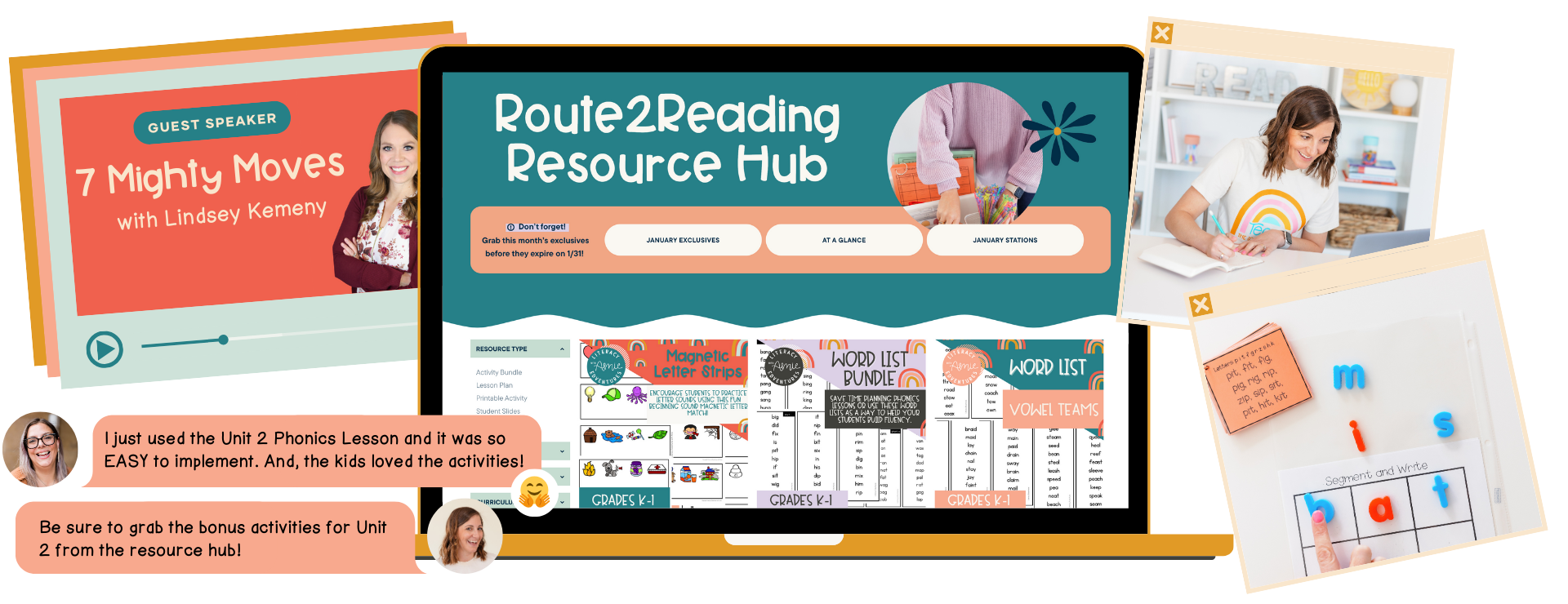
I understand that buying each resource separately can quickly ADD UP. As a teacher, I know we have to make the money we spend COUNT! But don’t worry—there’s a more straightforward, more efficient solution with Route2Reading, my K-2 membership designed to streamline planning, prepping, and teaching small group instruction. Rather than spending your weekends glued to your computer, searching for Science of Reading-aligned phonemic awareness, phonics lessons, and decodable texts for your small groups, you can log in to Route2Reading. Choose the focus skill for the week, download the detailed, step-by-step lesson plans and activities, and your small group instruction is ready to go in just a few clicks. Planning has never been easier!
I hope that you found today’s post helpful. Whether you choose to join the membership or not, I am always here to help you in any way that I can. Leave your questions below or send me an email Amie@literacyedventures.com